
What if everything you've been told about teaching civic values is wrong?
Most educators think patriotism is something you recite. A morning routine. Words spoken without weight. But here's the truth – when students actually understand phrases like "liberty and justice for all," something powerful happens. They don't just say the words. They live them.
The Pledge of Allegiance isn't a dusty relic from another era. It's a conversation starter. A launching pad for critical thinking. And when you give students the right tools, those five words – liberty and justice for all – become a mirror reflecting the world they want to build.
Why "Liberty and Justice" Still Resonates
Picture this: a seventh-grader reads about a community struggling for equal access to clean water. She connects it to "justice for all." Suddenly, the Pledge isn't just words. It's a promise – one she wants to help keep.
That's the magic hiding inside civic education.
Students today are hungry for meaning. They scroll through headlines filled with conflict, inequality, and division. They see injustice and feel powerless. But when you ground these conversations in something familiar – something they've been saying since kindergarten – you give them an anchor.
"Liberty and justice for all" becomes more than a phrase. It becomes a question: Is this always true? Sometimes true? Never true?

And that question? It sparks everything.
The Power of Critical Inquiry in the Classroom
Here's what the best educators already know: students learn best when curriculum connects to their lived experiences. When you ask a student to evaluate whether "liberty and justice for all" applies to their community, you're not lecturing. You're inviting them into the conversation.
This approach transforms passive learners into active citizens.
Start with a simple exercise. Have students read a current news article – something relevant to their world. Then ask them to find evidence supporting their position on whether the Pledge's promise holds true. Watch what happens next. Students debate. They question. They dig deeper.
The classroom becomes a laboratory for democracy.
Teachers across the country are using strategies like "Reading Against the Grain" for older students and "Resistant Reading" for younger ones. These methods teach kids to question dominant narratives, identify assumptions, and think independently. That's not just civic education – that's life preparation.
From Discussion to Action
Talking about liberty and justice is powerful. Acting on it is transformational.
The most effective classrooms don't stop at discussion. They move students toward action. After identifying conflicts or injustices in their communities, students merge into groups. They brainstorm solutions. They create concrete steps toward change.

This project-based learning approach develops more than civic knowledge. It builds empathy. Collaboration. Problem-solving skills. Students learn that they're not just future citizens waiting for permission to participate. They're agents of change right now.
One teacher in Colorado shared how her students, after discussing "justice for all," organized a neighborhood cleanup focused on neglected areas of their town. Another class in Texas created a peer mediation program after exploring what "liberty" means in daily school interactions.
These aren't hypothetical outcomes. They're happening in classrooms where educators prioritize dialogue, inquiry, and student voice.
Creating Safe Spaces for Big Conversations
Let's be honest – conversations about liberty and justice can get uncomfortable. Students bring different perspectives shaped by their families, communities, and experiences. That's not a problem. That's the point.
The key is creating a safe space where every student feels heard.
Effective teachers ground discussions in student experience first. Before diving into complex issues, they let students articulate their own beliefs about justice. This builds trust. It validates diverse viewpoints. And it creates a foundation for deeper understanding.
Open-ended questions are your best friend here. Instead of asking "What does justice mean?" try "When have you seen justice in action?" or "What would a just community look like to you?" These questions invite participation without judgment.
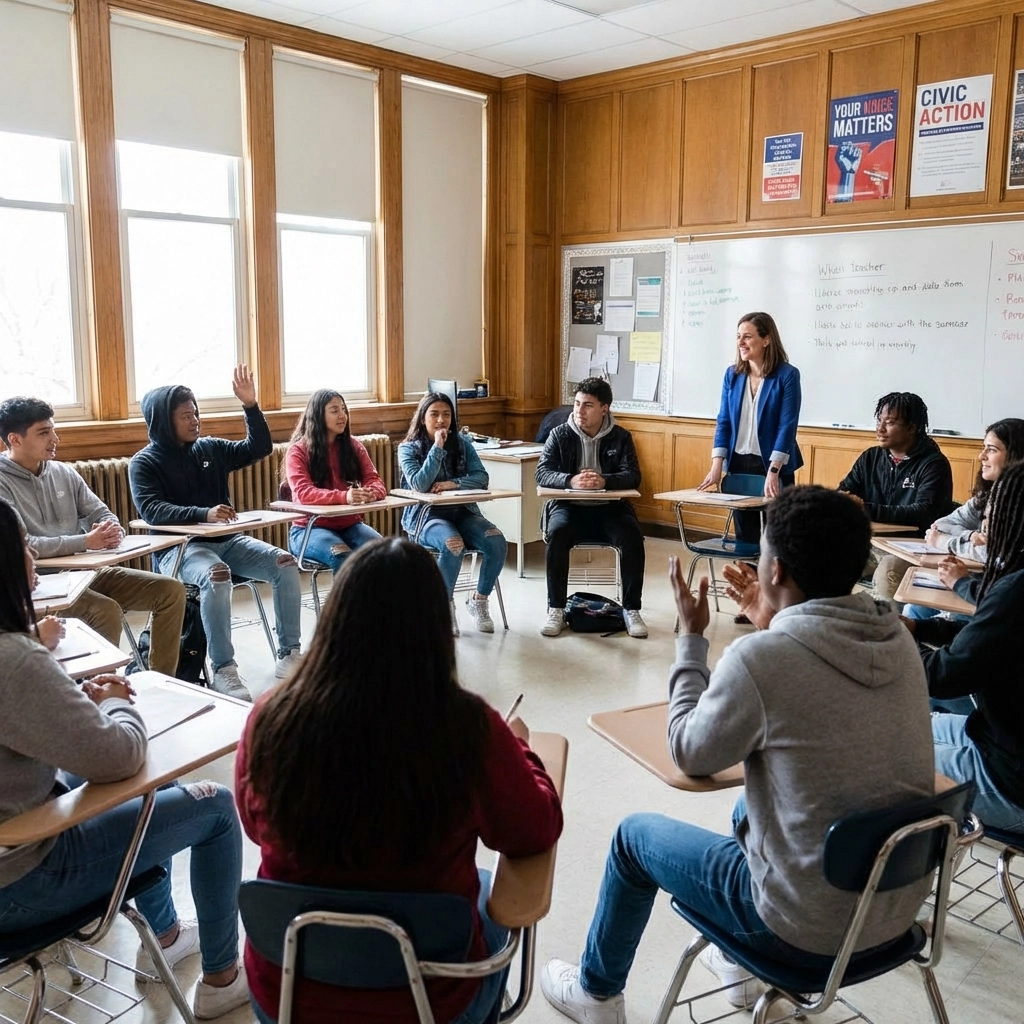
When students feel safe, they open up. They share stories. They listen to classmates whose experiences differ from their own. And slowly, "liberty and justice for all" stops being an abstract concept and starts becoming a shared goal.
Tools That Make the Difference
Great teaching requires great resources. You can have all the passion in the world, but without the right materials, even the best lessons fall flat.
That's where thoughtfully designed classroom resources come in.
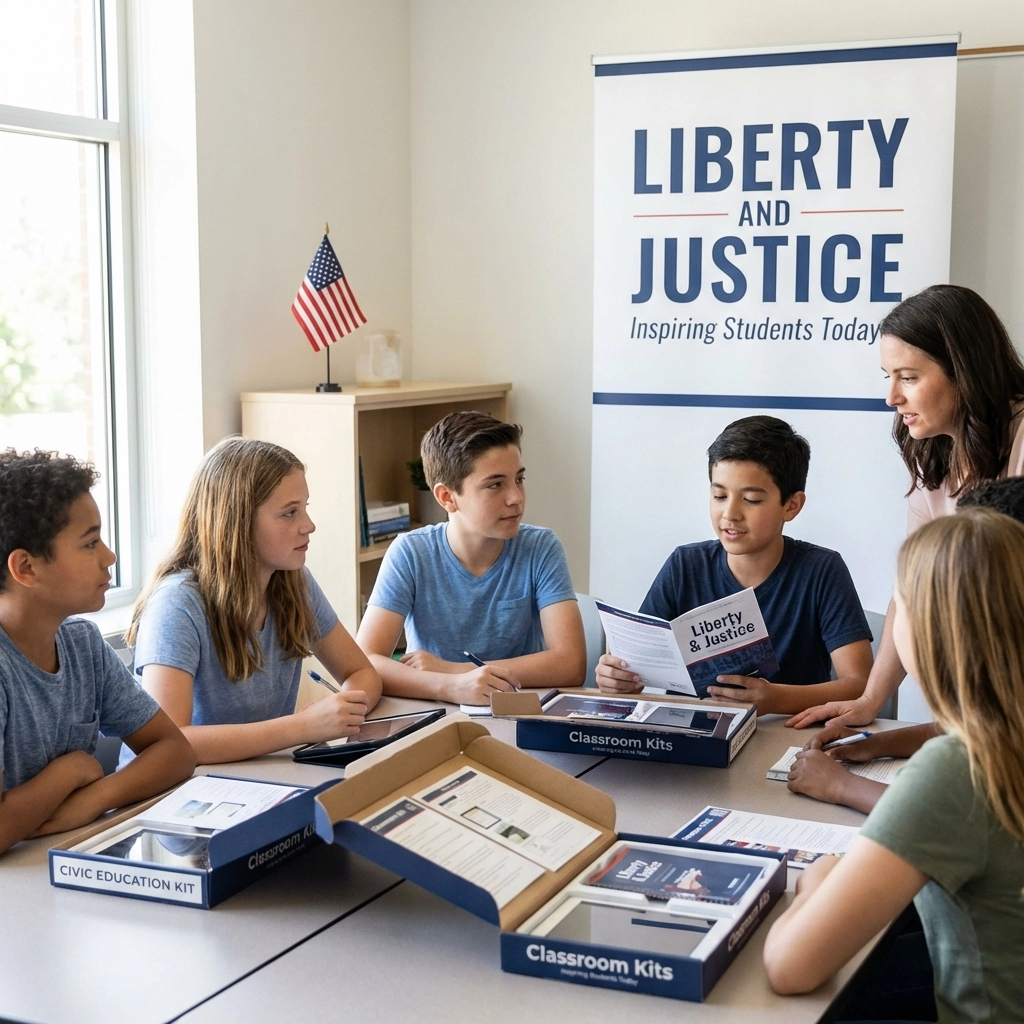
Imagine having everything you need in one place – discussion guides, activity sheets, visual aids, and age-appropriate materials that bring "liberty and justice" to life. Resources that connect the Pledge to current events. Materials that spark conversation without requiring hours of preparation.
At Pledge Allegiance, we've developed classroom kits designed to do exactly that. These aren't worksheets students forget by lunch. They're interactive tools that make abstract concepts tangible – helping educators facilitate meaningful discussions without reinventing the wheel.
Our kits include prompts for critical inquiry, project templates for student-led initiatives, and guides for navigating difficult conversations with confidence. They're built by educators, for educators – people who understand the challenges of bringing civic education to life in today's classrooms.
You can explore our full range of offerings and see how these resources might fit your teaching style.
Real Results from Real Classrooms
97% of students say they feel more connected to their country when they understand what they're pledging. That's not a made-up statistic – that's feedback from teachers using inquiry-based civic education.
When students understand "liberty and justice for all," they don't just recite words. They:
- Ask better questions about the world around them
- Engage more deeply with current events and community issues
- Develop empathy for people whose experiences differ from their own
- Take action on causes they care about
- Feel ownership over their role as citizens
These outcomes don't happen by accident. They happen when educators commit to making civic education meaningful – and when they have the tools to support that commitment.
Getting Started in Your Classroom
You don't need to overhaul your entire curriculum to make "liberty and justice" resonate with students. Start small.
This week, try asking your students: "Is 'liberty and justice for all' always true, sometimes true, or never true?" Let them discuss in small groups. Have them find one piece of evidence supporting their position.
Then watch what happens.
You'll see students who usually stay quiet suddenly have something to say. You'll hear debates that extend beyond class time. You'll notice kids making connections between the Pledge and their daily lives.
That's the spark. Once you see it, you'll want to fan it into a flame.
If you're ready to take the next step, consider bringing structured resources into your classroom. Visit our shop to explore classroom kits designed to support exactly these kinds of conversations.
The Promise We Make Together
"Liberty and justice for all" isn't just a line in the Pledge. It's a promise. A commitment. A vision for what America can be.
When we help students understand these words – really understand them – we're not just teaching history. We're shaping the future. We're raising citizens who question, who care, who act.
That's the power hiding in five simple words.
And with the right approach, the right conversations, and the right tools, you can unlock it in your classroom starting today.
Ready to bring civic education to life? Contact us to learn more about our classroom resources, or donate to support civic education programs in schools nationwide.