
What if the most powerful lesson you could teach your children costs nothing: but lasts forever?
Every family has traditions. Sunday dinners. Holiday recipes. Birthday rituals. But there's one tradition that connects your household to something much bigger than yourselves: the Pledge of Allegiance. And passing it down isn't just about memorizing 31 words. It's about preserving the spirit of what it means to be American.
Here's the truth most families discover too late: patriotic traditions don't survive on autopilot. They require intention, conversation, and a little creativity. The good news? You don't need a history degree to make this happen. You just need a plan: and maybe a few stories worth keeping.
Why Patriotic Traditions Matter More Than Ever
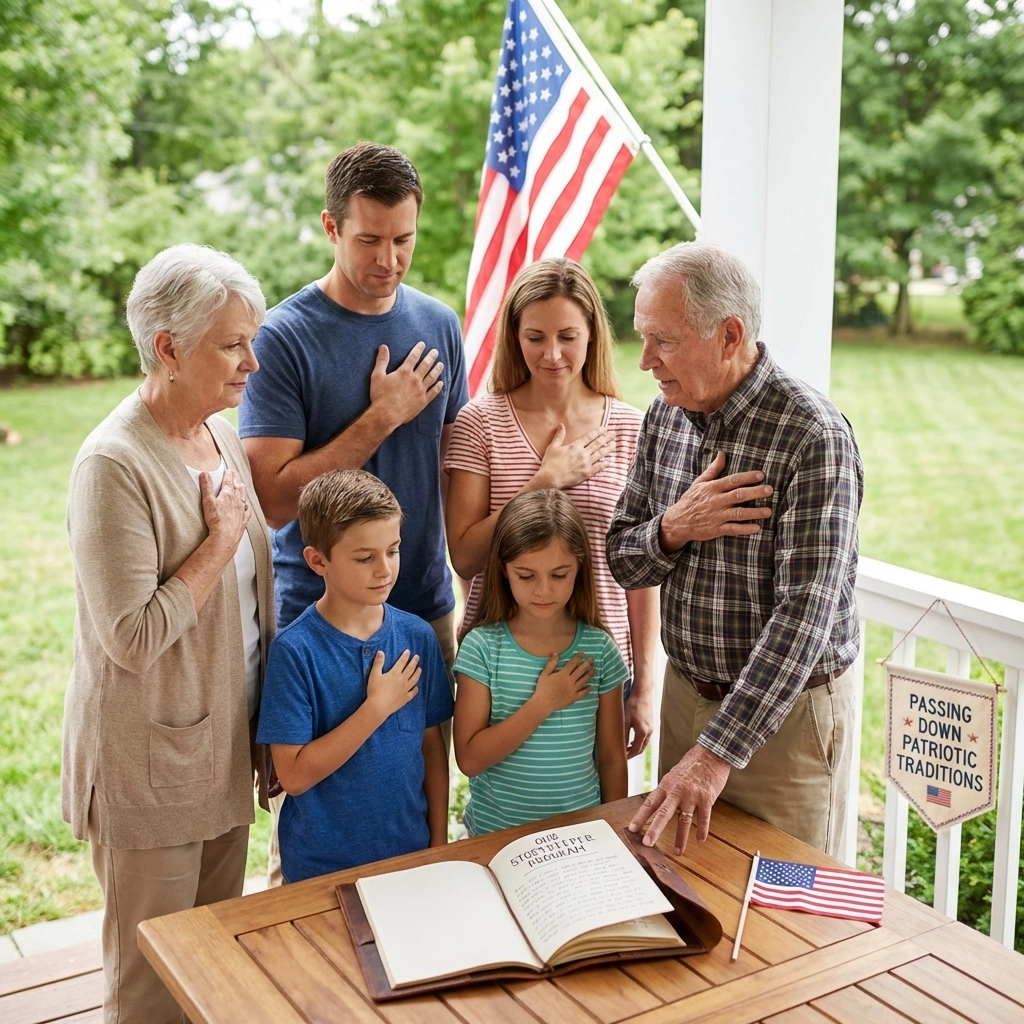
Picture this: your grandchildren gathered around a table, listening to recordings of great-grandpa explaining why he stood for the flag every single morning. Now what if I told you that moment is completely within your reach?
Traditions anchor families. They create identity, build character, and give children something solid to hold onto in an ever-changing world. Patriotic traditions: like reciting the Pledge together: do something even more powerful. They connect your family to a shared national story spanning generations.
The Pledge of Allegiance isn't just words. It's a commitment. "I pledge allegiance to the Flag of the United States of America, and to the Republic for which it stands, one Nation under God, indivisible, with liberty and justice for all." Every phrase carries weight. Every word holds history.
When you pass this tradition down intentionally, you're giving your children roots and wings simultaneously.

Start With the Story Behind the Words
Most people think the Pledge has always sounded the same… until they learn its fascinating evolution.
The original Pledge was written in 1892 by Francis Bellamy. It was shorter, different, and didn't include "under God." That phrase was added in 1954 when President Eisenhower signed it into law on Flag Day, June 14th. Why? The country wanted to distinguish itself from atheistic communism during the Cold War.
Share this history with your kids. Ask them questions:
- Why do you think the words "liberty and justice for all" matter?
- What does "indivisible" mean to you?
- How does pledging allegiance make you feel?
Don't lecture. Have conversations. Let them wrestle with the ideas. This is where real understanding grows: not from rote memorization, but from genuine engagement with meaning.
Create a Family Pledge Ritual
Here's where tradition becomes tangible. You need a ritual: something repeatable, meaningful, and uniquely yours.
Morning Recitations: Start the day by reciting the Pledge together as a family. It takes 15 seconds. Before breakfast, before screens, before the chaos begins. This small act sets an intentional tone for the entire day.
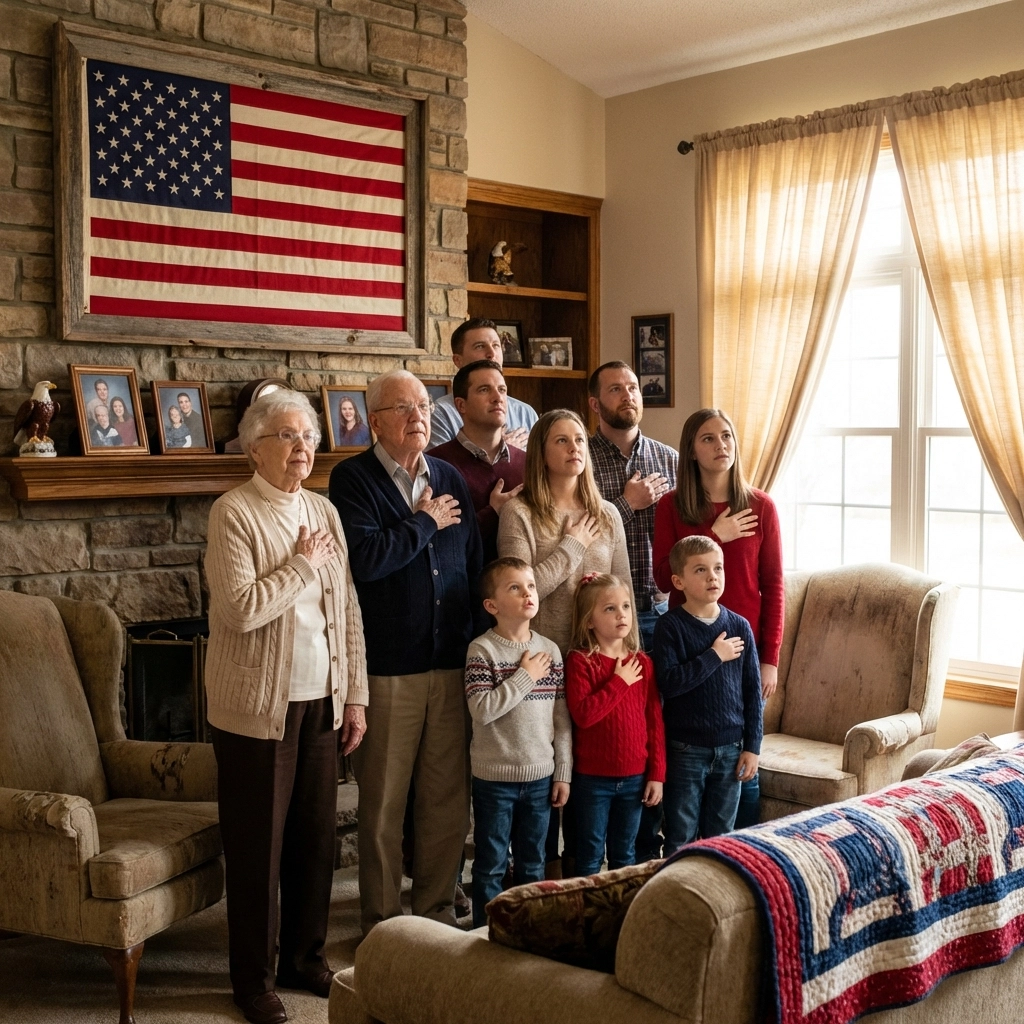
Flag Display: Hang a flag in your home. Maybe it's the one grandpa carried. Maybe it's brand new. Either way, having a physical symbol creates a focal point for your tradition.
Weekly Discussions: Pick one night a week to discuss what patriotism means to your family. Talk about current events, share stories from relatives who served, or read about American heroes together.
Holiday Celebrations: Use Flag Day, Independence Day, Veterans Day, and Memorial Day as anchor points. These aren't just days off: they're opportunities to reinforce what you're building.
Capture the Stories Before They're Gone
If you've ever felt like family history slips away too fast, you're not alone.
Here's the hard truth: 97% of family stories are lost within three generations. The veteran uncle who stormed beaches. The grandmother who raised five kids while her husband served overseas. The great-grandfather who immigrated with nothing but hope and became a citizen. These stories disappear unless someone captures them.
That's exactly why we created the Storykeeper Program.
Storykeeper works simply. Family members receive weekly prompts via email: questions designed to unlock memories worth preserving. What did the flag mean to you growing up? When did you first understand what America stood for? What traditions do you want future generations to keep?
The responses get compiled into a hardcover book with recorded audio, stored in a private digital archive your family can access forever. It's not complicated. It's not expensive. But it creates something priceless: a permanent record of your family's patriotic journey.
Make It Multigenerational
The most powerful traditions bridge generations. They create moments where grandparents, parents, and children share experiences together.
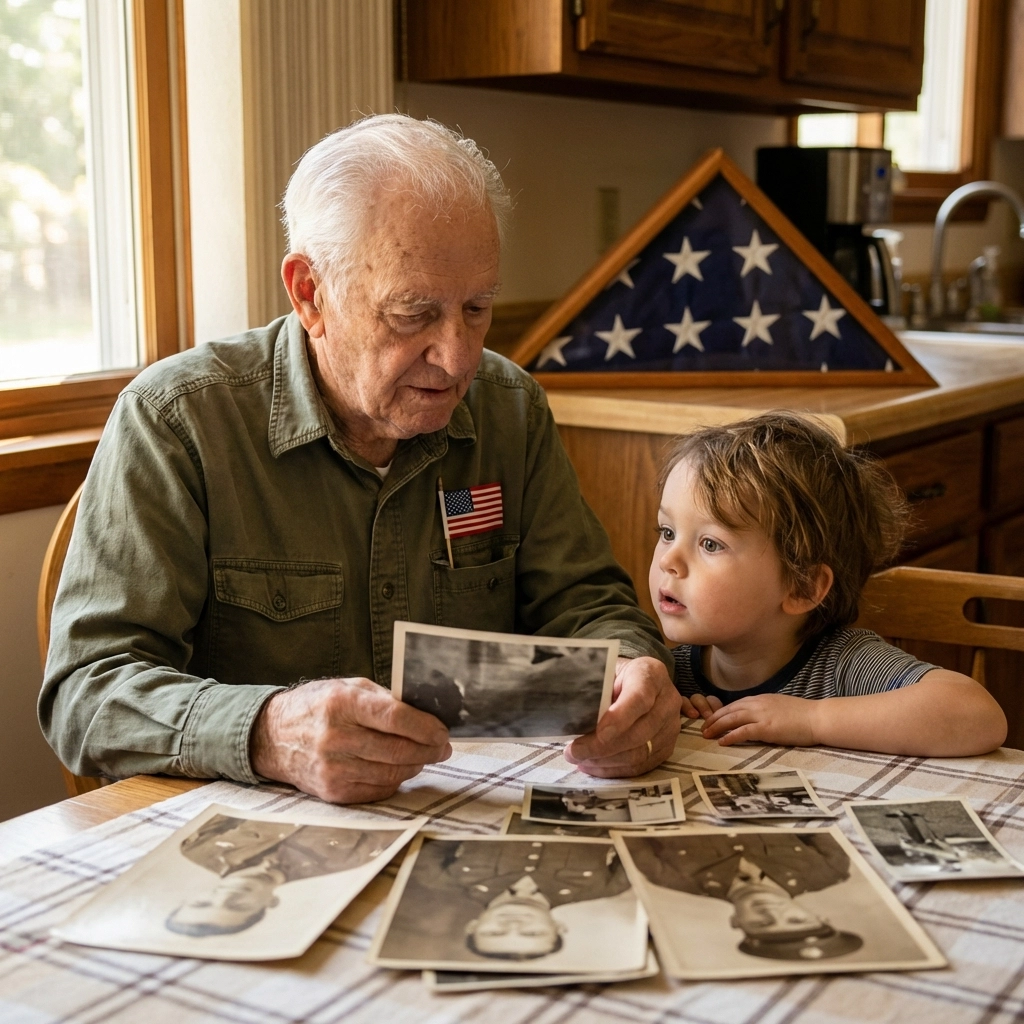
Interview Your Elders: Sit down with grandparents or great-grandparents. Ask them about their earliest memories of the Pledge. Record the conversation on your phone. These recordings become treasures.
Include Young Voices: Let children lead the Pledge sometimes. Give them ownership. When kids feel responsible for a tradition, they carry it forward naturally.
Create a Family Pledge Book: Compile photos, written reflections, and drawings from every generation. Pass it down like a family Bible: something sacred and shared.
Attend Community Events Together: Parades, flag ceremonies, civic gatherings. Show your children that your family's commitment extends into the broader community.
Address the Hard Questions Honestly
Your kids will have questions. Some will be simple. Others won't be.
"Why do some people not stand for the Pledge?"
"What does 'under God' mean if we're not religious?"
"Is it okay to disagree with the government and still love America?"
Don't dodge these conversations. Lean into them. The Pledge isn't about blind obedience: it's about thoughtful allegiance. You can love your country while working to make it better. You can respect the flag while acknowledging imperfection. These nuances matter.
When you model honest, respectful dialogue about patriotism, you teach critical thinking alongside civic pride. That combination creates informed citizens: not just obedient ones.
Small Actions That Create Lasting Impact
Passing down patriotic traditions doesn't require grand gestures. Consistency beats intensity every time.
- Say the Pledge together once a week
- Share one story about an American hero each month
- Write down why the flag matters to you personally
- Attend one local civic event as a family each year
- Record a grandparent's memories before it's too late
These small actions compound. In ten years, your children won't just know the Pledge: they'll understand it. They'll feel it. And they'll pass it forward to their own families.
Your Family's Legacy Starts Today
In one generation, you could transform how your family relates to patriotism, civic duty, and American identity.
That's not an exaggeration. That's what intentional tradition-building accomplishes. The Pledge of Allegiance becomes more than morning routine: it becomes a thread connecting your past, present, and future.
Start small. Start today. Gather your family tonight and recite those 31 words together. Ask one question about what they mean. Listen to the answers.
And if you want help capturing the stories that make your family's patriotic journey unique, explore our Storykeeper Program. Because some traditions are too important to leave to chance.
Your family's legacy is waiting. What will you pass down?
Ready to preserve your family's patriotic heritage? Learn more about our programs or contact us to get started.