

Most Americans think the Pledge of Allegiance has remained a static, sacred pillar of our Republic since the days of the Founding Fathers, until they see the secret history buried in the national archives.
You stand up at a ballgame, a school assembly, or a local council meeting. You place your hand over your heart and recite those thirty-one words from memory. It’s a rhythmic, comforting tradition. But what if I told you that the man officially credited with writing it might have stolen the idea from a thirteen-year-old boy? Or that the original salute looked exactly like the one used by the Nazi regime?
History isn't always the polished, linear narrative we find in middle school textbooks. It’s messy, it’s political, and it’s deeply human. As we approach America’s 250th anniversary, understanding the true evolution of the Pledge isn’t just a history lesson, it’s a way to reconnect with the complex, evolving heart of our nation.
The Mystery of the Stolen Pencil: Who Really Wrote It?
The name you’ll find in most history books is Francis Bellamy. In 1892, Bellamy was an editor for The Youth’s Companion, a popular magazine. According to his own account, written decades later in 1923, he locked himself in a Boston office on a sweltering August afternoon and emerged with the words that would define American patriotism for over a century.
But here is the secret your textbook probably skipped: evidence suggests Bellamy’s "sole authorship" might be a total fabrication.
Years before Bellamy claimed his "eureka" moment, a thirteen-year-old schoolboy from Cherryvale, Kansas, named Frank E. Bellamy (no relation), reportedly submitted a nearly identical pledge to a school contest. In April 1892, months before the Boston editor’s supposed brainstorm, a newspaper in Hays, Kansas, published a pledge that looks suspiciously familiar.
Did the high-powered editor "borrow" the work of a Kansas kid? While the debate still rages among historians, it serves as a powerful reminder that our national symbols often rise from the grassroots, not just from the ivory towers of the elite.

The Words They Left Behind: Why "Equality" Was Cut
If you looked at the original 1892 draft of the Pledge, you would notice two glaring omissions: the words "under God" and the word "Equality."
Francis Bellamy was actually a Baptist minister, yet he intentionally excluded any mention of God in the original version. Why? Because he held a fierce belief in the separation of church and state and the freedom of conscience. He wanted a pledge that any American, regardless of their faith or lack thereof, could say with a clear heart.
Even more shocking to modern ears is why he left out "Equality." Bellamy initially wanted to include the phrase "liberty, fraternity, and equality." He was a man of his time, but he was also a realist. He looked at the political landscape of 1892, a time when women couldn't vote and Jim Crow laws were tightening their grip on the South, and realized that the word "equality" would be too controversial. He didn't think the American public was ready for it.
Think about that for a second. The very word we consider the backbone of our democracy was deemed "too hot to handle" for the original Pledge. Knowing this doesn’t diminish the Pledge; it highlights the work we’ve done, and still have to do, to live up to those ideals. If you want to dive deeper into how these laws shaped our schools, check out our guide on student rights and the Pledge.
The Salute That Changed Everything
Picture a 1920s classroom. The students stand. They don’t put their hands over their hearts. Instead, they snap their right arms straight out, palms up, pointing toward the flag.
This was known as the "Bellamy Salute." It was the standard way to honor the flag for fifty years. However, as the 1930s rolled around, a dark shadow fell across Europe. The rise of the Nazi party in Germany brought with it the "Heil Hitler" salute, a gesture that looked disturbingly similar to the American Bellamy Salute.
By 1942, as American boys were heading overseas to fight fascism, the optics became unbearable. Congress stepped in and officially mandated the hand-over-the-heart gesture we use today. It was a move driven by necessity, intended to distance our symbol of freedom from the symbols of tyranny.

National Fear and the Addition of "Under God"
The Pledge stayed in its 1923 form (which added "the flag of the United States of America" to ensure immigrants knew exactly which flag they were swearing to) until the height of the Cold War.
In 1954, America was gripped by the "Red Scare." Communism was viewed as a godless threat to the American way of life. In an effort to draw a sharp line between "God-fearing Americans" and "atheistic Soviets," President Dwight D. Eisenhower encouraged Congress to add the words "under God."
This wasn’t just a religious move; it was a geopolitical one. It transformed the Pledge from a secular oath of civic loyalty into a spiritual declaration of American identity. It’s a change that remains one of the most debated aspects of the Pledge today, yet it’s a perfect example of how our national symbols evolve to meet the fears and hopes of each generation.
Why This History Matters for the 250th Anniversary
You might be wondering, "Why dig up these secrets now?"
Because in a few short years, our nation will celebrate its 250th birthday. At Pledge Allegiance, we believe that true patriotism isn't about blind following, it’s about informed participation. When you know the history of the Pledge, you aren't just reciting words; you are engaging with a living document that has been shaped by wars, social shifts, and the constant struggle for the American soul.
For educators and families, these "secrets" are the perfect spark for civic education. They turn a rote morning routine into a fascinating detective story. They allow us to ask our children: What would you add to the Pledge today? What words do you think represent us now?
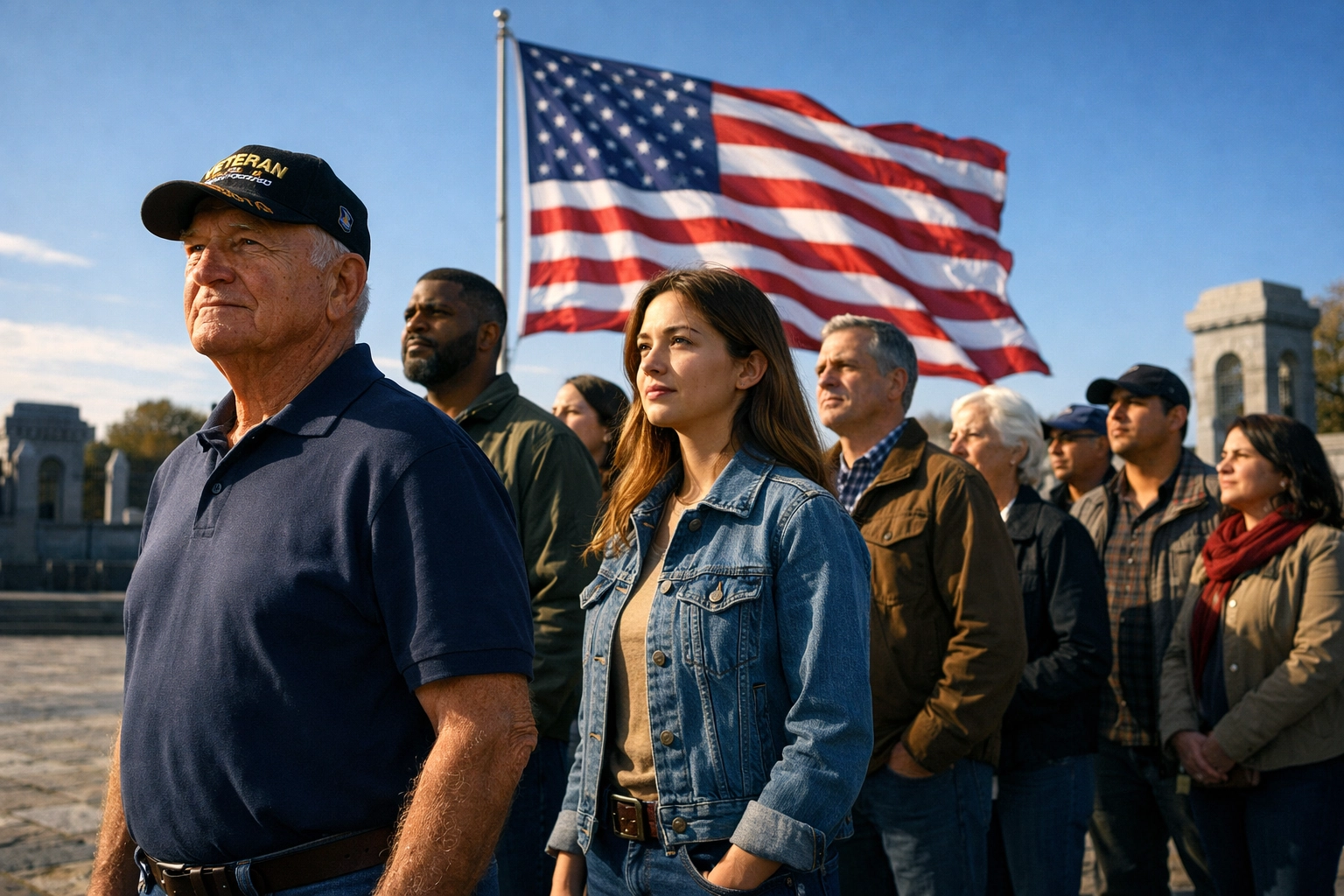
We encourage you to explore our about page to see how we’re working to keep these stories alive. Whether you are a veteran who has defended these ideals or a teacher trying to inspire the next generation, these stories are your heritage.

How You Can Keep the Story Alive
The Pledge of Allegiance is more than just a classroom ritual, it’s a thread that connects us to every generation that came before. But those threads can fray if we don’t take the time to strengthen them.
Here is how you can take action today:
- Educate Your Family: Don't let these secrets stay hidden. Share the story of the "Bellamy Salute" or the "Kansas schoolboy" at the dinner table tonight.
- Capture Your Own Story: Every veteran and every family has a "pledge story." Consider using our Storykeeper program to record your family's patriotic traditions.
- Support Civic Literacy: We are a non-profit dedicated to making sure the next generation understands what it means to be an American. If you feel moved by our mission, please consider making a donation to help us reach more schools.
- Start a Conversation: Check out our blog for more deep dives into the history that made us.
The Pledge of Allegiance has changed before, and it serves as a mirror to our national journey. By understanding where these words came from: and the secrets they hold: you become a more informed, more engaged, and more powerful citizen.
Let's head into the 250th anniversary with our eyes open and our hearts full of the real, unvarnished story of America. Together, we can ensure that "liberty and justice for all" isn't just a phrase we say, but a goal we actually achieve. Reach out to us on our contact page if you want to join the movement!