
What if everything you've been told about teaching patriotism is wrong?
Most educators think civics education starts and ends with textbooks. Read the chapter, answer the questions, move on. But here's the truth – the Pledge of Allegiance becomes something entirely different when a veteran stands at the front of your classroom and shares why those 31 words changed their life.
You can't manufacture that kind of impact. You can only create space for it.
Why Textbooks Fall Short
Let's be honest. Your students have grown up in a world of instant content, endless scrolling, and short attention spans. Asking them to connect emotionally with words written in 1892 through a paragraph in a history book? That's an uphill battle you don't need to fight alone.
Textbooks provide facts. They outline dates, amendments, and historical context. But they can't look a student in the eye and explain what it felt like to stand on foreign soil, thousands of miles from home, holding onto the promise of liberty and justice for all.
Veterans can.
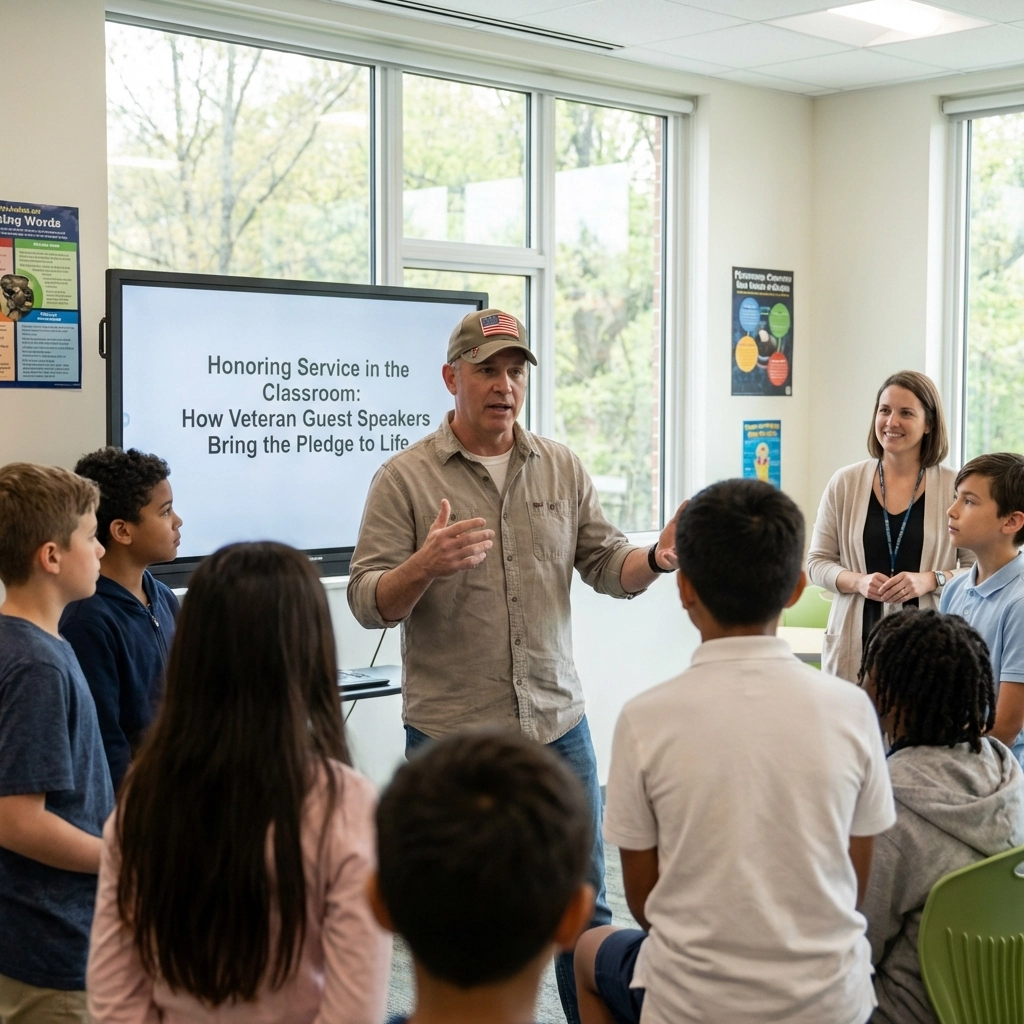
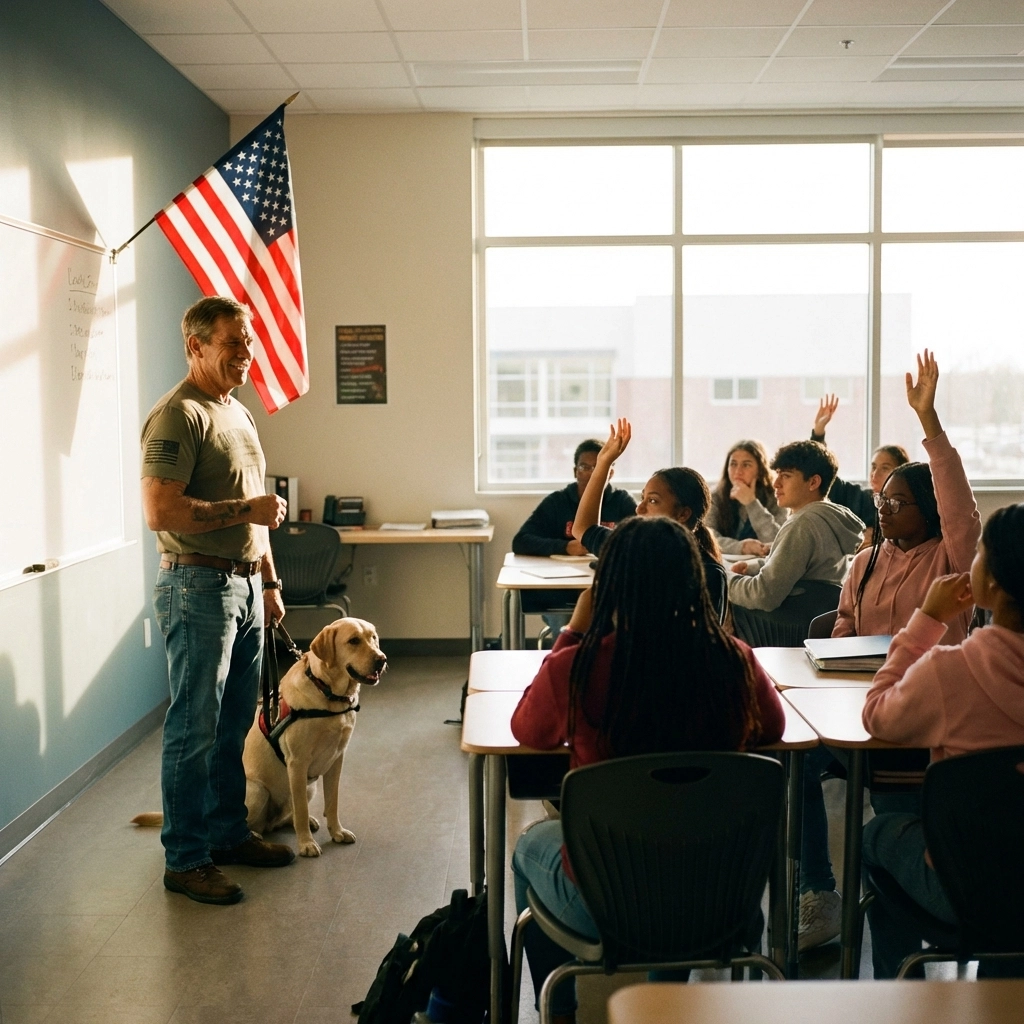
When a service member walks into your classroom, everything shifts. The energy changes. Students sit up straighter. Questions flow naturally. And suddenly, the Pledge isn't just a morning routine – it's a living commitment that real people have defended with their lives.

The Power of Personal Stories
Picture this: a Vietnam veteran stands before a group of high schoolers. He doesn't lecture. He simply tells them about the morning he shipped out – how his mother pressed a small American flag into his palm and whispered, "Come home to us."
Now what if I told you that single story does more for civic understanding than an entire semester of reading assignments?
Personal narratives create emotional anchors. When students hear firsthand accounts of service and sacrifice, they develop empathy that no worksheet can replicate. They begin to understand that the words "I pledge allegiance" carry weight – real weight that men and women have shouldered for generations.
Research confirms this. Veteran speakers don't just deliver information; they transform perspectives. Students from all backgrounds gain new appreciation for what service means in American culture. They ask better questions. They engage more deeply. They remember.
Building Bridges Across Generations
Here's something educators often overlook – veteran guest speakers don't just teach history. They bridge generational gaps that grow wider every year.
Your students live in a different America than the one their grandparents knew. They consume different media, face different challenges, and often hold different assumptions about patriotism itself. A veteran speaker creates a connection point between these worlds.
When a young Marine shares her story of enlisting after 9/11, she's not ancient history to your students. She's relatable. She's real. And when she explains what the flag represents to her personally, students listen in ways they simply won't for a recorded lecture or assigned reading.
These interactions build respect – not through force or obligation, but through genuine human connection. Students walk away understanding that patriotism isn't abstract. It's personal. It's lived.
More Than Civics: Life Skills That Last
The benefits extend far beyond civic education. When veterans engage with your students, they're modeling professional communication, confidence, and authentic storytelling.
Think about it. Your students need practice interacting with adults outside their immediate circle. They need exposure to different career paths, different life experiences, different ways of seeing the world. A veteran speaker provides all of this wrapped in a single classroom visit.
Students learn to:
- Ask thoughtful, respectful questions
- Listen actively to someone with different experiences
- Process complex emotions around service and sacrifice
- Connect historical events to present-day implications
- Express gratitude in meaningful ways
These aren't soft skills. These are life skills. And they emerge naturally when you bring the right voices into your learning environment.
Making It Work: Practical Integration Tips
You want maximum impact from veteran speakers? Preparation matters.
Before the visit, ensure your students have foundational knowledge about the topic at hand. If your speaker served in Afghanistan, spend a class period covering that conflict's basic timeline. Give students vocabulary they'll need to engage meaningfully.
During the presentation, encourage dynamic interaction rather than passive listening. The best veteran speakers thrive on questions. They want dialogue, not monologue. Create space for genuine conversation.
After the visit, reinforce the experience. Have students write thank-you letters – not as busy work, but as genuine reflection. Ask them to identify one thing that surprised them, one thing that challenged them, and one thing they'll remember.
These simple steps transform a guest speaker from a one-time event into a lasting educational experience.
Where to Find the Right Speakers
Finding qualified, engaging veteran speakers can feel overwhelming. You need someone who can connect with young people, communicate clearly, and represent service with dignity and authenticity.
That's exactly why speaker networks exist.
Through Pledge Allegiance, educators can access our Speaker Network – a curated group of veterans ready to bring the Pledge to life in classrooms across America. These aren't random volunteers. They're trained communicators passionate about civic education and youth engagement.
Our speakers come from every branch, every era, every background. Some served in Vietnam. Others deployed to Iraq or Afghanistan. Some spent careers in peacetime service. All of them share one thing: a deep commitment to helping the next generation understand what allegiance truly means.
Real Impact, Real Results
The feedback from educators speaks for itself.
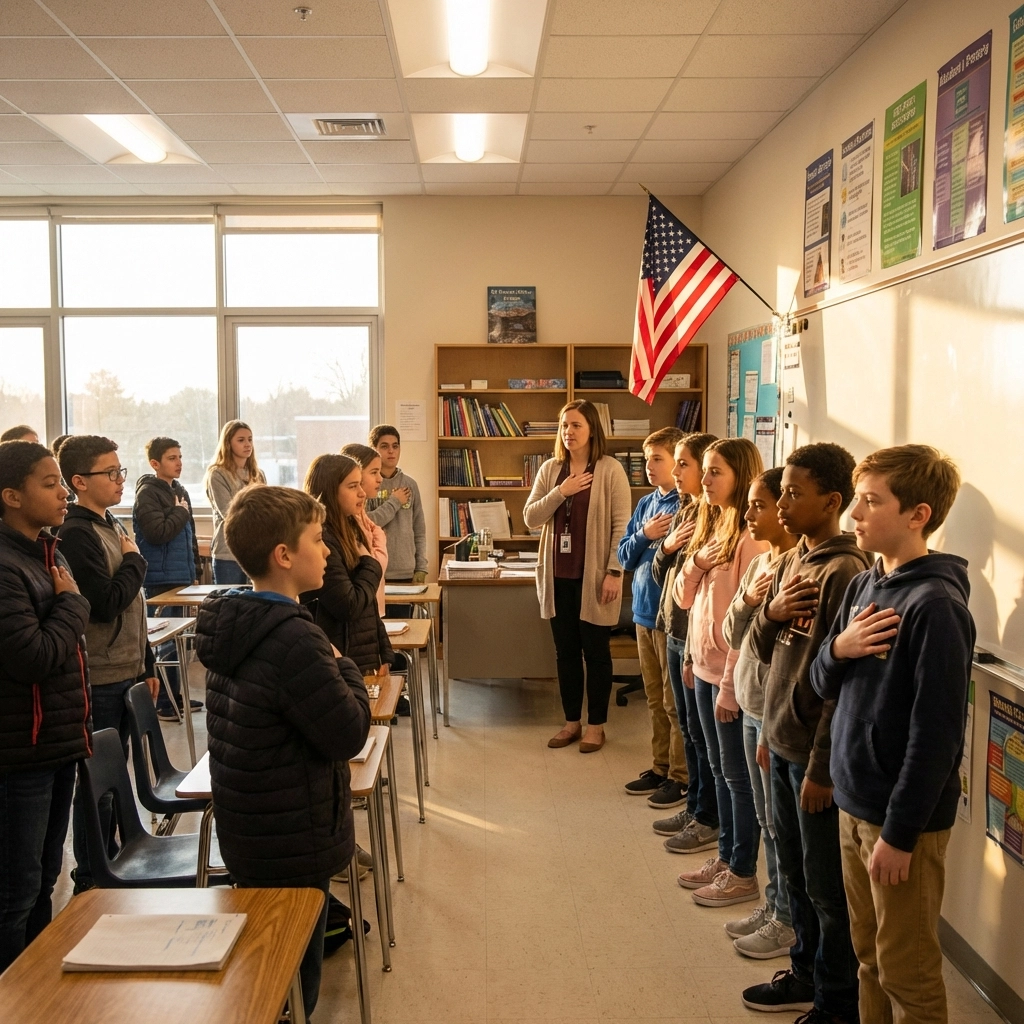
Teachers report that students who experience veteran speakers show increased engagement with civics content for weeks afterward. They ask more questions during morning pledge time. They express curiosity about military history. They demonstrate greater respect for classroom routines connected to patriotism.
One middle school teacher put it simply: "My students used to mumble through the Pledge. After our veteran visit, they stand taller. They speak clearer. They understand why it matters."
That's the transformation you're looking for. Not compliance – comprehension. Not routine – reverence.
Your Next Step
You don't have to figure this out alone. Bringing veteran voices into your classroom is easier than you think – and the impact lasts far longer than a single class period.
Start by exploring what's available. Visit our offerings page to learn more about connecting with speakers who can bring authenticity, energy, and lived experience to your students.
If you're passionate about supporting this work, consider making a donation to help us expand our network and reach more classrooms nationwide.
The Pledge of Allegiance deserves more than memorization. It deserves meaning. And veterans – the men and women who've lived those words – are the ones who can provide it.
Your students are waiting. The stories are ready. All that's missing is the connection.
Make it happen.