

What if everything you've been told about explaining patriotism to kids is wrong?
You're driving home from school when your child hits you with it: "Mom, why do we have to say the Pledge every day?" Or maybe it's the dinner table classic: "What does 'indivisible' even mean?" These questions catch most parents off guard. You want to give a good answer: one that honors the tradition while respecting your child's curiosity.
Here's the truth. Kids ask tough questions because they're thinking critically. That's exactly what we want them to do. The Pledge of Allegiance isn't just words to memorize: it's an opportunity to teach values, history, and what it means to be part of something bigger than yourself.
Let's break down the most common questions kids ask and give you confident, clear answers that actually stick.
Why Do We Say the Pledge Every Day?
This one comes up constantly. Your child sees repetition and wonders why it matters.
Start simple. The Pledge is a daily reminder of our shared values as Americans. Just like brushing your teeth keeps your smile healthy, reciting the Pledge keeps our connection to country strong. It's a moment to pause, reflect, and remember that we're all in this together.
You can explain that traditions create bonds. When millions of students across the country stand together each morning, they're participating in something that connects generations. Their grandparents said these same words. Their parents did too. Now it's their turn to carry that torch forward.
Kids respond well to the idea of being part of a team. The Pledge is like a team huddle before the big game: it gets everyone on the same page and focused on what matters.

What Does "Allegiance" Mean?
Vocabulary trips up plenty of adults, so don't feel bad if this one makes you pause.
Allegiance means loyalty. It's a promise to support and stand by something you believe in. When your child pledges allegiance to the flag, they're saying they're loyal to the country it represents: and all the freedoms that come with it.
Try this analogy: allegiance is like being loyal to your family or your best friend. You stick together through good times and tough times. You support each other. That's what we're promising when we say those words.
Break down the other tricky terms while you're at it:
- Indivisible means we can't be divided or broken apart
- Liberty means freedom
- Justice means fairness for everyone
When kids understand the words, the Pledge transforms from a chore into something meaningful.
Why Do We Face the Flag?
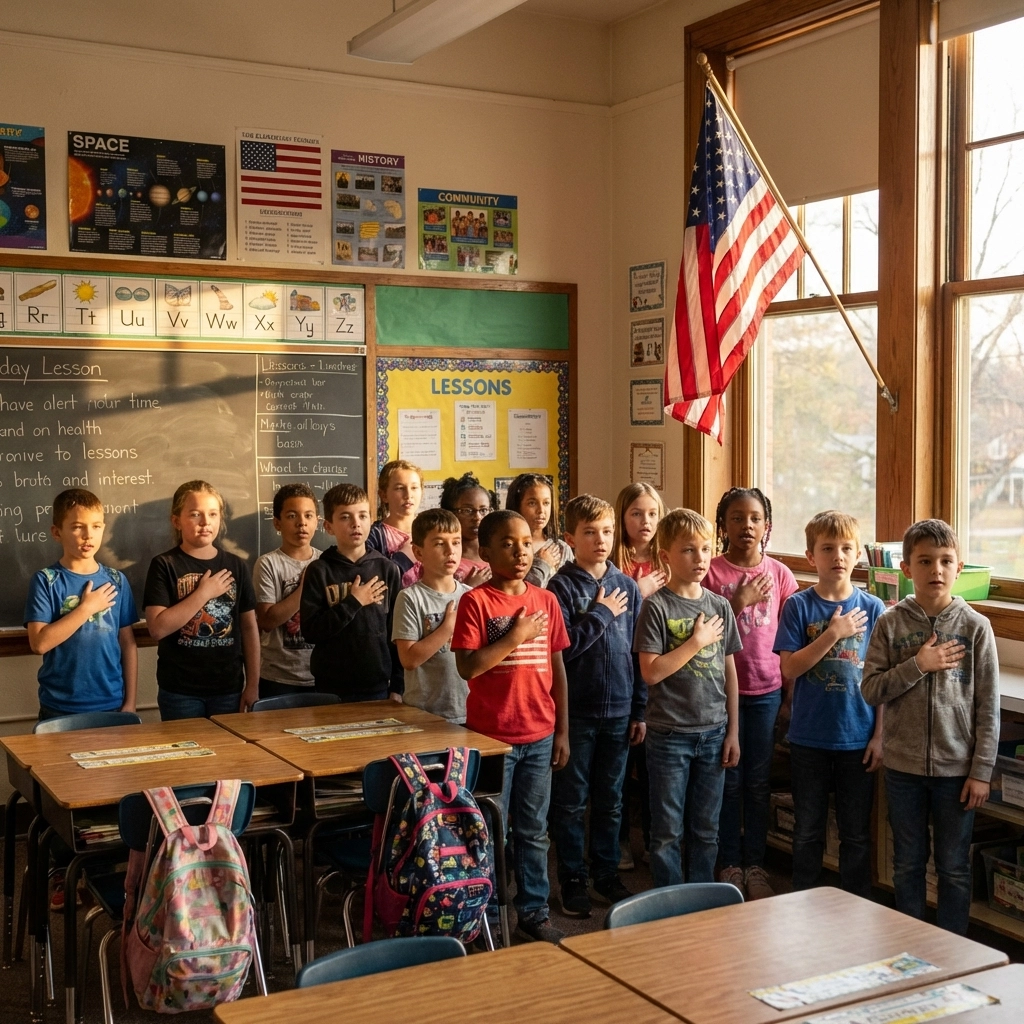
Picture this: your child asks why everyone looks at that rectangle of fabric on the wall. Great question.
The flag is a symbol. It represents the entire country: every state, every person, every sacrifice made to protect our freedoms. When we face it, we're showing respect for everything it stands for.
You can compare it to looking someone in the eye when you make a promise. It shows you're serious and sincere. The flag represents 330 million Americans, and when we face it, we're acknowledging our commitment to all of them.
Some kids are visual learners. Point out the 50 stars for the 50 states and the 13 stripes for the original colonies. Suddenly that flag isn't just decoration: it's a history lesson hanging on the wall.
What About "Under God"? Why Is That in There?
Here's where things get interesting. This question requires a bit of history and a lot of honesty.
The phrase "under God" was added to the Pledge in 1954. The original version, written in 1892, didn't include it. Congress added those words during the Cold War as a response to the anti-religious stance of Soviet Communism. It was a way of highlighting American values and distinguishing our nation from those who opposed religious freedom.
Some people believe the phrase should remain because it reflects the country's heritage and the beliefs of many citizens. Others think it should be removed because the Constitution calls for separation of church and state. Both perspectives exist, and that's okay.
Here's your parenting power move: use this as a teachable moment about respectful disagreement. Americans don't always agree on everything: and that's actually a sign of a healthy democracy. What matters is that we can discuss our differences without tearing each other apart.
If your child asks what you believe, be honest. Share your perspective while acknowledging that others may feel differently. This models the kind of civil discourse our country needs more of.
Do I Have to Say the Pledge?
This question often comes with strong feelings attached. Tread carefully but confidently.
Legally, no one can force your child to recite the Pledge. The Supreme Court ruled in 1943 that students have the right to opt out. That's a freedom protected by the very Constitution the Pledge honors.
But here's the deeper conversation: rights come with responsibilities. Your child has the right to sit out, but they should understand what the Pledge represents before making that choice. Encourage them to learn the history, understand the meaning, and then decide how they want to participate.
You might ask them: "What do you think the Pledge means? Do you agree with those values?" Let them wrestle with it. Critical thinking builds stronger citizens than blind compliance ever could.

When Did Kids Start Saying the Pledge in School?
History buffs unite: this one's actually fascinating.
The Pledge of Allegiance was written in 1892 by Francis Bellamy. It was originally created for a Columbus Day celebration and quickly spread to schools across the nation. The idea was simple: unite young Americans around shared values during a time of massive immigration and national growth.
Over the years, the Pledge evolved. The wording changed slightly, "under God" was added in 1954, and the hand-over-heart gesture replaced the original salute. What hasn't changed is the core purpose: bringing Americans together under common ideals.
Share this with your kids and watch their eyes light up. They're part of a tradition that stretches back over 130 years. That's pretty cool when you think about it.
Resources to Keep the Conversation Going
You don't have to figure this out alone. Having the right tools makes these conversations easier and more impactful.
Our Parent Resources are designed specifically for moments like these. You'll find age-appropriate guides, vocabulary breakdowns, and discussion starters that turn awkward car ride questions into meaningful family conversations. These materials help you answer with confidence: no scrambling for words required.
Consider making civic education a regular part of your family routine. Watch documentaries together. Visit local monuments. Talk about current events in ways that connect back to founding principles. The Pledge becomes more meaningful when it's part of a larger conversation about citizenship and responsibility.
Your Role as the First Civics Teacher
Here's something most parents don't realize: you're your child's first and most important civics teacher. Schools introduce concepts, but you bring them to life. The way you talk about country, flag, and freedom shapes how your child will think about these things for the rest of their life.
Don't shy away from tough questions. Embrace them. Every question is an opportunity to pass down values, share history, and strengthen your child's understanding of what it means to be American.
The Pledge of Allegiance isn't just 31 words recited on autopilot. It's a doorway to conversations about loyalty, unity, freedom, and justice. Your kids are asking because they want to understand. Give them answers worth remembering.
Ready to dive deeper? Explore our resources and offerings to equip your family for a lifetime of meaningful civic conversations. Because the best time to start is right now: and your kids are already asking the questions.