
Most people think “supporting veterans” means a ceremony, a discount, and a thank-you speech… until they see what happens when a community builds real, practical support that lasts past the applause.
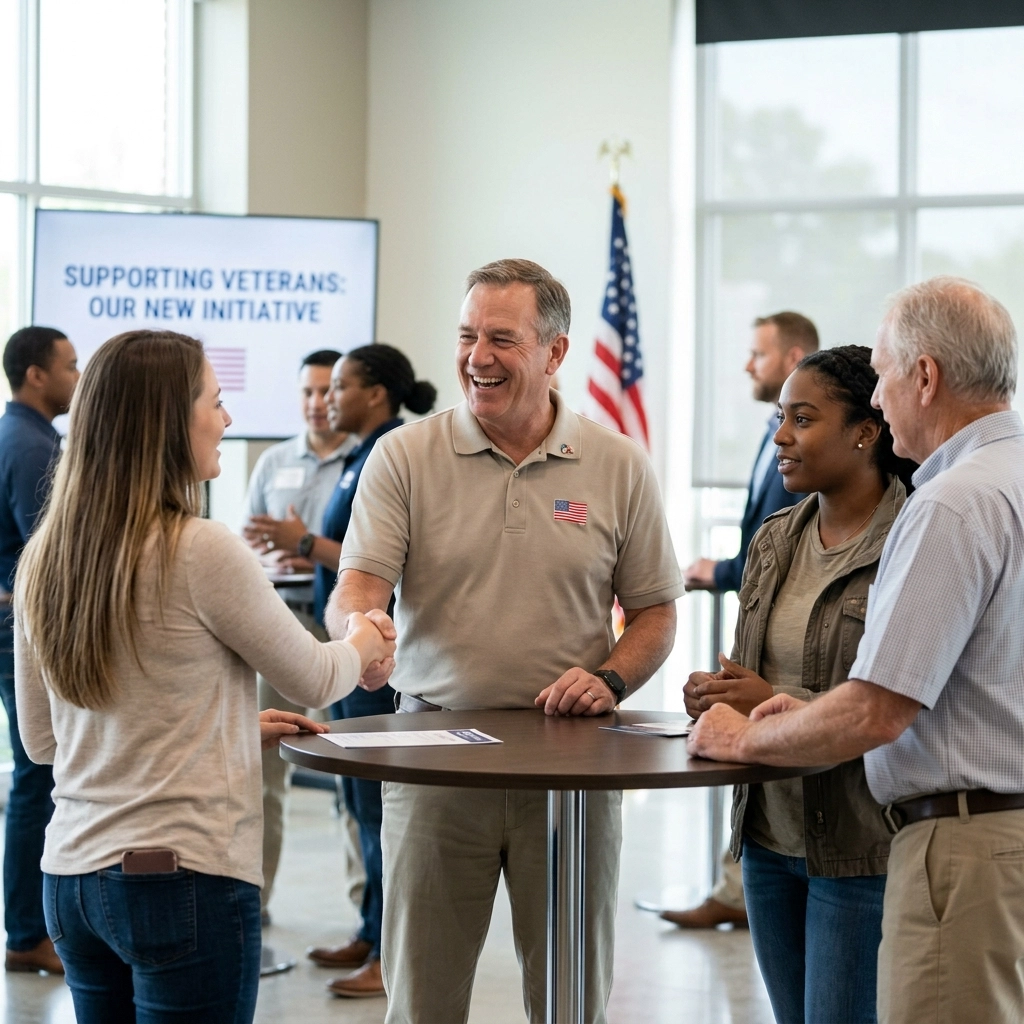
That’s why you’re hearing so much about Pledge Allegiance’s latest veterans initiative. It isn’t a one-day moment. It’s a working program designed to help you turn appreciation into action: through civic education, story preservation, and community-based support that keeps veterans visible, heard, and included.
This update also comes at a pivotal time nationally. Lawmakers are pushing major changes to modernize and expand veterans services: especially around healthcare access, accountability, and workforce readiness. When the national conversation gets loud, local action matters more than ever. And you’re in a position to help lead it.
Press Release Snapshot (March 27, 2026)
Pledge Allegiance announces expanded Veterans Initiative programming focused on three outcomes:
- Honor service through storytelling that strengthens civic understanding for students and families
- Connect veterans with community-based support through partner referrals and local events
- Equip educators and organizers with classroom and community tools that make service and citizenship feel real: not abstract
You’ll see new content, new community milestones, and updated ways to participate rolling out across our channels: starting now and continuing through the year.
If you want to follow updates as they publish, bookmark our blog: https://pledgeallegiance.us/blog
Understand Why This Is Blowing Up Right Now
Pay attention to what’s happening in the broader veterans landscape: because it explains why this initiative is getting such strong traction.
This week, the House Veterans’ Affairs Committee advanced 27 major bills aimed at modernizing and expanding VA programs. That scope is unusual: and important. The legislation focuses on three urgent categories:
- Improving healthcare access
- Strengthening government accountability
- Expanding education and workforce readiness benefits
Several proposals are driving serious attention:
- Automatic VA healthcare enrollment for eligible service members leaving the military (a direct response to suicide-prevention gaps)
- Expanded mental health access for incarcerated veterans, including telehealth and mobile care units
- Expanded dental coverage
- Structural reforms to streamline how VA networks operate
You don’t need to be a policy expert to understand the takeaway: the country is openly admitting that “good intentions” aren’t enough. Veterans need easier access, fewer barriers, and stronger continuity of care: and communities need better on-ramps to support them.
That’s exactly where your local action becomes a force multiplier.
Know What Makes Our Veterans Initiative Different
Start with a simple truth: you can’t support people you don’t understand: and you can’t understand people you never hear from.
Our veterans initiative is built around civic education with a pulse. You’re not just learning about service. You’re creating space for veterans to share what service has meant, and you’re helping younger Americans connect that lived experience to values like duty, liberty, responsibility, and unity.
Here’s the core difference:
- Not performative: you’re not checking a box once a year
- Not abstract: you’re not keeping service at a “thank you for your sacrifice” distance
- Not one-way: you’re building two-way community connection: veterans give perspective, communities give support
That combination is why people are talking. It feels real. And it scales: one classroom, one family, one civic group at a time.
See the Three Pillars You Can Plug Into Immediately
1) Story + Service: Make Veterans Visible Through Oral History
Capture stories while they can still be told: then use them to teach civic values in a way students actually remember.
A veteran’s story does something a textbook can’t:
- It humanizes duty and sacrifice
- It grounds big civic ideas in real decisions
- It creates empathy without political noise
If you want a ready-made way to do this with your family, school, or community group, our oral history approach is built for everyday people: not professional historians.
Explore the “Oral History Kit for the 250th” resource here:
https://pledgeallegiance.us/why-telling-americas-stories-still-matters-pick-up-an-oral-history-kit-for-the-250th
What you can do this week
- Identify one veteran in your community (family, neighbor, coworker, church member)
- Invite them to share one story: “When did you feel most proud to serve?”
- Save it: audio, notes, or video: and commit to passing it forward
You’ll be surprised how fast a single conversation turns into a meaningful tradition.
2) Education That Connects the Dots: Help Students Understand Service and Citizenship
Move beyond reciting words. Teach what they mean: and why they matter.
When you teach civic education with veterans’ perspectives in the mix, students don’t just memorize. They connect:
- Liberty becomes something protected
- Justice becomes something practiced
- Unity becomes something built
If you’re an educator (or a parent supporting one), lean into practical tools that make the Pledge and civic values “click” in a classroom setting.
Two helpful starting points:
- Classroom connection: https://pledgeallegiance.us/how-the-words-liberty-and-justice-inspire-students-today-with-classroom-kits-that-make-it-click
- Homeroom ideas: https://pledgeallegiance.us/getting-past-the-recital-creative-ways-to-teach-the-pledge-in-homeroom-with-help-from-our-educator-toolkit
What you can do this week
- Ask a teacher in your life: “Would your students benefit from a veterans story or a civic lesson tie-in?”
- Offer to help organize a short, respectful Q&A: structured, time-bound, and student-centered
- Keep the focus on values and lived experience: not politics
This is how you create understanding that sticks.
3) Community Bridgework: Turn Gratitude Into Practical Support
Support doesn’t have to be complicated. It has to be consistent.
Your role might look like:
- Helping a veteran feel welcomed at a community event
- Connecting someone to a local resource
- Inviting veterans into civic life: boards, mentorship, classrooms, service projects
- Making sure no one feels forgotten after the parade ends
This pillar matters even more in light of national attention on healthcare access and transition gaps. If automatic enrollment and expanded mental health options are under discussion federally, your community still has a job locally: help veterans navigate, connect, and belong.
If you want a strong example of values-based veterans content (and a model for how to share it respectfully), read:
https://pledgeallegiance.us/what-it-means-to-remember-a-veteran-shares-why-we-stand-brought-to-you-by-our-veterans-tribute-series
What you can do this week
- Create a “warm handoff” list: 3 local organizations you trust (mental health, employment, housing)
- Offer to accompany someone: because friction is real, and support is easier with a second set of hands
- Host a small gathering that’s about listening, not spotlighting
Consistency is what veterans remember. And it’s what communities are built on.
Use This Simple Playbook to Get Involved (Without Overthinking It)
Do this in order: fast, clear, and doable.
-
Choose your lane
- Storytelling (oral history)
- Education (classroom/community learning)
- Bridgework (connections and support)
-
Pick one measurable action
- One interview
- One classroom moment
- One resource connection
-
Bring one other person
- A friend, a teacher, a parent, a youth leader, a faith leader: anyone reliable
Momentum loves teamwork.
- A friend, a teacher, a parent, a youth leader, a faith leader: anyone reliable
-
Share the outcome: respectfully
- Share what you learned, not private details
- Focus on values: service, courage, unity, responsibility
If you’re unsure where to start, reach out and we’ll point you in the right direction: https://pledgeallegiance.us/contact
Expect These Program Updates and Milestones Next
Here’s what you should watch for as our veterans initiative continues to expand:
- More Veterans Tribute features that you can share with your community
- More educator-friendly civic resources that tie service to real-life citizenship
- More “how-to” guides that help you host conversations that stay respectful and productive
- More ways to fund the work through direct contributions and mission-aligned purchases
To support the initiative directly, donate here: https://pledgeallegiance.us/donate
If you prefer supporting through a straightforward contribution product, use: https://pledgeallegiance.us/products/donations
Keep the Conversation Respectful: And Strong
Veterans support should unite people. But you’ve seen how quickly public conversations can turn sharp.
Do this instead:
- Lead with curiosity, not conclusions
- Ask veterans what support looks like to them
- Keep the focus on service and community, not partisan talking points
- Create room for different experiences: because service stories aren’t one-size-fits-all
If you want a practical model for civil, community-centered conversation, use this as a guide:
https://pledgeallegiance.us/respecting-differences-leading-civil-discussions-through-community-dialogue-nights
Your goal isn’t to win an argument. It’s to strengthen a community.
Quick Facts You Can Share (Because People Will Ask)
Use these as simple, accurate talking points when someone asks, “What’s new with Pledge Allegiance and veterans work?”
- You’re seeing increased national focus on veterans healthcare access, transition support, and mental health: communities still play a key role.
- Pledge Allegiance is expanding a veterans initiative that ties civic education to real veteran stories and community support pathways.
- You can participate through oral history, classroom resources, or local bridgework: no special expertise required.
Take Action Today: Choose One Step
Don’t wait for the “perfect” moment. Do the next right thing.
- Read and share our veterans story feature:
https://pledgeallegiance.us/what-it-means-to-remember-a-veteran-shares-why-we-stand-brought-to-you-by-our-veterans-tribute-series - Start an oral history conversation using our 250th-focused toolkit:
https://pledgeallegiance.us/why-telling-americas-stories-still-matters-pick-up-an-oral-history-kit-for-the-250th - Donate to expand the work in more communities:
https://pledgeallegiance.us/donate
Your support doesn’t have to be loud. It has to be real: and repeated.