
What if everything you’ve been told about the Pledge of Allegiance is only half the story? Most people think these thirty-one words were handed down directly from the Founding Fathers: etched into stone alongside the Constitution. But the truth is much more fascinating, a bit more complicated, and far more relevant to your life today than you might realize.
As we approach America’s 250th anniversary this year, there’s never been a better time to pull back the curtain on our national traditions. Whether you’re a veteran who has stood at attention a thousand times, a teacher looking to inspire a classroom, or a parent wanting to pass down a sense of duty to your kids, understanding the "why" behind the "what" is the first step toward true civic mastery.
At Pledge Allegiance, we believe that patriotism isn't just a feeling: it's an informed commitment. Let’s dive deep into the history of the Pledge and see how it evolved from a magazine promotion into the heartbeat of a nation.
The 1892 Spark: A Deadline and a Dream
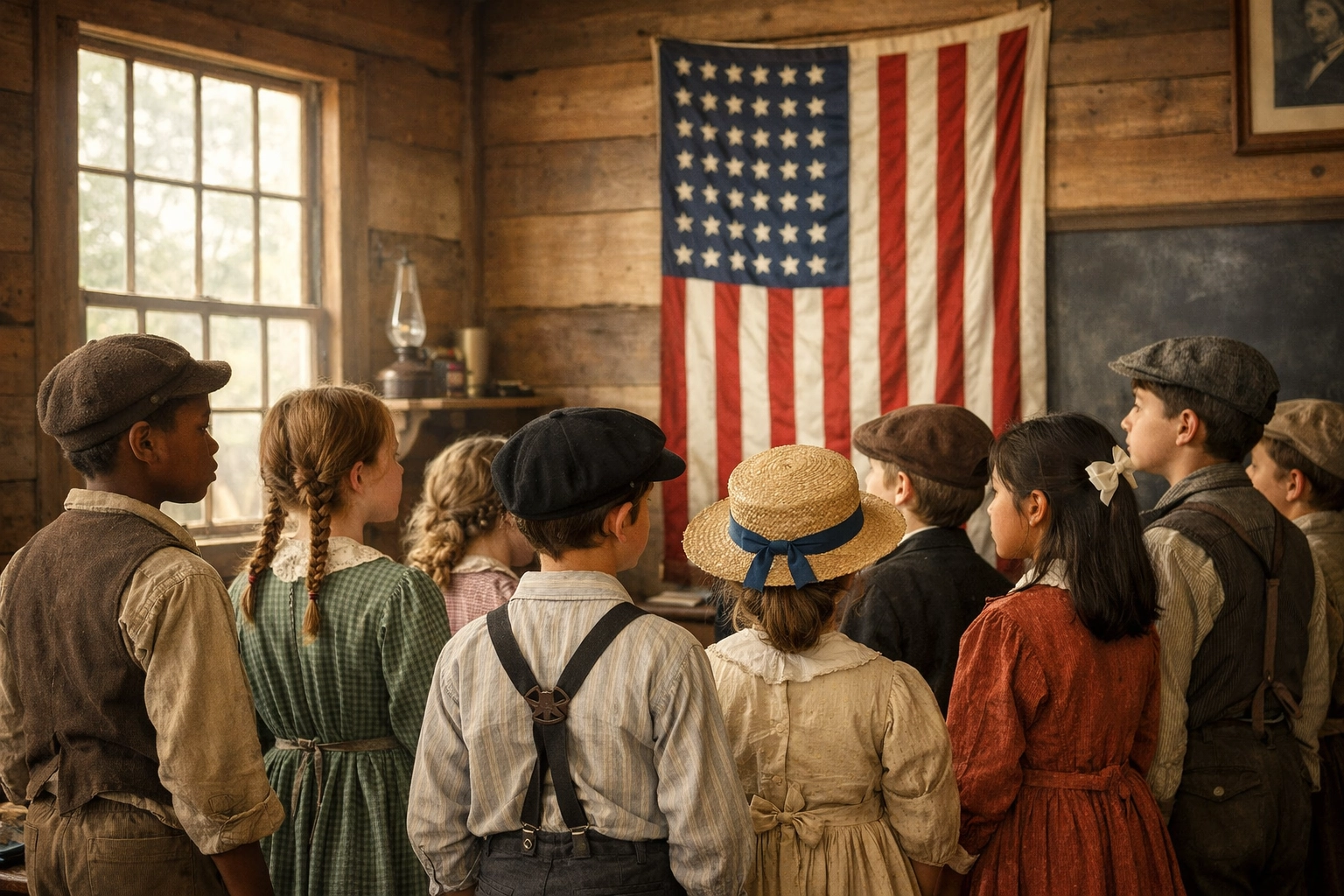
Picture this: It’s August 1892. The United States is gearing up for the 400th anniversary of Christopher Columbus arriving in the Americas. There’s a sense of "New Nationalism" in the air. People want to feel unified, but the scars of the Civil War are still healing, and the country is changing fast.
Enter Francis Bellamy. He wasn't a politician or a general; he was a Baptist minister with a passion for social reform and a job at a popular magazine called The Youth’s Companion. Bellamy was tasked with creating a patriotic program for schools across the country. He wanted something punchy, something rhythmic, and something that every child in America could say in unison.
Bellamy reportedly sat down and knocked out the original text in just two hours. But don't let the speed fool you: every word was carefully chosen to reinforce the idea of a "Republic" and "indivisibility."
The original version looked a little different than what you know today:
"I pledge allegiance to my Flag and to the Republic for which it stands: one nation indivisible: with liberty and justice for all."
Notice what’s missing? There’s no mention of the "United States" and no "under God." It was a lean, mean, patriotic machine designed to be recited by millions of kids on October 12, 1892. And it worked. Following an endorsement from President Benjamin Harrison, the Pledge became an overnight sensation in schoolhouses from Maine to California.
The First Big Tweak: Identifying the Flag
Fast forward to 1923. The world had just survived the "Great War," and the U.S. was seeing a massive influx of immigrants. Some leaders in the American Legion and the Daughters of the American Revolution started getting a little nervous. They worried that when foreign-born citizens said "my Flag," they might be thinking of the flag of their home country rather than the Stars and Stripes.
To clear up any confusion, the wording was changed to: "the Flag of the United States." A year later, they added "of America" just to be crystal clear.
This change transformed the Pledge from a personal promise of loyalty into a specific national oath. It was about defining who "we" are as a people. If you’re curious about how these subtle shifts in language still impact us today, check out our guide on how the words "liberty and justice" inspire students today.
1942: The Year Everything Changed
1942 was a massive turning point for the Pledge. Up until this point, it was a popular tradition, but it wasn't officially "the law of the land." With World War II raging, Congress decided it was time to bring the Pledge into the official U.S. Flag Code.
But there was a problem: and it was a visual one.
Before 1942, the standard way to recite the Pledge was using the "Bellamy Salute." You’d start with your hand over your heart, and then on the words "to the flag," you’d extend your arm straight out, palm up or down, toward the colors.
Sound familiar? It should. By the early 1940s, that gesture looked way too much like the salute used by the Nazis and Fascists in Europe. To avoid any association with tyranny, Congress officially changed the protocol. From then on, the rule was simple: keep your right hand over your heart.
This shift wasn't just about optics; it was about distance. We moved from "pointing" at our loyalty to "holding" it close to our chests. It’s a powerful reminder that our civic rituals are constantly evolving to reflect our values. If you're a veteran, this history hits home: you know exactly what it means to stand for something bigger than yourself. Read more about what it means to remember from a veteran’s perspective.

1954: The Cold War and "Under God"
The final major piece of the puzzle fell into place in 1954. We were in the thick of the Cold War, and the tension between the U.S. and the "godless" communism of the Soviet Union was at an all-time high.
President Dwight D. Eisenhower, encouraged by religious groups and the Knights of Columbus, urged Congress to add the words "under God" to the Pledge. He argued that this would remind us that our rights don't come from the government, but from a higher power: a direct contrast to the ideologies we were fighting abroad.
With that, the Pledge reached its current 31-word form:
"I pledge allegiance to the flag of the United States of America, and to the republic for which it stands, one nation under God, indivisible, with liberty and justice for all."
Why Mastery Matters in 2026
You might be wondering, "Dan, why does this history lesson matter right now?"
Here’s the deal: We are living in a moment where unity feels harder to come by. But as we celebrate America's 250th anniversary, we have a unique opportunity to reconnect with the ideas that bind us together. The Pledge isn't just a relic of the past; it’s a living document of our shared journey.
When you teach your kids the history of the Pledge, you aren't just giving them facts to memorize for a test. You are giving them a foundation. You are showing them that America is a work in progress: that we’ve had to change our words and our gestures to stay true to our mission of "liberty and justice for all."
For the teenagers in your life, this can be the spark that ignites a real interest in civic responsibility. Instead of seeing the Pledge as a boring morning routine, they can see it as a revolutionary statement of unity. We actually have some great youth workshops that dive into this exact topic.

How to Bring the History Home
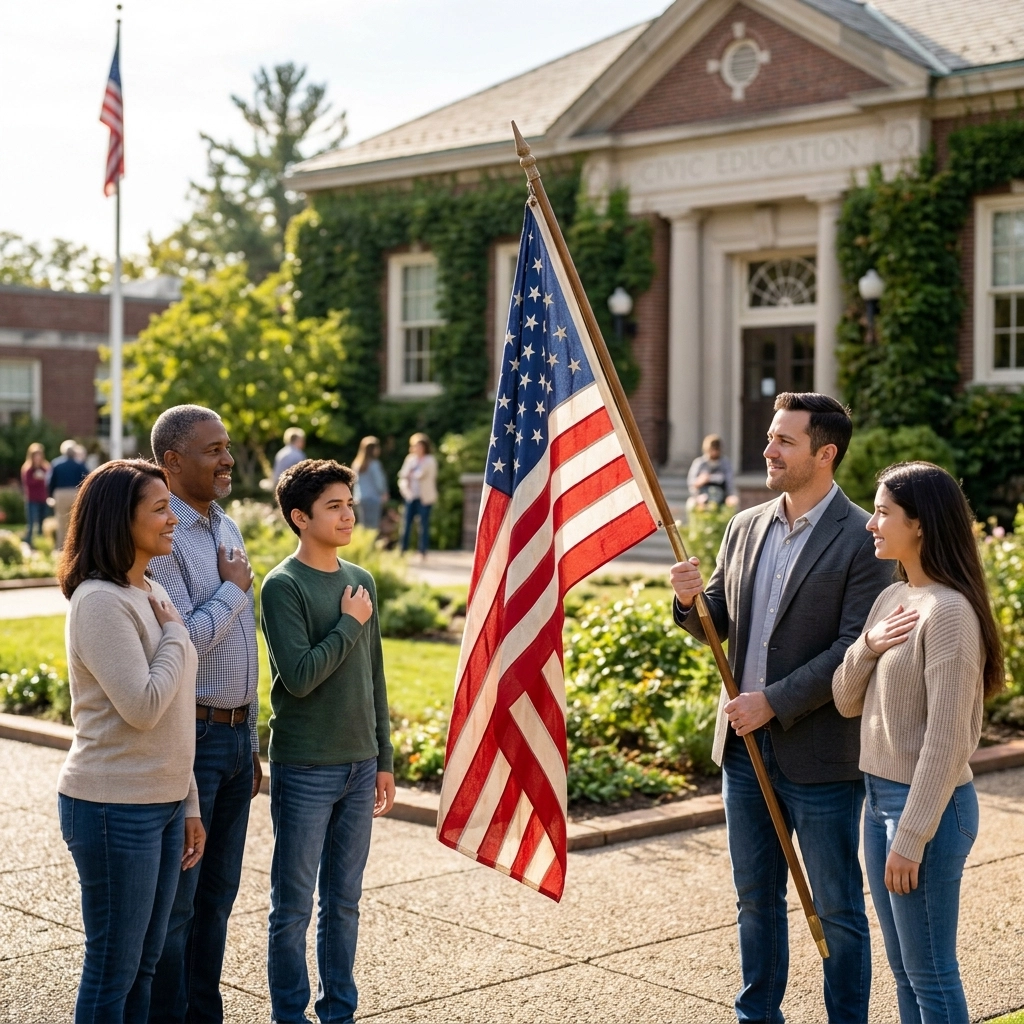
Don’t just let this information sit in your brain: put it into action! Here are a few ways you can use this "Civic Education 101" to make an impact in your community:
- Start a Conversation: The next time you’re at a community event or a school board meeting, share a piece of this history. Most people are shocked to learn about the "Bellamy Salute" or the original 1892 wording.
- Support Civic Education: Organizations like ours are working around the clock to ensure the next generation understands the weight of their inheritance. Consider making a donation to help us get more educational kits into classrooms.
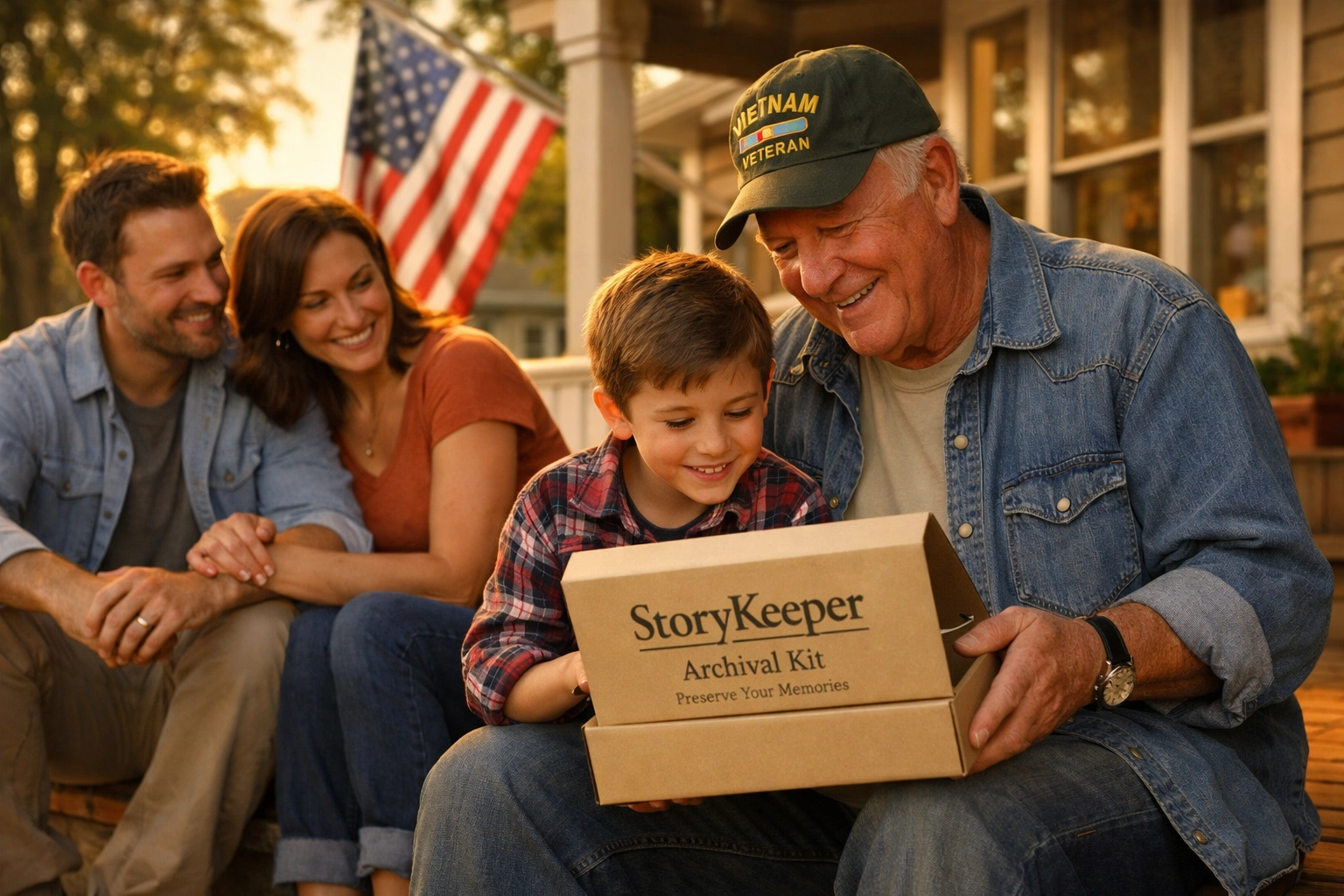
- Document Your Story: Every family has a "patriotic tradition." Whether it’s how your grandfather folded the flag or how you teach your kids to stand at a ballgame, those stories matter. Our Storykeeper Program is the perfect way to preserve those memories for the next 250 years.
The One Nation Challenge
I want to challenge you today. The next time you stand up, place your hand over your heart, and recite those thirty-one words, don't do it on autopilot.
Think about Francis Bellamy's 1892 deadline. Think about the 1923 update to include all Americans. Think about the 1942 decision to choose the heart over the hand-salute. And think about the 1954 addition that defined our stance in a divided world.
You are part of a long, unbroken chain of Americans who have committed themselves to the Republic. That’s a powerful thing. By mastering the history of the Pledge, you’re not just looking backward: you’re helping lead us forward into a future where "liberty and justice for all" isn't just a phrase, but a reality.
If you want to learn more about our mission or find resources to help you lead civic discussions in your own town, head over to our About page. We’re all in this together, one nation, indivisible.
Let’s make this 250th year one for the history books. Stay patriotic, stay informed, and keep leading the way!