

What if everything you've been told about the Pledge of Allegiance is incomplete? Those two small words, "under God", spark passionate debates across America. Yet most people don't know the fascinating story behind how they got there in the first place.
You've likely recited the Pledge thousands of times. In classrooms, at sporting events, during civic ceremonies. But have you ever paused to consider that those words weren't always part of the original text? The journey from a secular pledge to one that acknowledges a higher power involves multiple players, Cold War tensions, and constitutional questions that remain unresolved today.
Let's dig into the forgotten history that shaped one of America's most recognizable civic traditions.
The Original Pledge: A Different Beginning
Picture this: the year is 1892, and Baptist minister Francis Bellamy sits down to craft words that would unite a nation. His original composition contained no religious reference whatsoever. The first version read simply:
"I pledge allegiance to my flag and to the Republic for which it stands, one nation, indivisible, with liberty and justice for all."
That's it. No mention of God. No spiritual undertones. Bellamy, himself a minister, chose to keep the Pledge focused purely on national unity and democratic values. For over six decades, Americans recited these words without any divine acknowledgment.
This fact alone surprises many people. The Pledge feels so inherently connected to faith and patriotism that separating the two seems almost impossible. Yet history tells a different story, one where the addition came much later and through unexpected channels.
The Unsung Heroes Who Sparked Change
Most historical accounts jump straight to President Eisenhower and the Cold War. But the real story starts earlier, with figures you've probably never heard of.
Louis Albert Bowman, an Illinois attorney, deserves credit as the first person to formally suggest adding "under God" to the Pledge. On February 12, 1948, Bowman led the Illinois Society of the Sons of the American Revolution in reciting a revised version of the Pledge. His inspiration? Abraham Lincoln's Gettysburg Address, which contained the phrase "this nation, under God, shall have a new birth of freedom."
Bowman saw something powerful in Lincoln's words. He believed connecting America's founding principles to divine providence would strengthen the Pledge's meaning. His small act of revision planted a seed that would grow into a national movement.
Three years later, another organization picked up the torch. The Knights of Columbus, the world's largest Catholic fraternal service organization, formally adopted a resolution on April 30, 1951, to include "under God" in their recitations. They didn't stop there. The Knights launched a broader campaign urging public adoption of the revised wording.
These grassroots efforts eventually caught congressional attention. Representative Louis C. Rabaut of Michigan sponsored a resolution in 1953 to officially amend the Pledge. The momentum was building.
Cold War Tensions and the Final Push
You can't understand the "under God" addition without understanding the fear that gripped America in the early 1950s. The Soviet Union loomed as an existential threat, not just militarily, but ideologically.
Soviet communism was explicitly atheistic. The state actively suppressed religious practice and promoted secular materialism as the only acceptable worldview. American leaders saw this as fundamentally opposed to the nation's values.
President Dwight D. Eisenhower's Presbyterian pastor, George Docherty, delivered a sermon that crystallized this concern. He argued that the existing Pledge could just as easily be recited by citizens of the atheistic Soviet Union. There was nothing distinctly American about it, nothing that separated our values from theirs.
This argument resonated deeply with Eisenhower. On Flag Day, June 14, 1954, Congress officially amended the Pledge, and the President signed it into law. The Knights of Columbus received formal recognition from the American Legion that October for initiating the amendment.
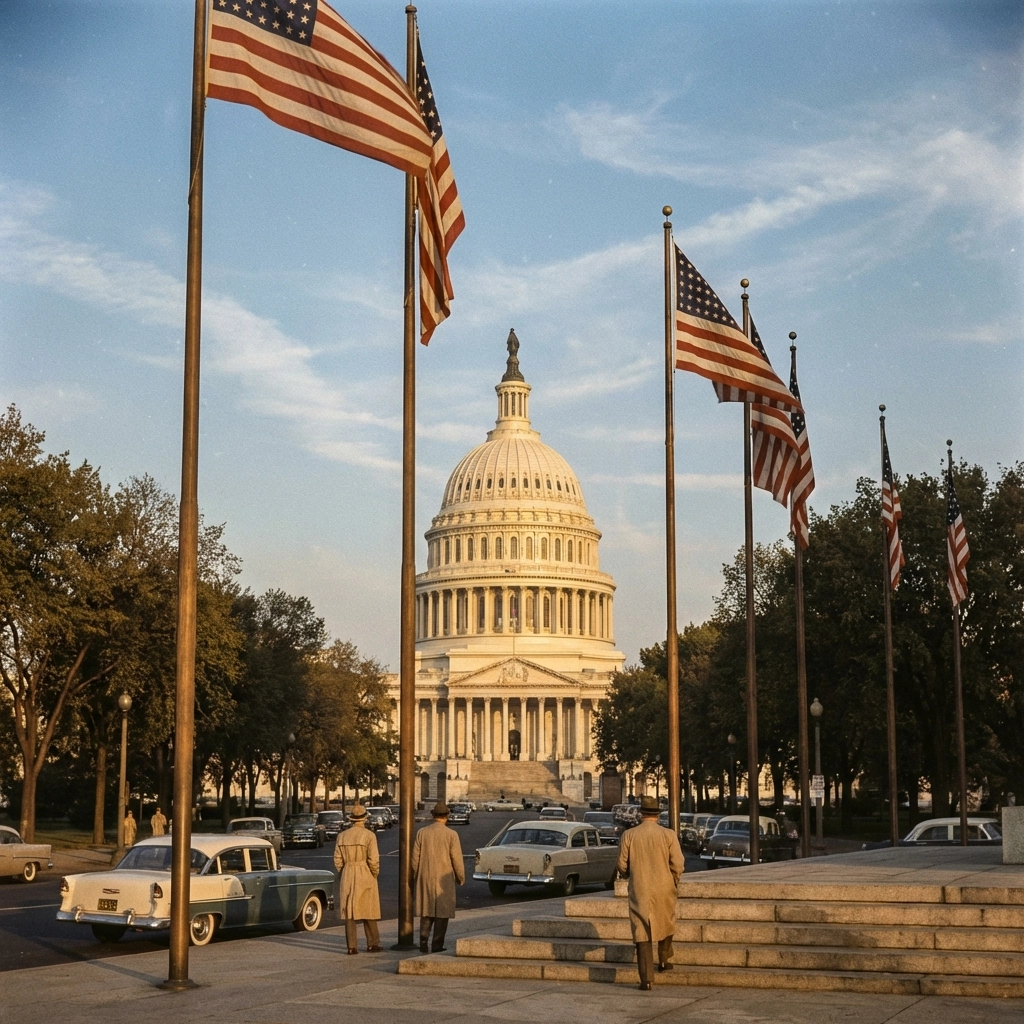
The Constitutional Questions That Won't Go Away
Here's where things get complicated. The First Amendment's Establishment Clause prohibits the government from establishing religion. So does requiring students to recite "under God" in public schools cross that line?
In 2002, the Ninth Circuit Court of Appeals said yes. They ruled the phrase unconstitutional as a violation of the Establishment Clause. The decision sent shockwaves through the nation.
However, the U.S. Supreme Court unanimously reversed this ruling in June 2004. Their reasoning? The phrase was "ceremonial and patriotic" in nature rather than an establishment of religion. The words remained.
But the debate didn't end there. Legal challenges continue to surface periodically. Some argue the phrase excludes non-religious Americans. Others contend it represents important historical and cultural values. Both sides make compelling points: and neither seems ready to back down.
Why This History Matters Today
Understanding where "under God" came from helps you engage more thoughtfully in contemporary discussions. You're not just arguing about two words: you're grappling with questions about national identity, religious freedom, and the proper relationship between faith and government.
These conversations happen in classrooms, around dinner tables, and in community forums across America. They require nuance, historical knowledge, and respect for differing viewpoints. Simply shouting talking points accomplishes nothing.
When you know that Bowman drew inspiration from Lincoln, that the Knights of Columbus campaigned for years, and that Cold War fears accelerated the change: you bring depth to the discussion. You move beyond surface-level arguments into substantive dialogue.
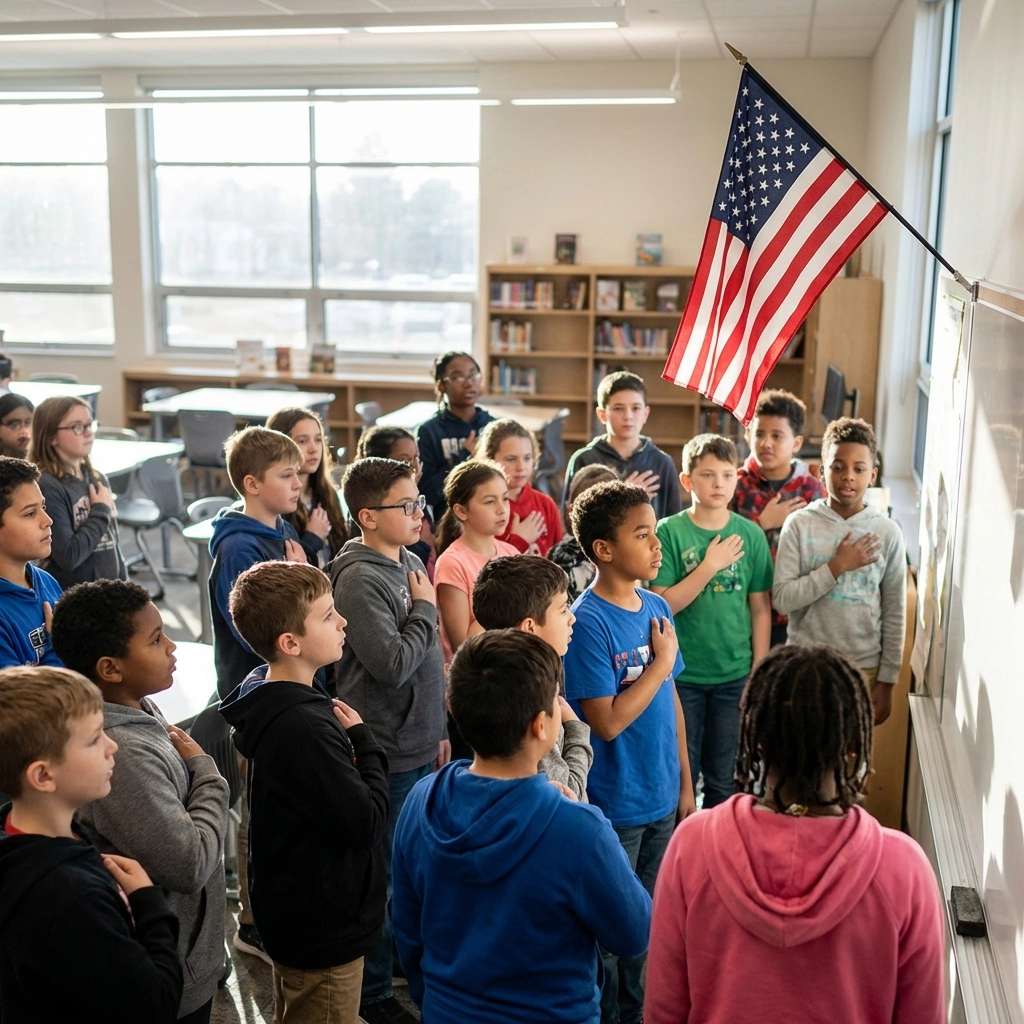
Exploring the Debate Through Digital Resources
The best way to form your own informed opinion? Dive into primary sources, historical documents, and diverse perspectives. That's where quality educational resources become invaluable.
At Pledge Allegiance, we've developed digital resources that illuminate this very debate. Our materials include historical timelines, primary source documents, discussion guides, and constitutional analysis tools. They're designed to help educators, families, and civic groups explore the Pledge's evolution without bias.
Whether you're a teacher preparing a civics lesson, a parent answering tough questions, or a community leader facilitating dialogue: having accurate, accessible information matters. Our digital library puts that information at your fingertips.
You can explore congressional records from 1954, read Bellamy's original writings, examine court decisions, and access lesson plans that encourage critical thinking. Everything is organized for easy navigation and practical application.
Moving Forward With Knowledge
The "under God" debate isn't going away anytime soon. New generations will continue asking questions. Courts will likely hear new challenges. Americans will keep wrestling with what the Pledge means and who it represents.
Your role? Stay informed. Engage respectfully. Teach young people the full history: not just the version that confirms existing beliefs.
The Pledge of Allegiance has evolved throughout its existence. From Bellamy's original 1892 composition to the 1954 amendment and beyond, it reflects America's ongoing conversation about identity and values. That conversation requires participants who understand the past.
Ready to deepen your understanding? Visit our blog for more historical insights, or check out our educational offerings to access comprehensive digital resources. The more you know, the more meaningfully you can contribute to this important American dialogue.
Because in the end, the Pledge belongs to all of us: and so does the responsibility to understand it fully.