
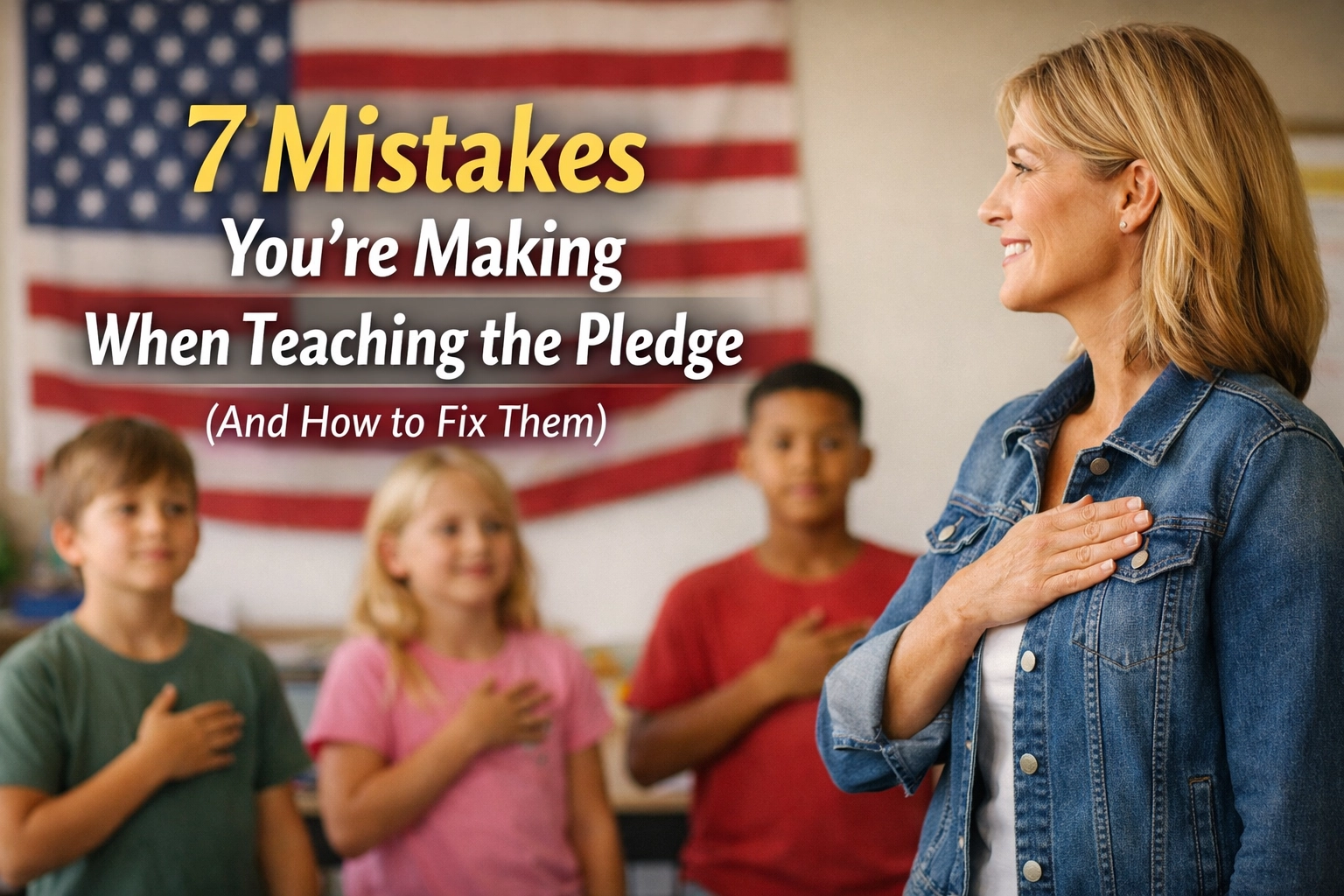
Most educators and parents think teaching the Pledge of Allegiance is as simple as standing up and repeating thirty-one words: until they realize their students are reciting them like a grocery list rather than a sacred vow.
I’ve seen it a thousand times. A room full of bright, patriotic young Americans standing at attention, yet their eyes are glazed over. They’re saying the words, but they aren't feeling the weight of the history behind them. As we approach America’s 250th anniversary, the stakes for civic education have never been higher. We aren't just teaching a routine; we’re passing the torch of liberty to the next generation.
If you’ve ever felt like the morning Pledge has become a hollow ritual, you need to see this. We’re going to break down the seven most common mistakes people make when teaching the Pledge and: more importantly: how to fix them so our traditions actually mean something again.
1. The "Auto-Pilot" Recitation
The biggest mistake is allowing the Pledge to become a mindless habit. When we do something every single day at the exact same time, our brains naturally shift into low-power mode. You’ve heard it: that droning, monotonous chant that sounds more like a sleep-walking exercise than a declaration of loyalty.
How to Fix It: Break the rhythm. Every once in a while, ask your students or children to recite it slower, focusing on the pauses. Explain that every comma is a breath of reflection. Better yet, have a different person lead the Pledge each day and share one thing they are grateful for about living in a free Republic before they begin. When you the-fastest-way-to-get-better-at-civic-duty-hint-it-only-takes-two-minutes-a-day, you realize that intentionality is the enemy of apathy.
2. Glossing Over the "Big Words"
Most kids can spell "Allegiance," but do they know what it actually means? To a seven-year-old, "Indivisible" sounds like something out of a superhero movie. If they don't understand the vocabulary, the Pledge is just a series of complex sounds.
How to Fix It: Turn the Pledge into a vocabulary lesson. Spend a week diving deep into one word at a time. What does it mean to give your "Allegiance"? It’s a promise, a bond, a "ride-or-die" commitment to our shared values. What is a "Republic"? It’s not just a fancy word for a country: it’s a system where the power belongs to the people. If you want a deep dive into the foundational elements of our system, check out the-ultimate-guide-to-civic-education-everything-you-need-to-prepare-for-americas-250th.

3. Ignoring the 1892 Origins
History isn't just a list of dates; it's a story of evolution. Many people teach the Pledge as if it dropped out of the sky in its current form in 1776. By ignoring the context of Francis Bellamy and the original 1892 version, you’re missing a massive opportunity to talk about how America has grown and changed.
How to Fix It: Show them the history. Explain why the words "Under God" weren't added until 1954 during the Cold War. Discuss why we no longer use the "Bellamy Salute" (the outstretched arm) and moved to the hand-over-heart. Understanding the history helps students realize that patriotism isn't static: it's a living, breathing commitment. You can find a great breakdown of this history right here: why-understanding-the-1892-original-pledge-will-change-the-way-you-see-our-traditions.
4. Neglecting the Physical Stance
Posture reflects attitude. If students are slouching, leaning against desks, or keeping their hands in their pockets, the mental connection to the Pledge is weakened. Physical discipline leads to mental focus.
How to Fix It: Lead by example. Stand tall, shoulders back, hand firmly over your heart. Explain that our physical posture is a sign of respect for those who can no longer stand: our veterans and fallen heroes. This isn't about being a drill sergeant; it's about teaching that some things are worth standing up for.

5. Disconnecting from the Veteran Community
The Pledge isn't just about a flag; it’s about the people who defended what that flag represents. When we teach the Pledge in a vacuum, it feels like an abstract concept.
How to Fix It: Bring the "Republic" to life by connecting with local veterans. Invite a veteran to speak to your class or group about what they felt when they saw the flag overseas. When children see a real face and hear a real story, the words "Liberty and Justice for all" suddenly have a heartbeat. To stay connected with these types of efforts, you should look into how-to-stay-informed-on-every-local-veteran-initiative-and-community-milestone.
6. Treating It Like a "School Rule"
If the only reason a student says the Pledge is because they'll get in trouble if they don't, you've already lost. Compulsory patriotism isn't patriotism at all: it's compliance.
How to Fix It: Frame the Pledge as a privilege. We live in one of the few places on earth where we have the right to pledge our loyalty to a set of ideals: liberty and justice: rather than a single monarch or dictator. Focus on the "For All" part of the Pledge. It’s an inclusive promise that belongs to every person in the room, regardless of their background.

7. Forgetting the Road to the 250th
We are currently in a very special window of American history. In 2026, our nation turns 250 years old. If you aren't using the Pledge as a countdown to this massive milestone, you're missing the "big picture" hook that gets people excited.
How to Fix It: Use the 250th anniversary as a goalpost. Every time we say the Pledge, we are preparing for a massive celebration of two and a half centuries of the American experiment. Spark curiosity by asking, "What will our country look like when we hit 300? How can we live out the Pledge today to make sure we get there?" This future-pacing turns a morning routine into a mission. Read more on why this matters at why-everyone-is-talking-about-civic-education-for-americas-250th-and-you-should-too.
The Heart of the Message
At Pledge Allegiance, we believe that reclaiming American unity starts with understanding our shared foundations. As the CEO, I see it as my mission to move us past the political noise and back to the core values that make this country great.
Teaching the Pledge isn't just about the words; it's about the spirit of the person saying them. If you’re ready to change the way you lead your community and inspire the people around you, I invite you to join our daily conversation. Why-reading-my-daily-ceo-letter-will-change-the-way-you-lead-your-community is more than just a headline: it’s a commitment to daily growth and civic pride.

Take Action Today
Don't let another morning go by where the Pledge is just "something we do."
- Hook their interest with history.
- Address the vocabulary gaps.
- Outline the importance of the 250th.
- Dive deep into the meaning of "Indivisible."
Our mission at Pledge Allegiance is to provide you with the tools to make civic education engaging, powerful, and lasting. Whether you are an educator looking for classroom resources, a parent wanting to instill values, or a veteran looking to stay involved, we are here to support you.
Check out our full range of resources and see how we can help you prepare for America’s big birthday at our offerings page.
Together, we can ensure that when the next generation stands up, puts their hand over their heart, and speaks those thirty-one words, they aren't just reciting a script. They are making a captivating, powerful, and immersive promise to the future of our Republic.
Let's get to work. The 250th is right around the corner: let’s make sure we’re ready to lead the way. If you have questions or want to share how you've fixed these mistakes in your own circle, contact us today. We’d love to hear your story.