
Most people think the Pledge of Allegiance was handed down by the Founding Fathers alongside the Constitution, until they find out it was actually a marketing campaign for a children’s magazine.
If that statement makes you do a double-take, you’re not alone. For most of us, the Pledge is something we’ve recited since we were five years old. It’s the background noise of every school morning, every city council meeting, and every veterans’ gathering. It feels like it’s been there since 1776, etched into the very bedrock of our republic.
But the real story of the Pledge is much more complex, surprisingly commercial, and deeply tied to the way we define ourselves as Americans. As we approach America’s 250th anniversary, understanding this "secret" history isn’t just a trivia exercise, it’s a way to reclaim the true spirit of our national unity.
The Marketing Gimmick That United a Nation
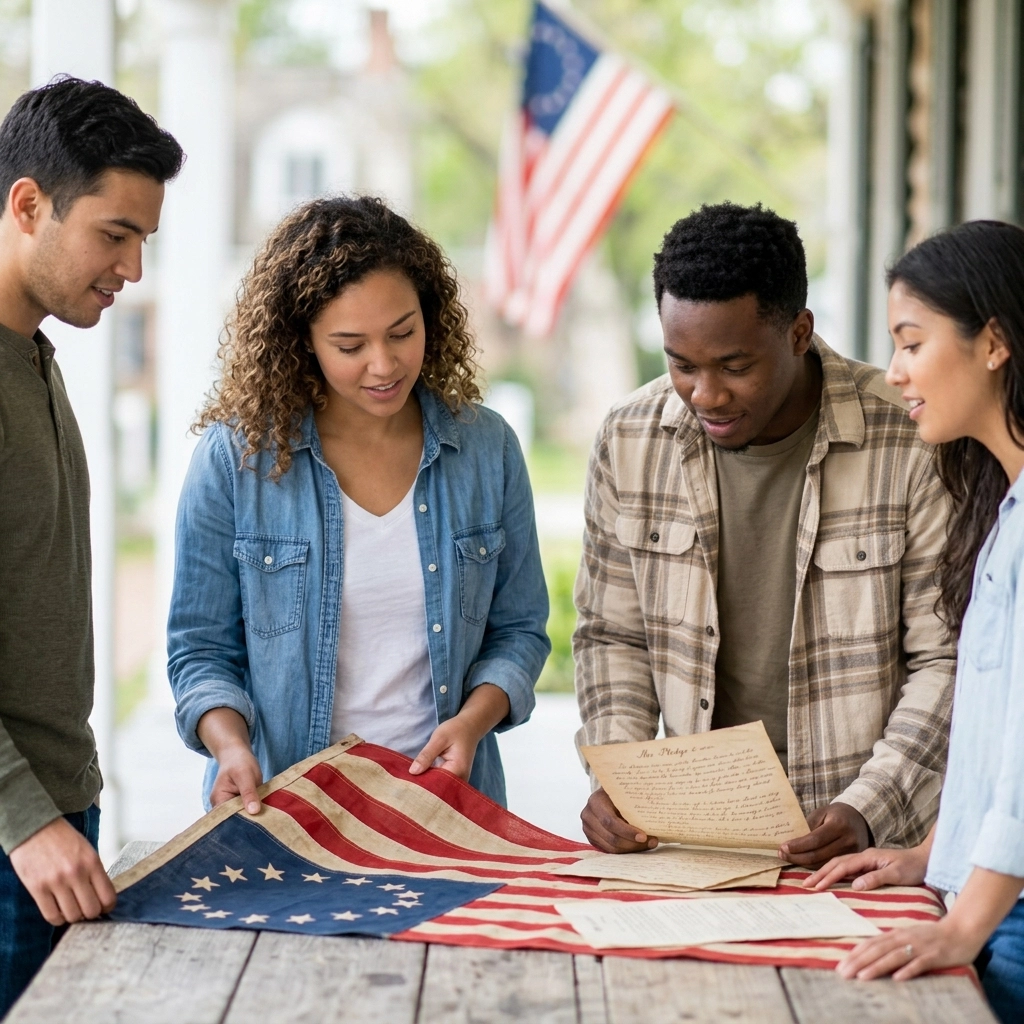
Picture this: the year is 1892. The United States is still healing from the wounds of the Civil War, and the country is preparing to celebrate the 400th anniversary of Christopher Columbus’s arrival in the Americas. Enter Francis Bellamy, a Baptist minister with a passion for social justice and a job at The Youth's Companion, a popular family magazine.
Now, here is the twist you didn’t see coming. The magazine wasn't just trying to inspire patriotism; they were trying to sell flags.
The magazine’s owners wanted to put an American flag in every schoolhouse across the country. To do that, they needed a hook. They needed a ritual that would make the flag the centerpiece of the American classroom. Bellamy was tasked with writing a brief, punchy salute that students could recite in unison.
He didn't want it to be long or flowery. He wanted it to be a sharp, clear statement of loyalty. What he produced was: "I pledge allegiance to my Flag and to the Republic for which it stands, one nation, indivisible, with liberty and justice for all."

The Words That Almost Were
When you look at Bellamy’s original draft, the most striking thing isn't what’s there, it’s what’s missing. You’ll notice there was no mention of the "United States of America," and there was definitely no mention of "under God."
Even more fascinating? Bellamy seriously considered adding the word "equality" to the end of the Pledge. He wanted it to read "with liberty, justice, and equality for all."
So, why did he cut it?
Bellamy lived in a time when the wounds of Reconstruction were still raw. He knew that the mention of "equality" would cause an immediate uproar among state superintendents in the South and even parts of the North. To keep the Pledge universal and ensure it was adopted nationwide, he made the difficult decision to leave "equality" on the cutting room floor.
Learning this changes the way you look at those final words, doesn’t it? It reminds us that our national symbols are often born out of compromise, and it challenges us to live up to the "equality" that Bellamy initially envisioned but felt the nation wasn't ready to hear. This is why civic participation matters, why understanding Pledge history is key to America's 250th celebrations.
The Evolution: 1923 and the Cold War Shift
The Pledge you say today is not the Pledge Bellamy wrote. It has evolved as the country has evolved, reflecting our changing anxieties and our shifting identity.
The first major change happened in 1923. Organizations like the American Legion and the Daughters of the American Revolution became concerned that immigrants might be confused about which "flag" they were pledging to. They pushed to change "my flag" to "the flag of the United States of America." It was a move toward clarity and a firm stance on Americanization during a period of high immigration.
Then came the big one: 1954.
At the height of the Cold War, the United States was locked in an existential battle with "godless Communism." President Dwight D. Eisenhower, encouraged by the Knights of Columbus and religious leaders, signed a bill into law adding the phrase "under God."
This wasn't an ancient tradition, it was a mid-century political and spiritual response to global tension. For many, this is the most meaningful part of the Pledge. For others, it’s a point of debate. But knowing that it was added specifically to distinguish our Republic from authoritarian regimes gives the phrase a different kind of weight. It’s a reminder that we define ourselves not just by what we are, but by what we refuse to be. If you’ve ever wondered about the specifics of this era, you should check out our guide looking for the story behind 'Under God', here are 10 things you should know about the 1954 change.
The Salute That Had to Go
Here is a piece of history that usually gets scrubbed from the textbooks. When Bellamy first published the Pledge, he also included instructions for a specific salute.
Students were told to stand with their right hand outstretched toward the flag, palm up or down. For decades, millions of American children performed this "Bellamy Salute" every single morning.
Does that image sound familiar? It should. By the 1930s, the salute became uncomfortably similar to the ones being used by fascist regimes in Italy and Germany. By 1942, Congress officially changed the salute to the hand-over-the-heart gesture we use today.
This little-known fact serves as a powerful lesson in civic education. It shows us that symbols and gestures can change meaning based on the world around them. It teaches us to be vigilant and to ensure that our displays of patriotism always reflect our democratic values, not the aesthetics of authoritarianism.

Why This History Matters for America’s 250th
You might be wondering, "Dan, why does this matter now?"
We are currently heading toward the Semiquincentennial, America’s 250th birthday in 2026. This is a massive milestone. But a birthday party without a sense of history is just a bunch of noise.
At Pledge Allegiance, we believe that civic education matters, why knowing the Pledge history heals divides. When you realize that the Pledge isn't a static document, but a living, breathing reflection of our journey as a people, it becomes a bridge rather than a barrier.
- For Educators: Use this history to spark debate. Don't just have your students recite the words; have them investigate why the words changed.
- For Families: Talk to your kids about what "liberty and justice for all" means in the 21st century.
- For Veterans: See the Pledge as a continuation of the oath you took, a promise that is constantly being refined by the courage of those who serve.
Our CEO, Dan Kost, often writes about how unity is making a comeback. He believes that by looking at our shared traditions with honest eyes, we can find the common ground we’ve been missing. You can dive deeper into that vision by reading why everyone is talking about these daily CEO notes and how we're reclaiming American unity.
Reclaiming the Flag
Learning the "secret" history of the Pledge doesn't make it less patriotic, it makes it more meaningful.
It reminds us that our country is a work in progress. The Pledge was created by a man who wanted to sell flags, yes, but he also wanted to heal a broken nation. It was edited by people who wanted to protect American identity and by those who wanted to invoke a higher power during a time of global fear.
When you stand and face the flag tomorrow, you aren't just reciting a 130-year-old poem. You are participating in a historical conversation. You are part of the "indivisible" nation that survived a Civil War, two World Wars, and the Cold War.
You are the keeper of the "liberty and justice" that Francis Bellamy hoped for, and the "equality" he was too afraid to write down.
Take the Next Step in Your Civic Journey
History is only powerful if we use it to build a better future. As we count down to the 250th anniversary of the greatest experiment in human history, we invite you to stay informed and stay engaged.
Whether you’re looking for positive community news or you want to master our nation’s civic traditions, we are here to be your guide.
The flag belongs to you. The history belongs to you. And the future of the Republic? That belongs to you, too.
Let’s make sure we’re ready to lead it. Dive into the full story and stay ahead of the curve by following our daily press releases. It’s time to see the flag: and the Pledge( with brand new eyes.)