

Most people think the Pledge of Allegiance has remained unchanged since the founding of our country: until they realize the version we recite today is actually the result of over 130 years of edits, political shifts, and even a marketing campaign.
If you’re standing in front of a classroom, a scout troop, or even just your own kids at the dinner table, you know that "just saying the words" isn't enough. To truly inspire the next generation, you have to peel back the layers of history. You have to show them that these 31 words aren't just a ritual; they are a living document of our national journey.
As we approach America’s 250th anniversary, there has never been a better time to dive deep into the roots of our civic traditions. I’m Dan Kost, and at Pledge Allegiance, we believe that understanding our past is the only way to build a unified future. So, let’s get into the nitty-gritty of how the Pledge came to be and how you can lead a discussion that actually sticks.
The Two-Hour Miracle: How It All Began
Picture this: It’s August 1892. A Baptist minister named Francis Bellamy is sitting in his office at The Youth’s Companion magazine. He’s been tasked with writing a salute to the flag for the upcoming 400th anniversary of Christopher Columbus’s arrival in the Americas.
He didn't have weeks to brainstorm. In fact, he reportedly hammered out the original draft in just two hours.
But here’s the kicker: it wasn't just about patriotism. It was also a savvy business move. The Youth's Companion was the largest magazine in the country at the time, and they were running a campaign to sell American flags to public schools. They wanted a way to unify the country after the scars of the Civil War while simultaneously putting a flag in every schoolhouse in the nation.
The Original 1892 Wording:
"I pledge allegiance to my Flag and to the Republic for which it stands: one nation indivisible: with liberty and justice for all."
Notice anything missing? There was no "United States of America" and definitely no "Under God." It was short, punchy, and designed to be recited by school children across the nation on October 12, 1892.
The "Other" Pledge: The Veteran’s Version
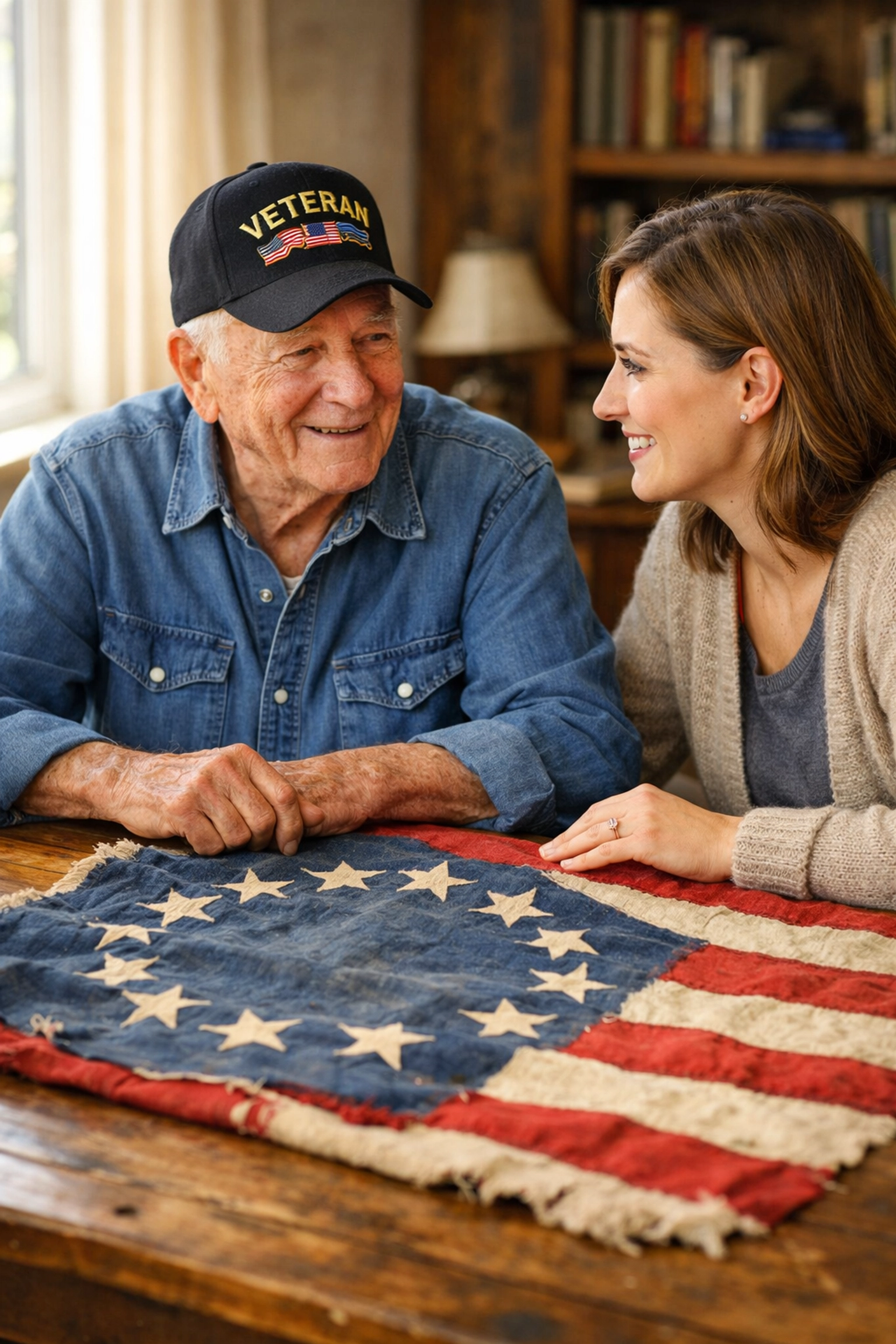
Before Bellamy’s version took over the world, there was another contender. Captain George Thatcher Balch, a Civil War veteran, wrote his own version in 1887. It read: "We give our heads and hearts to God and our country; one country, one language, one flag!"
For a while, schools actually used both. Can you imagine the confusion? Eventually, Bellamy’s version won out because it felt more "inclusive" of the civic ideals of the Republic rather than just a religious sentiment. If you’re looking for a great way to get past the recital and find creative ways to teach the Pledge, start by comparing these two versions with your students. Ask them: which one feels more like "America" to you?
Why the Words Changed (and Why It Matters)
The Pledge isn’t a static relic: it has evolved as our country has grown. Leading a classroom discussion means explaining the why behind these changes.
1. The 1923 Clarification
By the 1920s, many immigrants were coming to America. There was a concern that when someone said "I pledge allegiance to my flag," they might secretly be thinking of the flag of their birth country. To make things crystal clear, the National Flag Conference changed "my flag" to "the flag of the United States." A year later, they added "of America" just to be safe.
2. The 1942 Official Recognition
It took 50 years for Congress to officially recognize the Pledge! In 1942, right in the middle of World War II, it became an official part of the U.S. Flag Code.
3. The 1954 Addition of "Under God"
This is often the most debated part of the Pledge. During the Cold War, the United States wanted to distinguish itself from the "godless" ideology of Communism. Encouraged by President Dwight D. Eisenhower and the Knights of Columbus, Congress added the words "under God" to emphasize the spiritual foundations of American liberty.
Understanding these shifts helps students see that the Pledge is a reflection of the era in which it’s spoken. If you want to explore how these specific words like "liberty" and "justice" still resonate today, check out our classroom kits that make these concepts click.
The Salute Scandal: Why We Put Our Hands Over Our Hearts
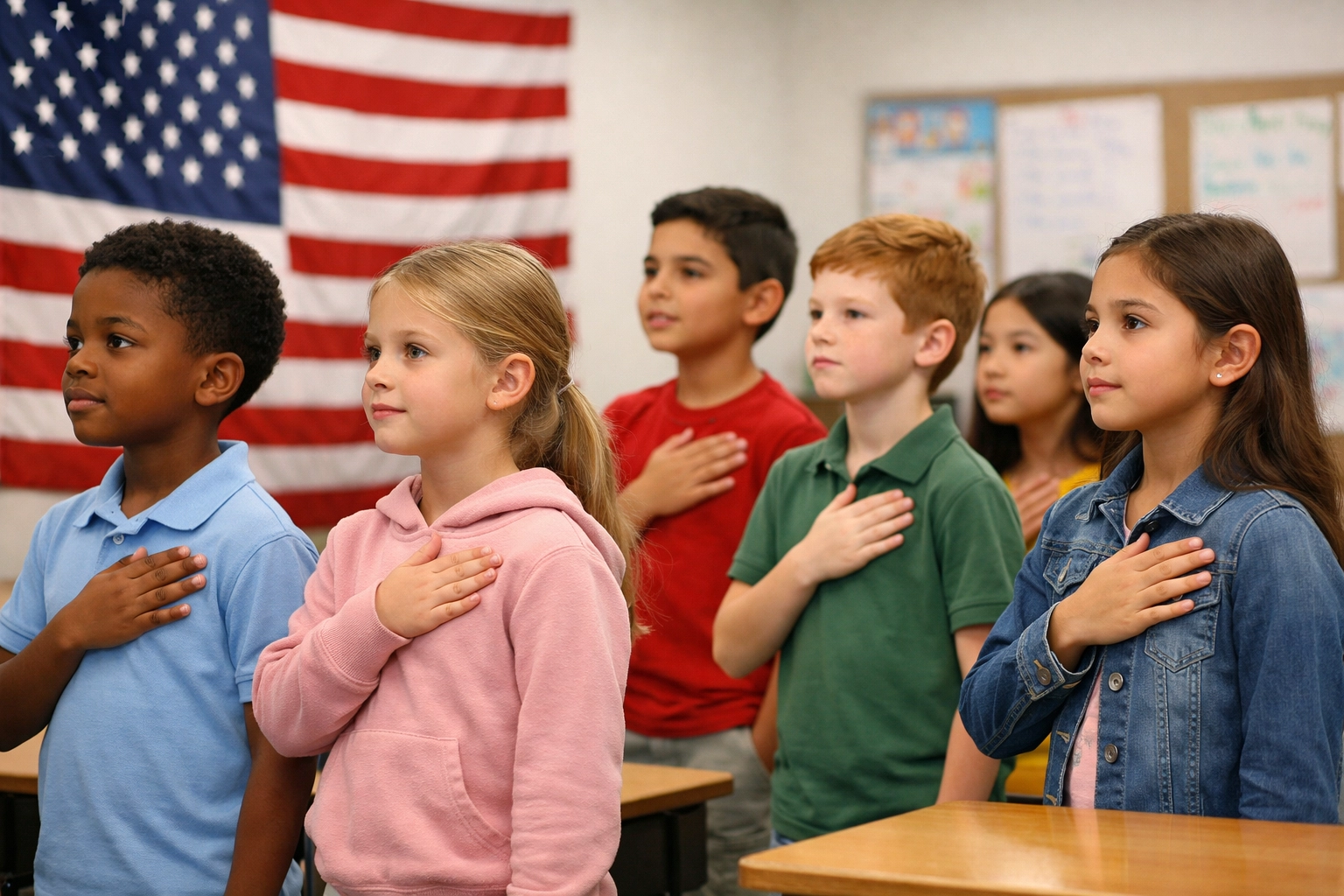
This is the part of the history lesson that always wakes the kids up. Originally, students didn't put their hands over their hearts. They used what was called the "Bellamy Salute."
You would start with your hand over your heart, and then, as you said the words "to my flag," you would extend your arm outward and upward toward the flag.
If that sounds familiar, it’s because it looked almost identical to the salute used by the Nazi party in Germany and the Fascists in Italy. Once Hitler rose to power, the optics became… problematic, to say the least. In 1942, Congress quickly amended the Flag Code to mandate the hand-over-heart gesture we use today.

Leading the Discussion: Prompts for Your Classroom
Now that you’ve got the history down, how do you turn this into a meaningful conversation? You don’t want a lecture: you want an exploration. Here are a few prompts to spark some real thought:
- The Commercial Connection: How do you feel about the fact that a magazine company created the Pledge partly to sell flags? Does a "commercial" origin make it less patriotic, or is that just the American way?
- The Definition of "Indivisible": We say this word every day, but what does it mean in a country that often feels very divided? How can we be "indivisible" while still having different opinions? This is a great bridge to discussing how to build unity in divided times.
- The Power of Symbols: Why was the salute changed during WWII? What does that tell us about the power of symbols and how they can be "hijacked" by different movements?
- The Choice to Participate: While we lead the Pledge, it’s important to understand the legal side of things. Can students be forced to say it? (Spoiler: No). You can find a full breakdown of the legal side of the Pledge here to help navigate those tricky classroom moments.
Preparing for the 250th Anniversary
We are rapidly approaching 2026: the 250th anniversary of the United States. This is a massive milestone for civic education. As educators and parents, you are the "storykeepers" of our national identity.
The Pledge of Allegiance is more than just a morning routine; it’s a daily promise. It’s a commitment to the idea that, despite our differences, we are all striving for a nation where there is "liberty and justice for all."
If you’re looking to take your classroom or family discussions to the next level, I highly recommend looking into our Storykeeper program. It’s designed to help you pass down these patriotic traditions in a way that feels modern, relevant, and deeply personal.
Wrapping It Up
History isn't just about dates and names; it’s about the evolution of ideas. When you lead a discussion on the Pledge, you aren't just teaching history: you’re teaching civic responsibility. You’re showing students that their voice matters and that they are part of a 250-year-old story that is still being written.
Stay patriotic, stay curious, and keep leading those important conversations. If you need more resources or want to support our mission of bringing civic education back to the forefront, feel free to visit our about page or make a donation to help us reach more schools.
Let’s make sure the next generation knows exactly what they’re promising when they stand and face the flag.