

Most people think unity is a warm, fuzzy feeling that just happens when everyone agrees: until they realize it’s actually a hard-fought discipline that requires a specific kind of leadership.
Look, I get it. You turn on the news, you scroll through your feed, and it feels like the fabric of our country is being pulled in a thousand different directions. We’re coming up on the 250th anniversary of this great experiment we call America, and yet, the gap between "us" and "them" seems wider than ever.
As the CEO of Pledge Allegiance, I spend my days on the front lines of civic education. I talk to veterans, students, teachers, and business owners. I see the friction, but I also see the fire: the desire for something better. If you’re feeling the weight of the division, if you’re struggling to lead your team, your family, or your community through these polarized times, I want to share five lessons I’ve learned from the front lines.
These aren't just academic theories. These are battle-tested principles of civic leadership that can help you bridge the divide and bring people back to the "Big We."
1. Start with the "Why," but Anchor it in the "We"
In the world of business, we’re told to "start with why." That’s great for selling widgets, but to lead a nation: or even a small community: you have to anchor that "why" in a shared identity.
Most leaders make the mistake of leading with their personal agenda or their specific "fix" for a problem. But if you haven't established who you are together first, your solution will only be seen through a partisan lens. In civic education, we teach that the Pledge isn't just a string of words; it’s a verbal contract we make with one another.
When you lead, remind your people of the shared values that transcend the current conflict. Whether it's the mission of your company or the foundational principles of our country, you must constantly reinforce the idea that we are on the same team. You can’t build a house on shifting sand; you need the solid rock of a shared "We."

2. Consistency is the Secret Sauce of Trust
You might be wondering why my daily letters will change the way you think about citizenship. It’s not because I have a secret magic formula or a crystal ball. It’s because I show up. Every. Single. Day.
In a world of "flavor of the week" activism and fleeting trends, consistency is a radical act of leadership. If you want people to follow you through a struggle for unity, they need to know you aren’t going anywhere when things get uncomfortable.
Civic leadership isn't about the grand gesture or the viral speech. It’s about the daily grind of reinforcing values. This is exactly why our daily community milestones keep the spirit of the Pledge alive. When you are consistent, you become a predictable, steady force. That stability is what allows people to let their guard down and actually listen to one another.

3. History is a Compass, Not a Cage
One of the biggest hurdles to unity is how we handle our history. I see people falling into two camps: those who want to pretend our history is perfect and those who want to burn it all down because it isn’t.
True civic leadership requires a different approach. You have to use history as a compass. You look at where we’ve been: the triumphs and the failures: to figure out which way North is. When I talk about the original 1892 Pledge of Allegiance, I’m not just doing a history lesson for the sake of trivia. I’m showing how our understanding of "liberty and justice for all" has evolved and where it still needs to go.
Don’t let your past (or our country’s past) be a cage that keeps you from moving forward. Instead, use it to ground your leadership. Acknowledge the scars, celebrate the victories, and use that context to give your team a sense of where they fit in the long story of progress. If you’re just starting out, check out this beginners guide to mastering the history of the Pledge to see how deep these roots really go.
4. Listen to the "Front Lines": Especially the Veterans
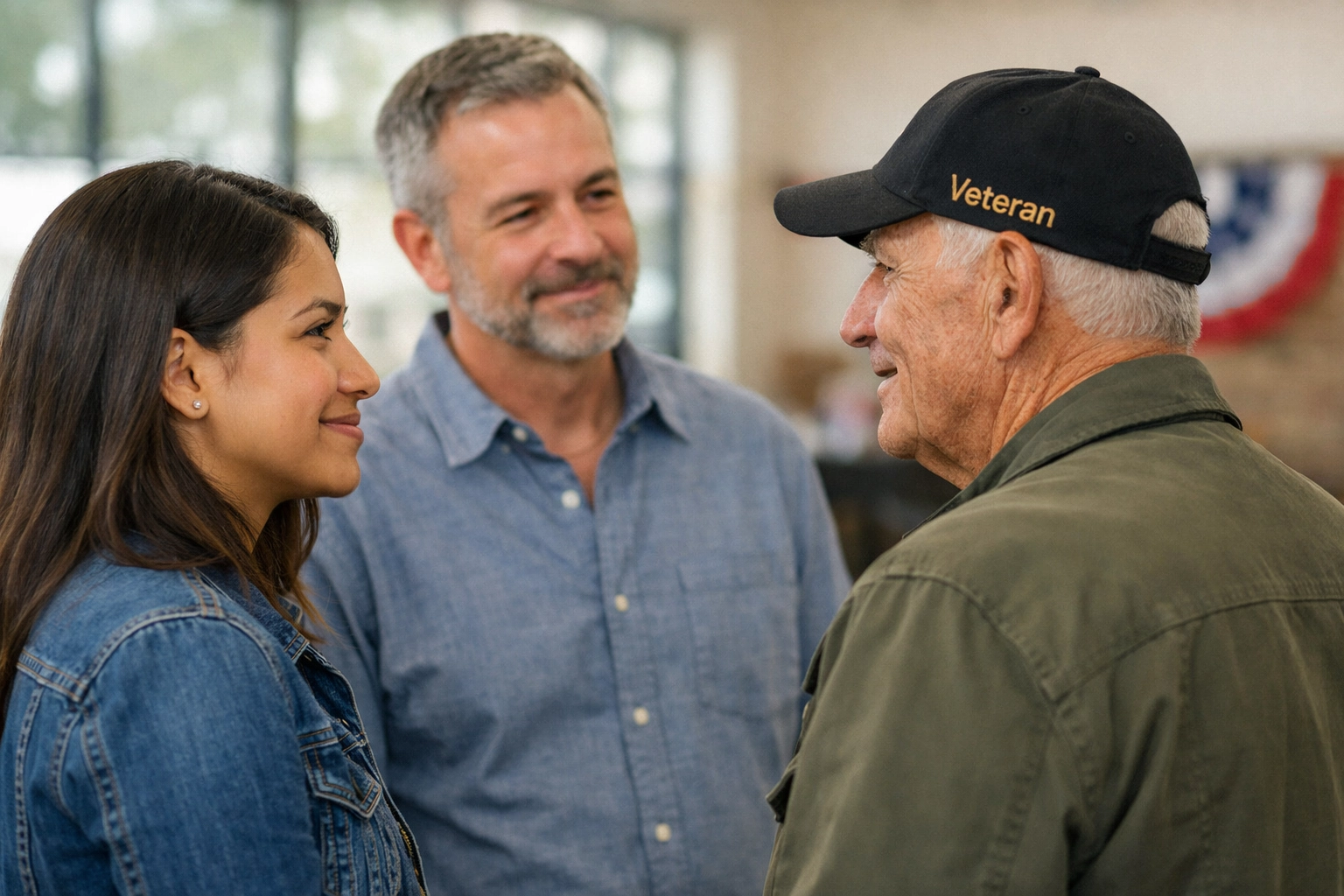
If you want to know what real leadership and unity look like, look at our veterans. They come from every background, every race, and every political persuasion imaginable. Yet, they find a way to work together toward a common goal under the most extreme pressure.
At Pledge Allegiance, we make it a point to highlight these stories. There’s a reason everyone is talking about our latest veterans initiative. It’s because veterans understand something that many of us have forgotten: the mission is bigger than the individual.
As a leader, your job is to seek out those who have sacrificed for the collective good. Listen to their perspectives. They often have the clearest view of what’s truly important. When you bring the "front line" perspective into your decision-making, you bypass a lot of the superficial noise that causes division. You start focusing on what works, what lasts, and what protects the person standing next to you.
5. Master the Art of the "Patriotic Pivot"
In every meeting, every dinner table conversation, and every community forum, there will be a moment where things start to go off the rails. Tempers flare. Fingers start pointing. This is where a civic leader performs the "Patriotic Pivot."
Instead of engaging in the "he-said, she-said" of the current argument, you pivot the conversation back to our shared responsibilities as citizens. You move from "What are you doing wrong?" to "What can we do together?"
This isn't about avoiding the hard topics. It’s about reframing them. We call this mastering civic values. I write about this all the time because civic values matter. It’s about having the guts to be the "moderate" in the room: not a moderate in your convictions, but moderate in your temper, ensuring that the bridge doesn't burn down while you're still standing on it.

Why This Matters Right Now
We are living in a time that will be written about in history books. Your kids and grandkids are going to ask what you did when the country felt like it was splitting at the seams. Did you add to the noise, or did you lead toward the light?
Leading for unity is exhausting. It’s thankless. It’s often lonely. But it’s the most important work you will ever do. Whether you're a CEO, a teacher, or a stay-at-home parent, you are a civic leader. Every time you choose respect over a retweet, every time you choose education over an emotional outburst, you are strengthening the Republic.
If you’re looking for more ways to sharpen your leadership, I’ve put together a list of 5 things our CEO wants you to know about the future of our mission.
And if you’re worried you’ve been doing it wrong, don't sweat it. We’ve all made mistakes. Just make sure you aren't making these 7 mistakes with civic education as we head toward the 250th anniversary.
Join the Conversation
I’m committed to sharing these lessons every day because I believe in us. I believe in this country. And I believe that with the right leadership, our best days aren't behind us: they’re straight ahead.
Stay in the loop with our daily press releases and join a community that’s dedicated to doing the hard work of unity. We aren't just reciting words; we’re living them.
Let’s get to work.
Dan Kost
CEO, Pledge Allegiance