
Most people think the Pledge of Allegiance was handed down by the Founding Fathers on a silver platter alongside the Constitution, until they find out it actually started as a high-stakes marketing gimmick to sell flags.
Hey there, I’m Dan Kost, CEO of Pledge Allegiance. If you’ve spent any time in an American classroom, you’ve recited those thirty-one words thousands of times. It’s the heartbeat of our morning routine, a moment of unity, and a tribute to the Republic for which it stands. But here’s the kicker: the version you know today is a relatively recent invention, and the road it took to get to your local schoolhouse was paved with marketing budgets, suppressed legal rulings, and corporate media campaigns.
As we gear up for America’s 250th anniversary, it’s time to pull back the curtain. If we’re going to champion civic education, we need to know the whole story, not just the "spark notes" version printed in the back of a social studies book.
The PR Stunt That Defined a Nation
Picture this: it’s 1892. The United States is preparing for the 400th anniversary of Christopher Columbus’s arrival. While you might imagine a group of scholars gathered in a wood-paneled room to write a national oath, the reality was much more commercial.
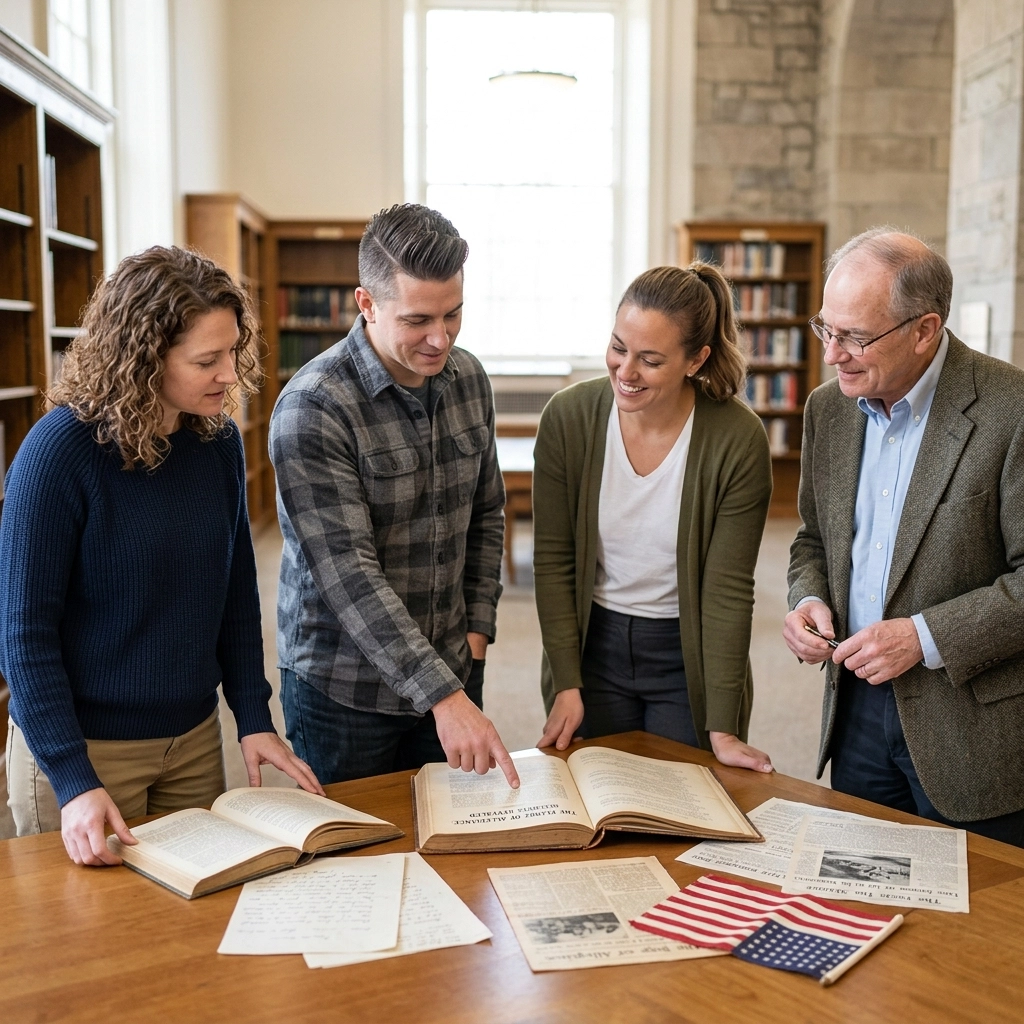
The Pledge was actually created as a promotional tool for The Youth’s Companion, a popular family magazine. The goal? To sell American flags to public schools across the country. James B. Upham, a partner at the magazine, realized that if every school had a flag, and every student was required to salute it, the magazine’s flag-selling business would skyrocket.
They hired Francis Bellamy, a former minister, to pen the words. It was first published in the September 8, 1892, issue of the magazine, and by October, millions of children were reciting it. It wasn't born out of a government decree; it was a grassroots movement powered by a publishing house.

The Authorship Drama You Weren’t Taught
Every hero story needs a bit of conflict, and the history of the Pledge is no different. While Francis Bellamy is traditionally credited as the author, he actually spent a good chunk of his later years defending his claim.
In 1923, Bellamy reportedly fabricated a dramatic origin story about how he composed the Pledge in a single sitting and had it immediately approved. Why the tall tale? He was trying to cement his legacy and ensure he was recognized as the sole creator over James Upham. This internal corporate power struggle is a far cry from the selfless patriotic myth we often hear.
At Pledge Allegiance, we believe that understanding the human side of our history, flaws and all, actually makes our connection to these symbols stronger. It shows that ordinary people, driven by both passion and business, can create something that eventually belongs to the entire nation. You can learn more about our mission to keep these traditions alive on our About page.
The "Under God" Corporate Campaign
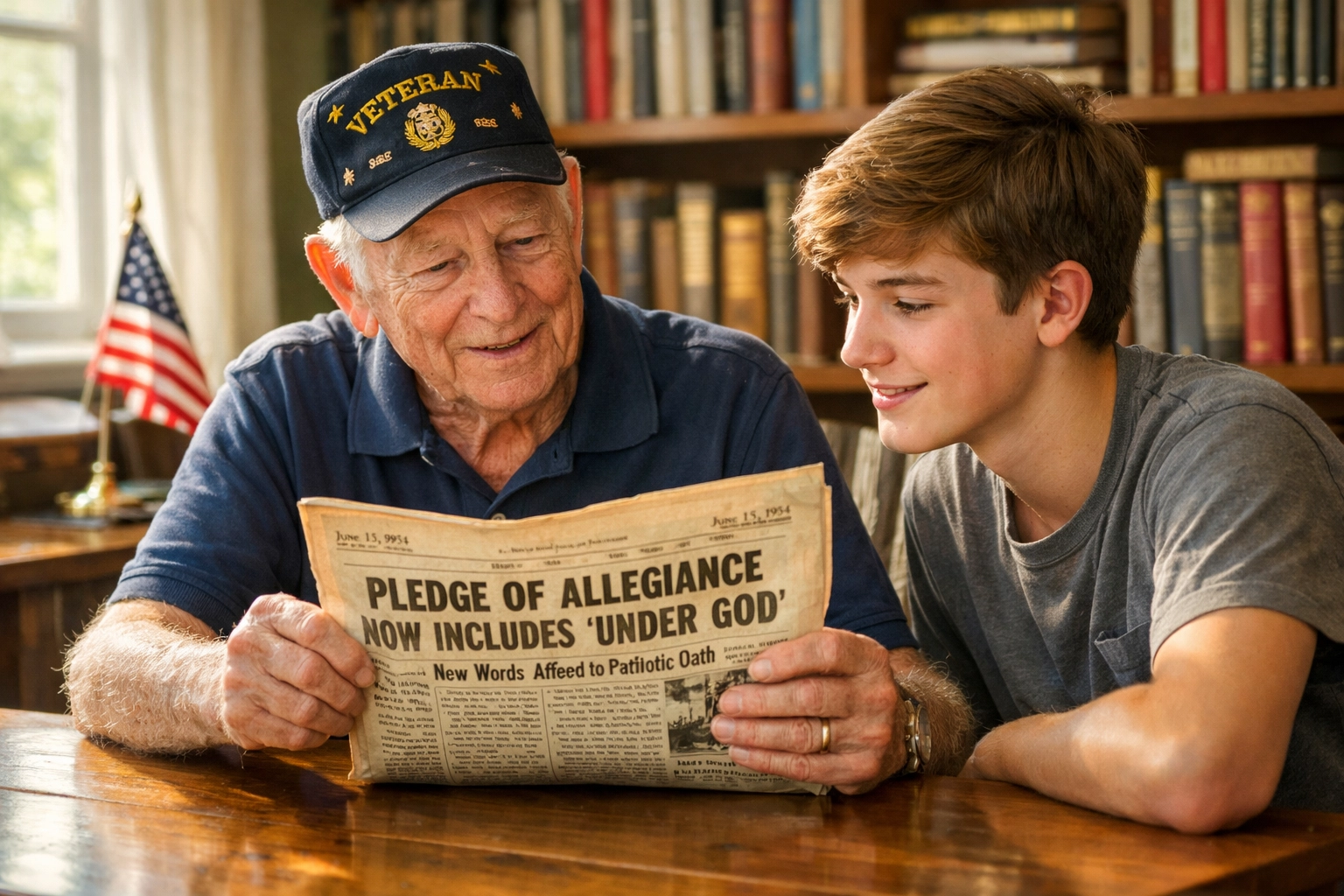
If you ask most people when "under God" was added to the Pledge, they might guess it was there from the start or added during the Civil War. In reality, it didn't show up until 1954, and it wasn't a spontaneous act of religious fervor from Congress.
The push for the change was a deliberate media campaign led by newspaper tycoon William Randolph Hearst Jr. Starting in 1952, after being prompted by a member of the Sons of the American Revolution, Hearst used his massive media empire to lobby for the inclusion of the phrase. This was the height of the Cold War, and the goal was to distinguish the United States from the "godless" ideologies of the Soviet Union.
President Dwight D. Eisenhower eventually signed it into law on Flag Day in 1954. It’s a powerful example of how media and public sentiment can reshape our national identity in a heartbeat.
The Salute That Had to Change
Here is a secret that definitely isn't in your third-grade textbook: the original salute used during the Pledge looked exactly like the Nazi salute.
Known as the "Bellamy Salute," it involved extending your right arm straight out toward the flag. Once the 1930s rolled around and the world saw what was happening in Europe, the optics became… well, problematic. To avoid any confusion with fascist regimes, Congress officially changed the salute to the "hand-over-heart" gesture in 1942.
It’s a reminder that symbols and gestures evolve. We adapt. We learn. And we ensure that our expressions of patriotism always reflect our values of liberty and justice.
The Right to Remain Silent
One of the most suppressed aspects of Pledge history is the 1943 Supreme Court case West Virginia State Board of Education v. Barnette. While most of us grew up with the expectation that everyone stands and recites the words, the highest court in the land actually ruled that public schools cannot force students to participate.
Justice Robert Jackson wrote one of the most famous lines in legal history during this case: "If there is any fixed star in our constitutional constellation, it is that no official, high or petty, can prescribe what shall be orthodox in politics, nationalism, religion, or other matters of opinion."
Despite this ruling, many schools and communities still treat the Pledge as a mandatory ritual. For educators and veterans, this is a vital piece of civic education. True patriotism isn't forced; it’s a choice made by a free people. When you donate to our cause, you help us spread this kind of nuanced, honest history to the next generation.

Why This Matters for America's 250th
As we approach the 250th anniversary of this great nation, we have a unique opportunity to look back and evaluate what it means to be an American. The Pledge of Allegiance has survived marketing schemes, authorship disputes, world wars, and legal battles. It has been edited, debated, and defended.
And you know what? That’s what makes it beautiful.
It isn't a static relic from 1776. It’s a living document that has grown alongside our country. It reflects our struggles, our fears during the Cold War, our need for unity during the World Wars, and our commitment to individual liberty.
Dive deep into these stories. Don't just settle for the surface-level history. Whether you are a veteran who has fought for that flag or an educator teaching the leaders of tomorrow, the truth about our history gives our symbols more weight: not less.
Join the Conversation
We aren't just here to recite words; we're here to understand them. At Pledge Allegiance, we’re building a community that values the grit and reality of American history.
- Stay informed: Check out our latest blog posts for more deep dives into civic history.
- Support the mission: Your contributions help us develop educational resources for schools and veterans’ groups.
- Get involved: Explore our veterans initiatives and see how we’re making a difference on the ground.

The history of the Pledge is a wild ride, and now you’re in on the secrets. Next time you stand up, place your hand over your heart, and look at the stars and stripes, remember that you aren't just reciting a script. You’re participating in a 130-year-old tradition that is as complex and vibrant as the country it represents.
Keep the spirit alive, and let's make this 250th anniversary one for the history books.
Stay patriotic,
Dan Kost
CEO, Pledge Allegiance