
Most people think Memorial Day is just the unofficial start of summer: until they realize it's the actual price tag of our freedom.
While you might be planning a backyard barbecue or looking forward to a long weekend, it is vital to pause and remember that this day wasn’t created for mattress sales or pool openings. It was forged in the aftermath of the bloodiest conflict in American history to ensure that those who gave "the last full measure of devotion" would never be forgotten.
At Pledge Allegiance, we believe that every time you place your hand over your heart, you aren't just reciting words: you are honoring a debt. To truly understand the "liberty and justice for all" we promise to uphold, you must first understand the history and the heartbreak behind Memorial Day.
From Decoration Day to a National Legacy
Before it was Memorial Day, it was Decoration Day.
Imagine the late 1860s. The Civil War had ended, leaving behind a scarred nation and hundreds of thousands of empty chairs at family dinner tables. In small towns across the North and South, people began a grassroots movement to gather in the spring, clean up the overgrown graves of fallen soldiers, and "decorate" them with fresh wildflowers.
One of the most powerful early observances took place in Charleston, South Carolina, in 1865. A group of formerly enslaved people organized a massive procession to honor Union prisoners of war who had died in captivity. Thousands of people: including 3,000 Black schoolchildren carrying bouquets: marched and sang patriotic songs. It was a profound assertion of citizenship and a way to say: We are part of this nation, and we honor those who died to keep it whole.

In 1868, General John A. Logan, leader of a Union veterans’ organization, officially designated May 30 as Decoration Day. He chose that date because it wasn't the anniversary of any particular battle, but rather a time when flowers would be in full bloom across the entire country.
It wasn't until after World War I that the holiday expanded to honor those who died in all American wars, and it didn't become an official federal holiday on the last Monday of May until 1971.
Why the Pledge of Allegiance Matters on Memorial Day
You might wonder how a classroom ritual like the Pledge of Allegiance connects to the somber rows of white headstones at Arlington National Cemetery.
Think about the phrases you say: “I pledge allegiance to the flag of the United States of America, and to the Republic for which it stands…”
The Republic doesn't just "stand" on its own: it is held up by the sacrifices of the men and women we honor today. When we teach the history and significance of the Pledge, we are teaching the next generation that "liberty and justice" are active responsibilities.
If you pledge your loyalty to these ideals, you are essentially promising to live a life that is worthy of the sacrifice made by those who can no longer speak those words. Memorial Day is the physical manifestation of the Pledge: it is where the promise meets the price.

The Civic Responsibility of Memory
Educating our children about Memorial Day is a cornerstone of informed civic participation. In a world that often feels divided, this day offers a rare moment of national unity.
We encourage you to replace assumptions with actual knowledge. Many students: and even adults: confuse Memorial Day with Veterans Day. While Veterans Day honors all who have served, Memorial Day is specifically reserved for those who died in service.
By teaching this distinction, you help preserve the sanctity of the day. You help your community understand that the flag isn't just a piece of fabric; it's a living symbol of a collective commitment to each other.

How You Can Honor the Fallen Today
Honoring the fallen doesn't require a grand gesture: it requires intentionality. Here are a few ways you can turn this holiday into a meaningful civic exercise:
- Observe the National Moment of Remembrance: At 3:00 PM local time, stop what you are doing for one minute of silence. It is a powerful way to join millions of other Americans in a shared act of gratitude.
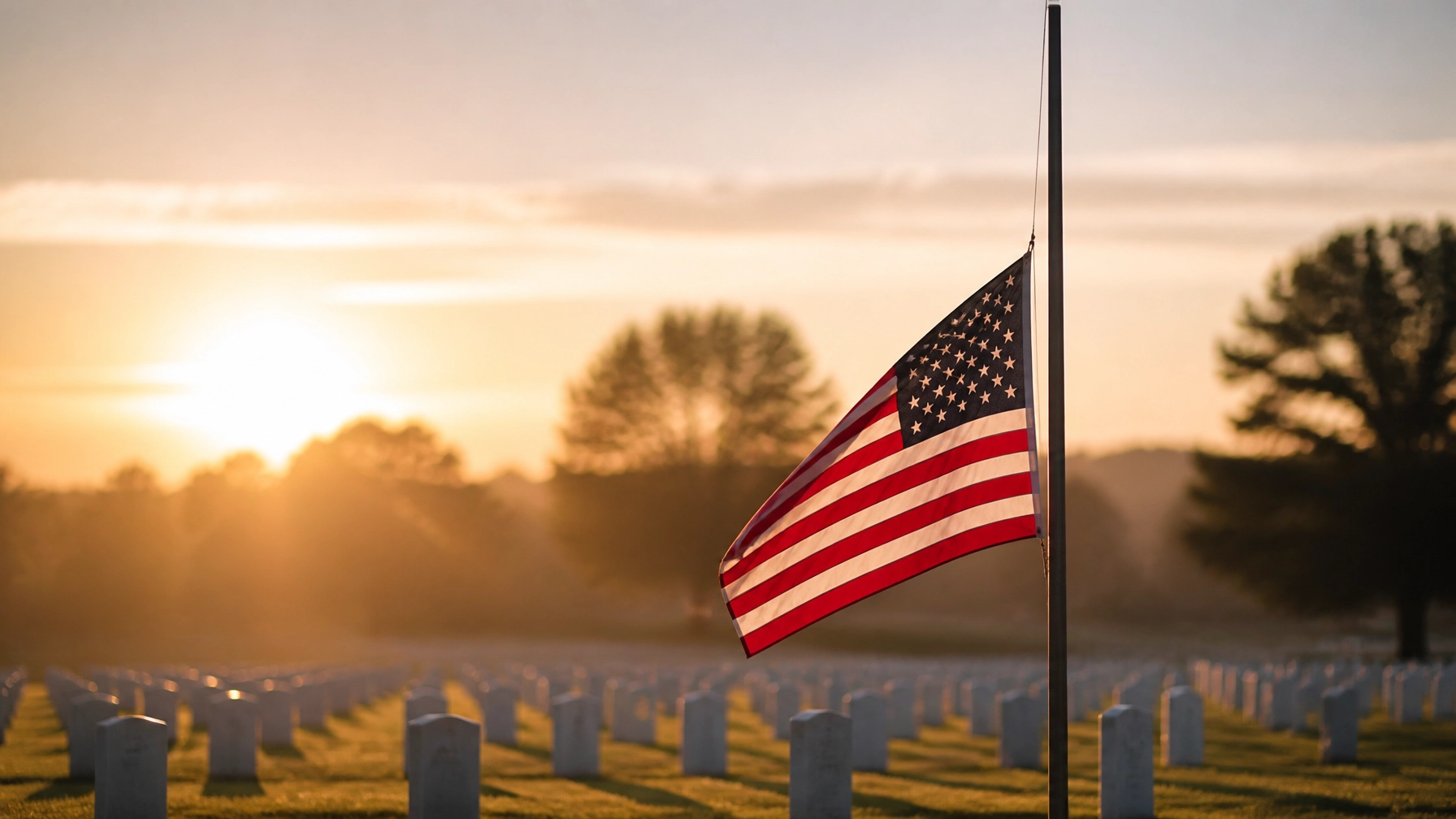
- Fly Your Flag Correctly: On Memorial Day, the flag should be flown at half-staff until noon, then raised to full-staff for the remainder of the day. This tradition symbolizes the nation’s mourning in the morning and its resilience in the afternoon.
- Visit a Local Memorial: Take your family to a local monument or cemetery. Read the names. If you see a grave without a flag or flowers, consider leaving a small token of respect.
- Support Veterans Initiatives: At Pledge Allegiance, we work to preserve the stories of service members. You can honor the dead by supporting the living veterans who continue to carry their legacy.

Frequently Asked Questions About Memorial Day
What is the difference between Memorial Day and Veterans Day?
Memorial Day honors those who died while serving in the U.S. military. Veterans Day, observed on November 11, honors all who have served in the military, whether in wartime or peacetime.
Why was it originally called Decoration Day?
It was called Decoration Day because the primary way people honored the fallen was by "decorating" their graves with flowers, wreaths, and flags.
What is the proper way to recite the Pledge of Allegiance?
The Pledge should be recited while standing at attention, facing the flag, with your right hand over your heart. Those in uniform should remain silent and face the flag while giving the military salute.
How can I help my children understand the meaning of the day?
Focus on the concept of "gratitude" and "service." Explain that some people loved their country and their neighbors so much that they took a big risk to keep everyone safe. Reading age-appropriate books about American history or visiting a local parade can help make the concept more concrete.
A Legacy Worth Protecting
As the sun sets this Memorial Day, let the "stars and stripes" remind you of the endurance of the American spirit. We live in a nation that is constantly striving toward that "more perfect union," and we do so on the shoulders of giants.
Be the kind of citizen who understands the history. Be the kind of neighbor who values community dialogue over divisive debate. And most importantly, be the kind of American who lives with the "liberty and justice" that so many fought to secure.
Ready to deepen your understanding of American civic life? Join us at Pledge Allegiance as we continue to educate, honor, and inspire the next generation of participants in our great democracy.
Search Engine Title: Memorial Day: Honoring the Sacrifices of American Heroes
Meta Description: Discover the true history of Memorial Day, from Decoration Day to its role in civic education. Honor the sacrifice behind the 'liberty and justice' we pledge.
Primary Keyword: Memorial Day history
Secondary Keywords: Decoration Day, Pledge of Allegiance meaning, honoring fallen soldiers, civic education, American flag etiquette.