
Most people think civic education is just a dusty chapter in a middle school textbook: until they realize that nearly one-third of eighth graders can’t explain the basic functions of our government. It is a sobering reality that hits home as we approach the monumental milestone of America’s 250th anniversary. We aren't just facing a lack of facts; we’re facing a crisis of connection to the very ideals that bind us together.
If you’ve ever felt that our national unity is fraying, or that the next generation is losing touch with the significance of our civic traditions, you’re not alone. But here is the good news: the "Semiquincentennial" (that's a mouthful for our 250th birthday) provides the perfect backdrop for a powerful patriotic reset.
The Civic Crisis: More Than Just a Bad Grade
Let’s look at the numbers: because the data tells a story we can no longer ignore. Recent reports from the National Assessment of Educational Progress (NAEP) show that civic knowledge is at its lowest point in decades. When only a small fraction of adults can name all three branches of government, we aren't just failing a test: we’re failing our responsibility as informed participants in a democracy.
For our veterans, this hits especially hard. You’ve served to protect a system of government and a way of life, only to see the fundamental understanding of that system vanish from the classroom. For educators and families, the pressure is on. How do you teach pride and participation in a world that feels increasingly divided?
The answer isn't to walk away. It’s to double down. Civic education matters now more than ever, and the 250th anniversary is your family's best history lesson in the making.

America’s 250th: The Ultimate Teachable Moment
Picture this: July 4th, 2026. The eyes of the world are on us. We have a choice: we can treat it like just another fireworks display, or we can use it as a catalyst for a national renewal of civic literacy.
This isn't about rote memorization of dates. It’s about understanding the why behind the what. When you understand the struggle, the debate, and the vision that went into the founding of this nation, your relationship with your country changes. It shifts from being a passive resident to an active stakeholder.
That is why everyone is talking about civic education for America’s 250th. It is a chance to move past divisive debates and return to the shared constitutional principles that actually work.
What Does a "Patriotic Reset" Actually Look Like?
A patriotic reset isn't about ignoring our flaws: it’s about owning our story. It involves three key pillars:
- Re-centering Shared Principles: We need to go back to the source. The Declaration of Independence and the Constitution aren't just old papers; they are the operating system of our country.
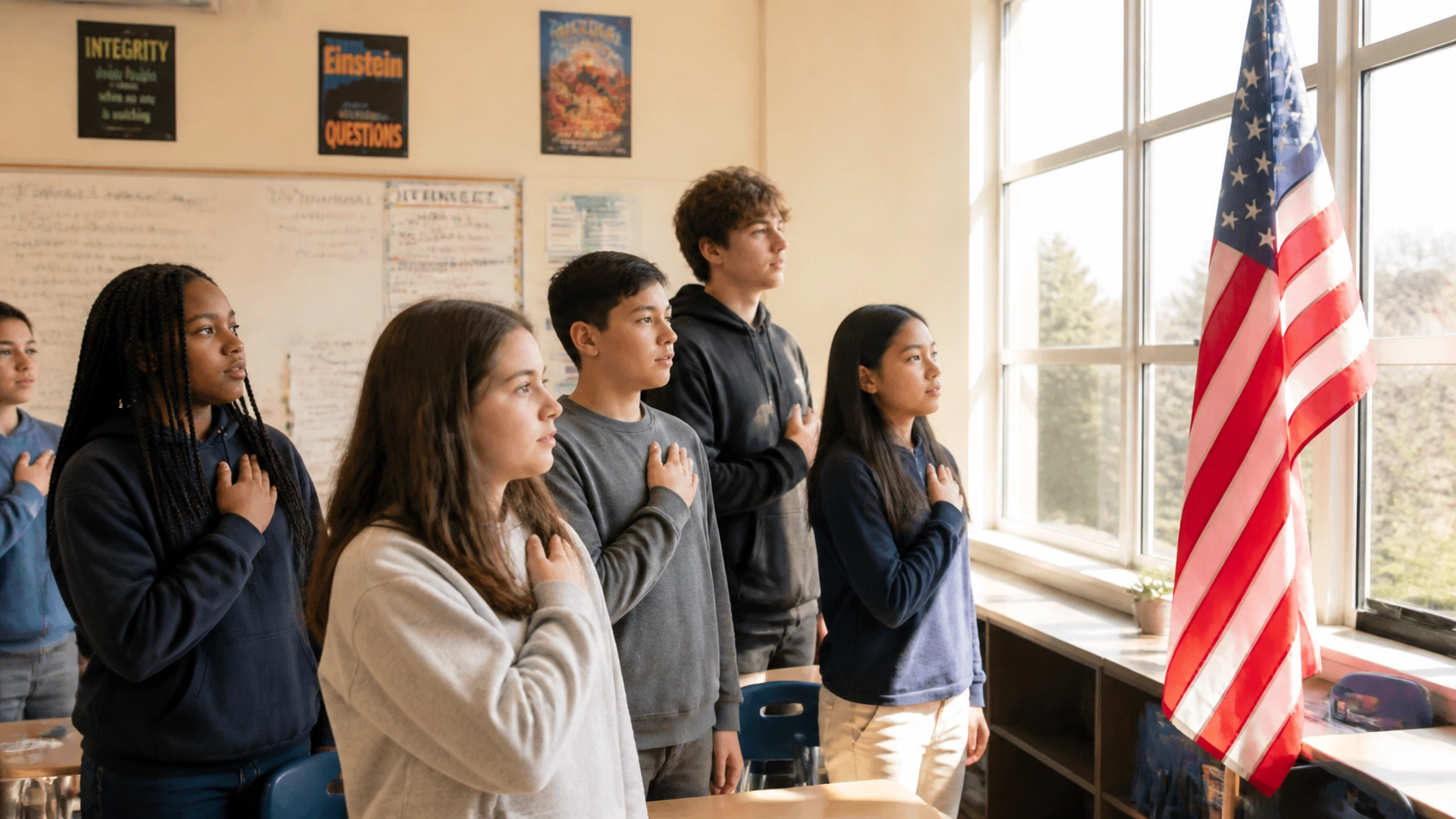
- Restoring Civic Rituals: Understanding symbols like the American flag and rituals like the Pledge of Allegiance provides a common language for a diverse nation.
- Fostering Civil Discourse: We must teach the next generation how to disagree without being disagreeable. Democracy is a team sport that requires participation, not just observation.
Whether you are a teacher looking for fresh classroom programs or a parent wanting to raise an informed citizen, this reset starts with a commitment to the truth.

The Power of the Pledge: Our Daily Anchor
At the heart of this civic renewal is a simple, powerful tool we often take for granted: The Pledge of Allegiance.
Think about the last time you said it. Did you focus on the words, or was it just muscle memory? When we break down each phrase: from "indivisible" to "liberty and justice for all": we find a roadmap for our civic responsibilities. Did you know the history of the Pledge itself is a fascinating journey of American identity? Learning about the 1892 original Pledge can completely change the way you see our traditions.
It is more than just a classroom start-of-the-day routine. It is a daily contract we sign with our fellow citizens. By teaching the history and significance of these words, we provide students and families with an anchor in a stormy political sea.

Your Call to Action: How You Can Lead the Charge
You don't need to be a politician or a historian to spark a patriotic reset in your community. You just need to be willing to lead. Here is how you can start today:
- For Educators: Integrate primary source documents back into your curriculum. Move beyond the "what" and dive deep into the "how" of our republic.
- For Families: Make civic engagement a family affair. Visit a local monument, volunteer for a community project, or simply discuss a current event at the dinner table with curiosity rather than judgment.
- For Veterans: Your stories are the bridge between history and the present. Share your experiences with local schools. Your perspective on service and duty is the best civic education a student can receive.
As we count down to 2026, stay informed. Whether it’s through local initiatives or keeping up with daily updates on our nation's progress, your involvement is the fuel for this reset.

The Path Forward
Is civic education dead? Not if we have anything to say about it. The 250th anniversary isn't just a look back at where we’ve been: it’s a bold look forward at who we can become. By choosing to prioritize civic knowledge and patriotic values, you are ensuring that the American experiment continues for another 250 years and beyond.
Be the guide your community needs. Spark the conversation. Reinforce the values. Because when we all understand the "why" behind our country, we don't just stand together( we move forward together.)