
Most people think Memorial Day is simply the unofficial start of summer: a day for backyard barbecues and department store sales: until they see the weight of a single white cross in a silent field.
As a parent or educator, you hold the keys to the next generation’s civic heartbeat. While it might feel easier to let the day pass as a simple holiday from school, you have a powerful opportunity to spark a lifelong understanding of sacrifice, service, and the cost of the freedoms we often take for granted. You aren't just teaching a history lesson; you are cultivating a sense of civic responsibility that will linger in your children's minds for years to come.
Explain the significance, embrace the traditions, and foster a spirit of gratitude. Here is your comprehensive guide on how to teach your children the true meaning of Memorial Day.
Start with the "Why": Clarifying the Mission
Before you dive into activities, you must ensure the foundation is clear. One of the most common mistakes is confusing Memorial Day with Veterans Day.
Hook your child’s attention by explaining the distinction: Veterans Day (in November) is a time to say "thank you" to everyone who has served in the military. Memorial Day, however, is a solemn day reserved for the men and women who died while serving in the U.S. Armed Forces. It is a day of remembrance for those who gave what Lincoln called "the last full measure of devotion."
Keep it Age-Appropriate
You don't need to discuss the graphic nature of war to convey the weight of service. Tailor your message to where your children are:
- For Preschoolers and Early Elementary (Ages 3–7): Focus on the concept of a "hero." Explain that Memorial Day is a day to say a special thank you to the brave people who helped keep our country safe but are no longer with us. Use words like gratitude, respect, and remembrance.
- For Upper Elementary (Ages 8–11): Introduce the idea of sacrifice. You can explain that being a soldier is a job where people choose to protect our freedoms: like the freedom to go to school or speak our minds: even if it means they might not come home. This is a great time to introduce civic curriculum concepts that link history to modern life.
- For Middle and High Schoolers (Ages 12+): Dive deeper into the concept of duty and the impact of loss on families and communities. Discuss how their own lives would be different without the historical sacrifices of those who defended democratic values.
Hands-On Traditions: Making History Tangible
Children learn best when they are active participants. Move beyond the textbook and immerse your family in traditions that reinforce the message.

1. The National Moment of Remembrance
Did you know there is a designated time for the entire country to pause? At 3:00 PM local time, join the National Moment of Remembrance. Stop whatever you are doing: whether you’re at a park or in your living room: and observe one minute of silence.
This simple act teaches your children that some things are more important than their current activity. It reinforces a shared national identity and shows that we, as a community, remember together.
2. Flags and Half-Staff Protocol
If you fly a flag at home, use it as a teaching tool. On Memorial Day, the flag should be flown at half-staff until noon, then raised to the top of the staff for the remainder of the day.
Explain the symbolism to your kids: the half-staff position is a sign of mourning for the fallen, while raising it at noon represents our resolve to keep the nation they died for standing strong. It’s a visual representation of connecting modern civic duty to history.
3. The Symbol of the Red Poppy
The red poppy is a powerful symbol of remembrance, inspired by the World War I poem "In Flanders Fields."
Action Item: Spend an afternoon crafting red poppies with your children using red paper and green pipe cleaners. While you work, explain that the flowers represent the resilience of those who served. If you see a veteran or a representative from the VFW (Veterans of Foreign Wars) handing out "Buddy Poppies," encourage your child to make a small donation and wear the flower with pride.

Beyond the Day: Fostering Civic Responsibility
Memorial Day should be the starting point, not the finish line. Use this holiday to coach your children on what it means to be an active, informed participant in democracy.
Discussion: What is Freedom Worth?
Ask your children: "What are some things you love doing?" Whether it's playing sports, visiting the library, or choosing their own clothes, explain that these "freedoms" aren't free. They were protected by people who valued the community more than their own safety.
This conversation shifts the focus from "what I get" to "what was given for me." It builds a sense of belonging to something larger than oneself: a core tenet of American civic life.
Visit a Local Memorial
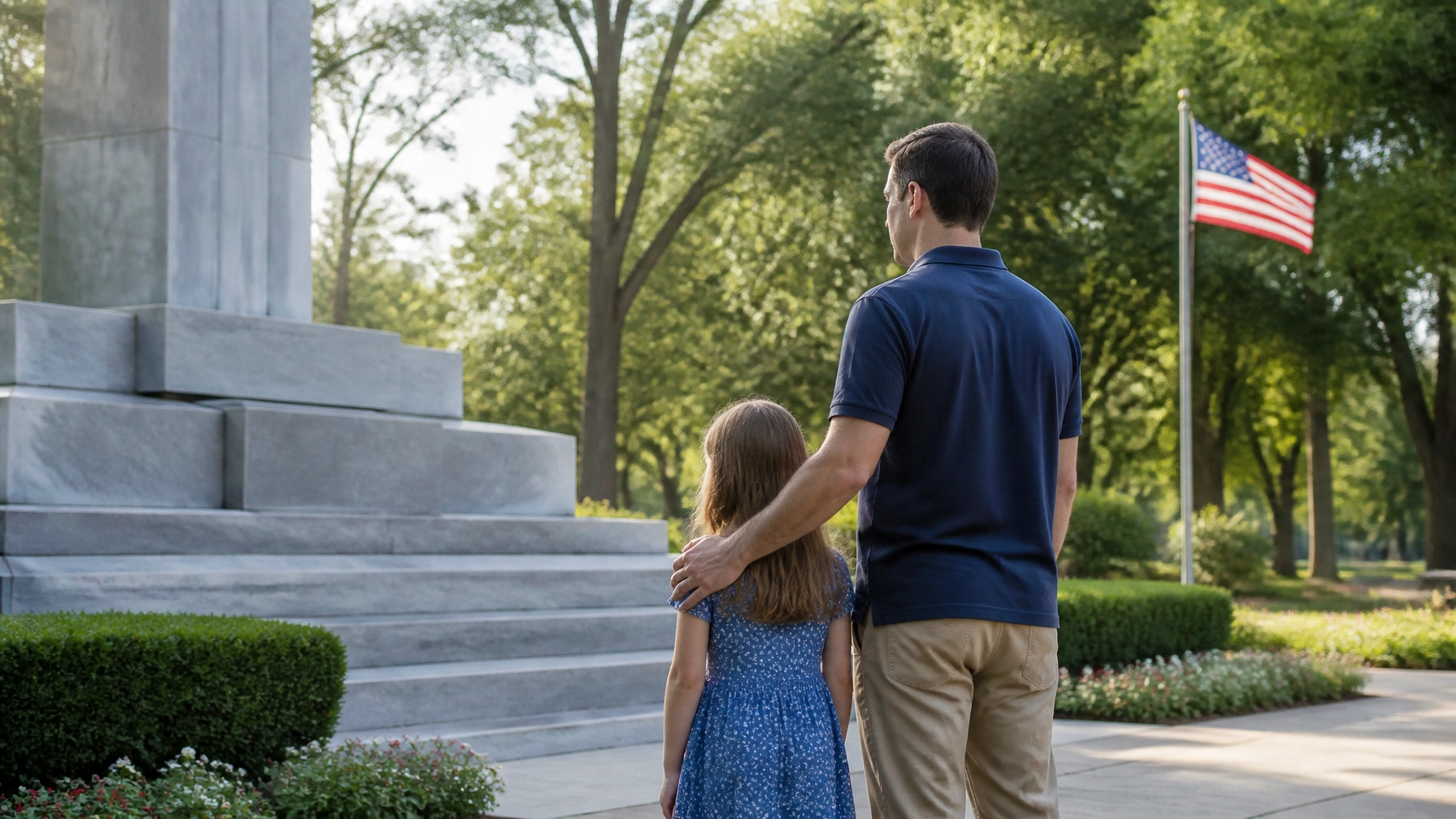
You don’t have to live near Arlington National Cemetery to pay your respects. Most towns have a local war memorial, a veteran's wing at a cemetery, or even a plaque in a city park.
Take a walk there. Read the names aloud. Seeing names from your own zip code makes the sacrifice personal. It transforms "history" into "neighbors."
Creating a Lasting Legacy of Respect
Your goal as a parent or educator is to replace assumptions with actual knowledge. When children understand the why behind the tradition, they are more likely to carry that torch into adulthood.
Remember, you are the most influential teacher in your child's life. By treating Memorial Day with the respect and gravity it deserves, you are modeling the very civic values that keep our nation united.

Hook your family into a new tradition this year. Whether it's a silent minute at 3:00 PM or a visit to a local monument, make sure your children know that today isn't just a day off: it’s a day to remember the heroes who made every other day possible.
Meta Description: Learn how to teach your children the true meaning of Memorial Day. Explore age-appropriate explanations, hands-on traditions, and ways to foster civic responsibility.
SEO Title: How to Teach Children the True Meaning of Memorial Day
URL: /teach-children-meaning-memorial-day/