
Most people think the Pledge of Allegiance was penned by a Founding Father, perhaps Thomas Jefferson or James Madison, during a candlelit session in 1776. It’s a beautiful image, right? But what if I told you the words millions of American children recite every morning actually started as a 19th-century marketing gimmick to sell magazine subscriptions and flags?
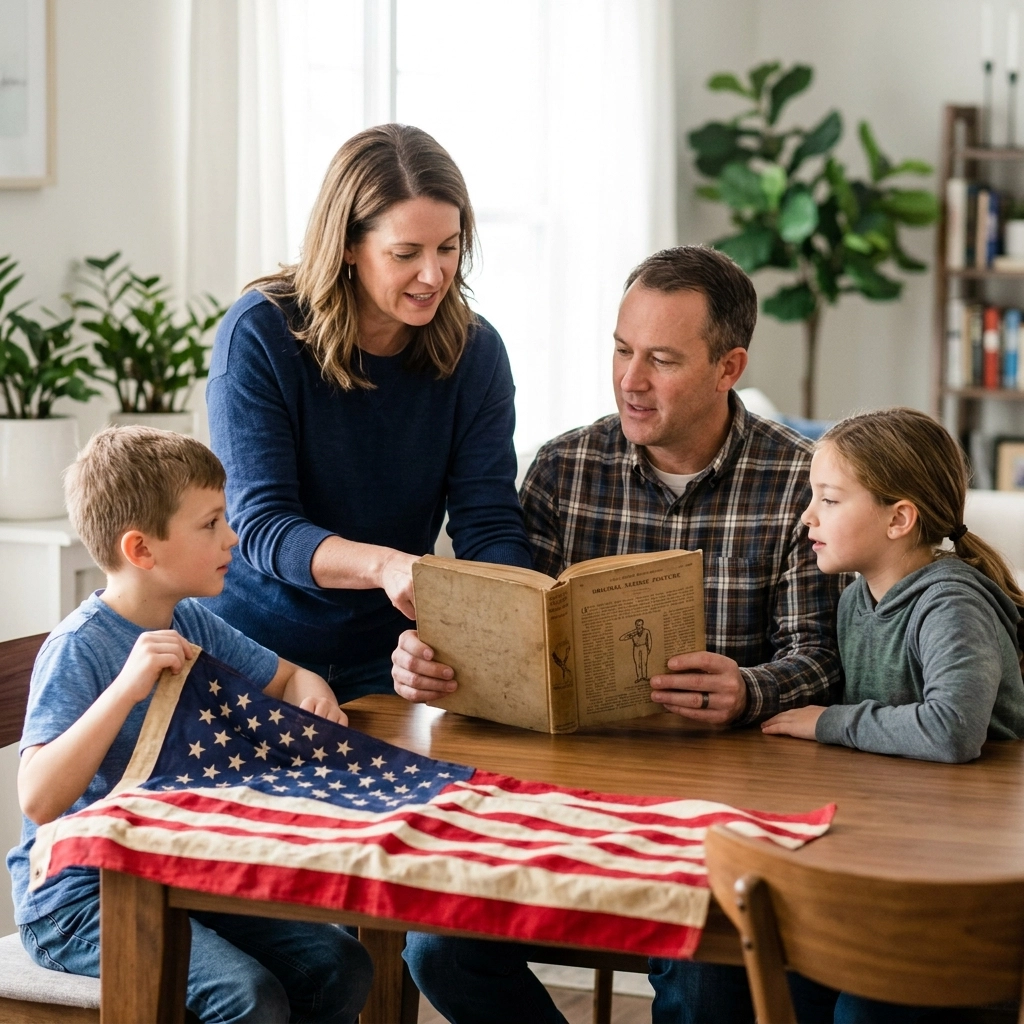
If you’ve ever felt like history is just a dry list of dates and dusty names, you need to see this. Telling your kids the real story of the Pledge isn’t just about facts; it’s about showing them that America is a living, breathing project that evolves over time. As we approach America’s 250th anniversary, there has never been a better time to dive into the "why" behind our traditions.
At Pledge Allegiance, we believe civic education shouldn’t feel like a chore. It should feel like an adventure. Here is how you can explain the hidden (and sometimes weird) history of the Pledge to your kids without putting them to sleep.
The Shocking Sales Strategy of 1892
Picture this: It’s the late 1800s. A magazine called The Youth’s Companion wants to boost its numbers. Now, what if I told you that the "heart" of our daily school ritual began because a former minister named Francis Bellamy needed a way to sell American flags to public schools?
Bellamy wasn't a politician; he was an editor. He believed that every schoolhouse in the country should fly the Stars and Stripes to help unify a nation that was still healing from the Civil War. But to sell those flags, he needed a reason for people to buy them. He created the "Official Program for the National Columbian Public School Celebration" to mark the 400th anniversary of Christopher Columbus arriving in the Americas.
The centerpiece of that program? A short, punchy oath of loyalty.
How to tell your kids: "Imagine a YouTuber or a TikToker creating a special dance just to sell merch. That’s kind of how the Pledge started! It was a way to get schools excited about owning their very own American flag."
The Salute That Looked Way Too Much Like a Villain’s
This is the part that always catches kids' attention because it sounds like a plot point from a superhero movie. When Bellamy first wrote the Pledge, he didn't instruct people to put their hands over their hearts. Instead, he created the "Bellamy Salute."
The move was simple: you’d start with your hand at your chest, then snap your arm out straight, palm up or down, pointing toward the flag. It was meant to be a gesture of honor. However, by the late 1930s and early 1940s, a certain group of villains in Europe, the Nazis, started using a salute that looked almost identical.
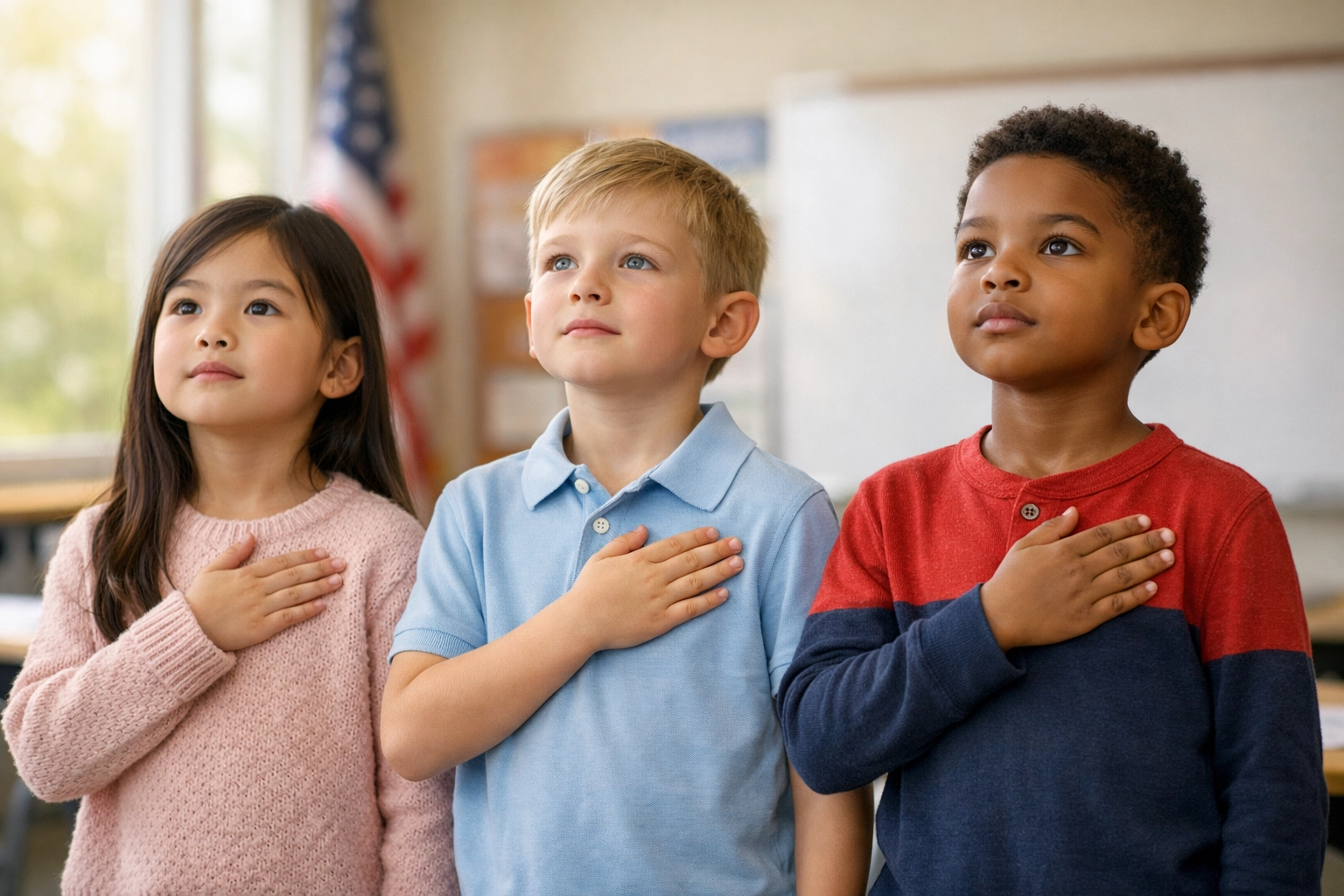
Congress realized pretty quickly that having American school children look like they were giving a "Heil" to the flag was a massive problem. In 1942, they officially changed the rules. They swapped the extended arm for the "hand over heart" gesture we use today.
How to tell your kids: "Did you know we used to point at the flag like a soldier? But when some really bad people in history started using the same move, Americans decided to change it. We moved our hands to our hearts to show that our loyalty comes from love, not just following orders."
Why We Changed the Words (Hint: It’s About You)
The Pledge you say today isn't exactly what Bellamy wrote. Originally, it was: "I pledge allegiance to my Flag and the Republic for which it stands, one Nation, indivisible, with liberty and justice for all."
Notice anything missing? Two big things changed.
First, in 1923 and 1924, the National Flag Conference decided that saying "my Flag" was too vague. At the time, there were many new immigrants coming to America. Leaders were worried that if a child from another country said "my flag," they might secretly be thinking about the flag of their birth country. To make things clear, they changed it to "the Flag of the United States of America."
It was a move designed to make sure everyone, no matter where they came from, was on the same team. It’s a powerful lesson in civic education 101 about how we define what it means to be an American.
How to tell your kids: "The words changed to make sure everyone felt included. It’s like when you’re playing a game and you clarify the rules so no one feels left out. We wanted to make sure everyone knew we were all pledging to the same home."
The Cold War and the Addition of "Under God"
The most famous change happened in 1954. If you have grandparents who went to school in the early 50s, they might remember a time when "Under God" wasn't part of the recitation.
During the Cold War, the United States was in a massive "who’s better" contest with the Soviet Union (Russia). The Soviet Union was officially atheist, meaning they didn't encourage religious belief. To highlight the difference between "Godless Communism" and American democracy, President Dwight D. Eisenhower encouraged Congress to add the words "under God."
He wanted to remind the world that American liberty was built on a foundation of higher principles. Whether you are religious or not, this addition was a major historical marker of the era’s anxieties and values.
How to tell your kids: "During a time when people were scared of another country, leaders wanted to add words that showed what made America special and different. It was a way of saying that our rights don’t just come from the government, they belong to us because we are human."
Making it Matter for the 250th Anniversary
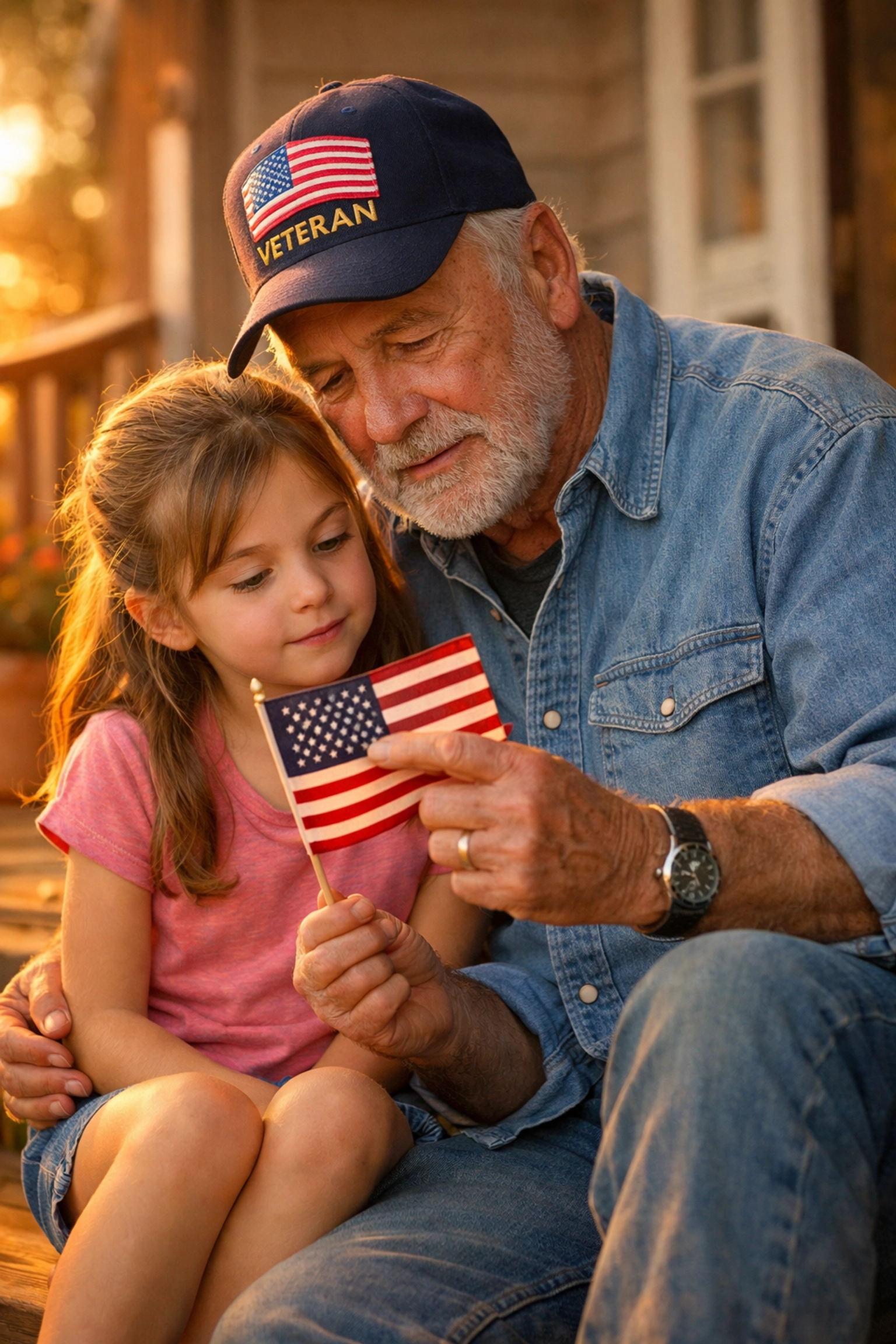
We are speeding toward 2026, the 250th birthday of the United States. This is a huge milestone! But a country is only as strong as the people who understand its story.
When you teach your kids the history of the Pledge, you aren't just giving them a trivia lesson. You are showing them that America is a "work in progress." We change the words, we change the salutes, and we grow because we are constantly trying to live up to those last five words: Liberty and justice for all.
Teaching these nuances helps children move from "rote memorization" to "active participation." They start to realize that their voices matter in the ongoing story of our Republic. You can learn more about our mission to keep this spirit alive on our about page.
How to tell your kids: "America is like a giant group project that has been going on for 250 years. The Pledge is our way of saying, 'I’m in. I’ll do my part to make it better.'"
Quick Tips for the "Cool" History Teacher (That’s You!)
If you want to keep the conversation going, try these simple activities:
- The "Spot the Change" Game: Read the 1892 version and the current version side-by-side. Ask your kids which one they like better and why.
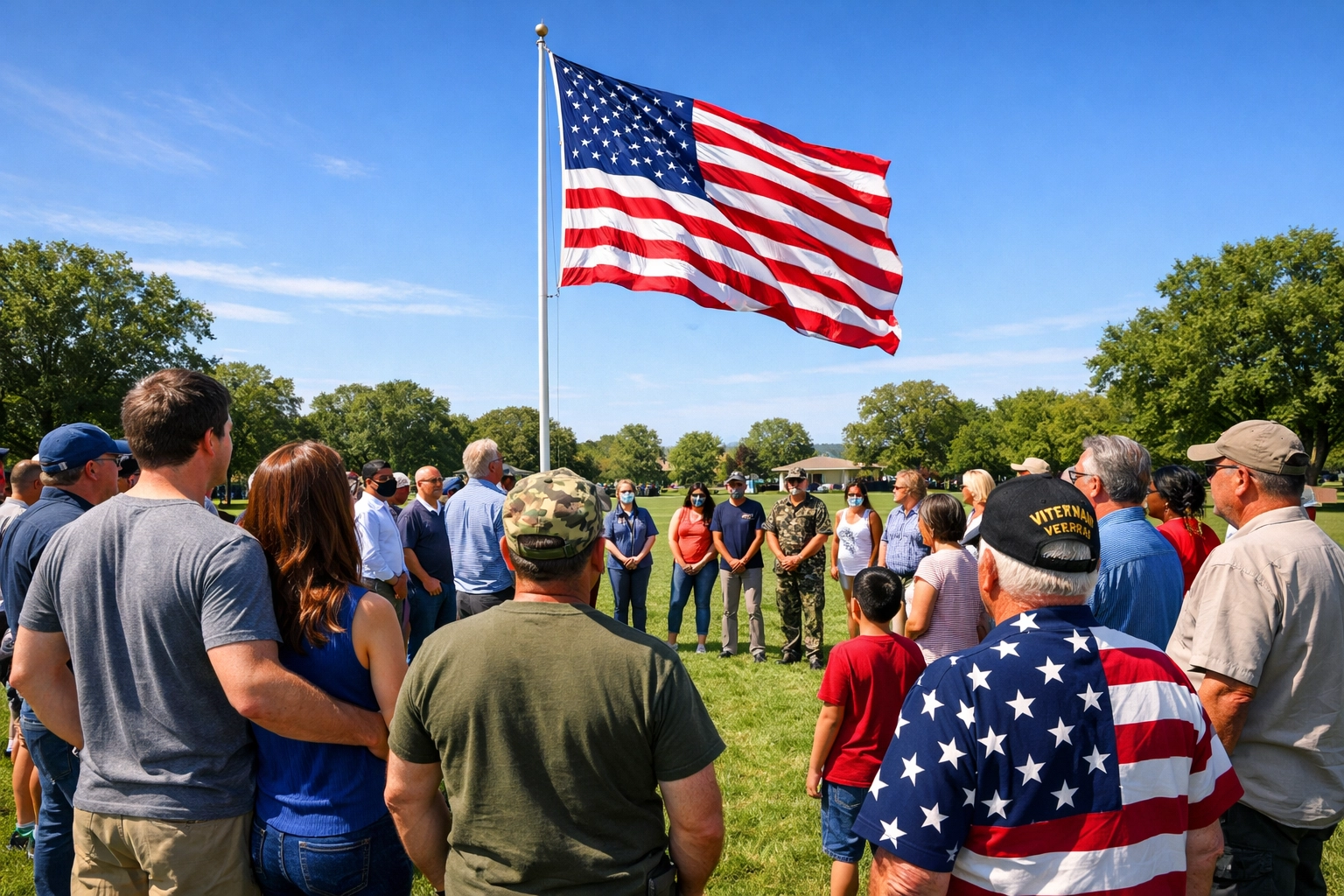
- The Flag Hunt: Go for a drive and see how many American flags you can count. Each one is a reminder of that 1892 goal to put a flag at every school.
- The "What Does it Mean?" Challenge: Pick one word from the Pledge, like "indivisible" or "allegiance", and ask them to define it in their own words. You might be surprised by their insight!
At Pledge Allegiance, we are dedicated to ensuring that every veteran, educator, and family has the tools they need to inspire the next generation. If you believe in the power of civic education and want to support our mission as we head toward the 250th anniversary, please consider making a donation.
History doesn't have to be a snooze-fest. It’s a collection of weird, wild, and wonderful stories that explain who we are today. By sharing the hidden history of the Pledge, you’re not just teaching a lesson: you’re sparking a lifelong love for our country.
Let’s make sure our kids don’t just say the words. Let’s make sure they understand them.
Stay patriotic, stay curious, and keep leading the way.
: Dan Kost, CEO, Pledge Allegiance