
Most people think the Pledge of Allegiance has remained unchanged since the dawn of the Republic: a timeless incantation passed down from the Founding Fathers themselves. But what if I told you that the original version was written nearly a century after Washington’s inauguration, and it didn't even mention the United States?
If you’ve ever felt like the morning ritual in our schools has lost some of its historical "punch," you aren't alone. As we approach America’s 250th anniversary in 2026, understanding where these 22 original words came from isn’t just a history lesson: it’s a way to reclaim the heart of our civic identity.
In under three minutes, let’s dive deep into the 1892 origin story of the words that define our national unity.
The 15-Second Revolution
Picture this: It’s August 1892. The United States is preparing for the 400th anniversary of Christopher Columbus’s arrival in the Americas. A Baptist minister and magazine writer named Francis Bellamy is tasked with creating a "National Public-School Celebration." He wants something punchy. Something powerful. Something that every student in the country can say in 15 seconds flat.
He sits down and pens these words:
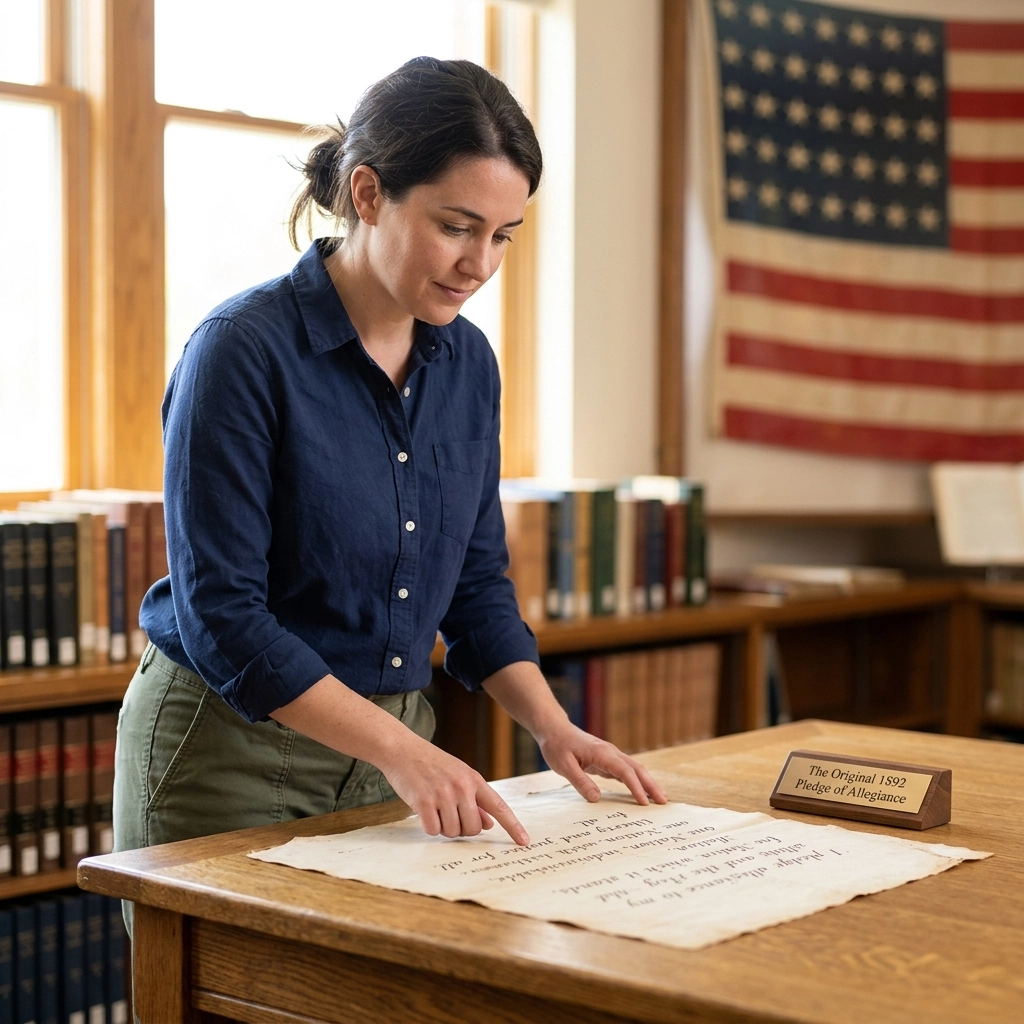
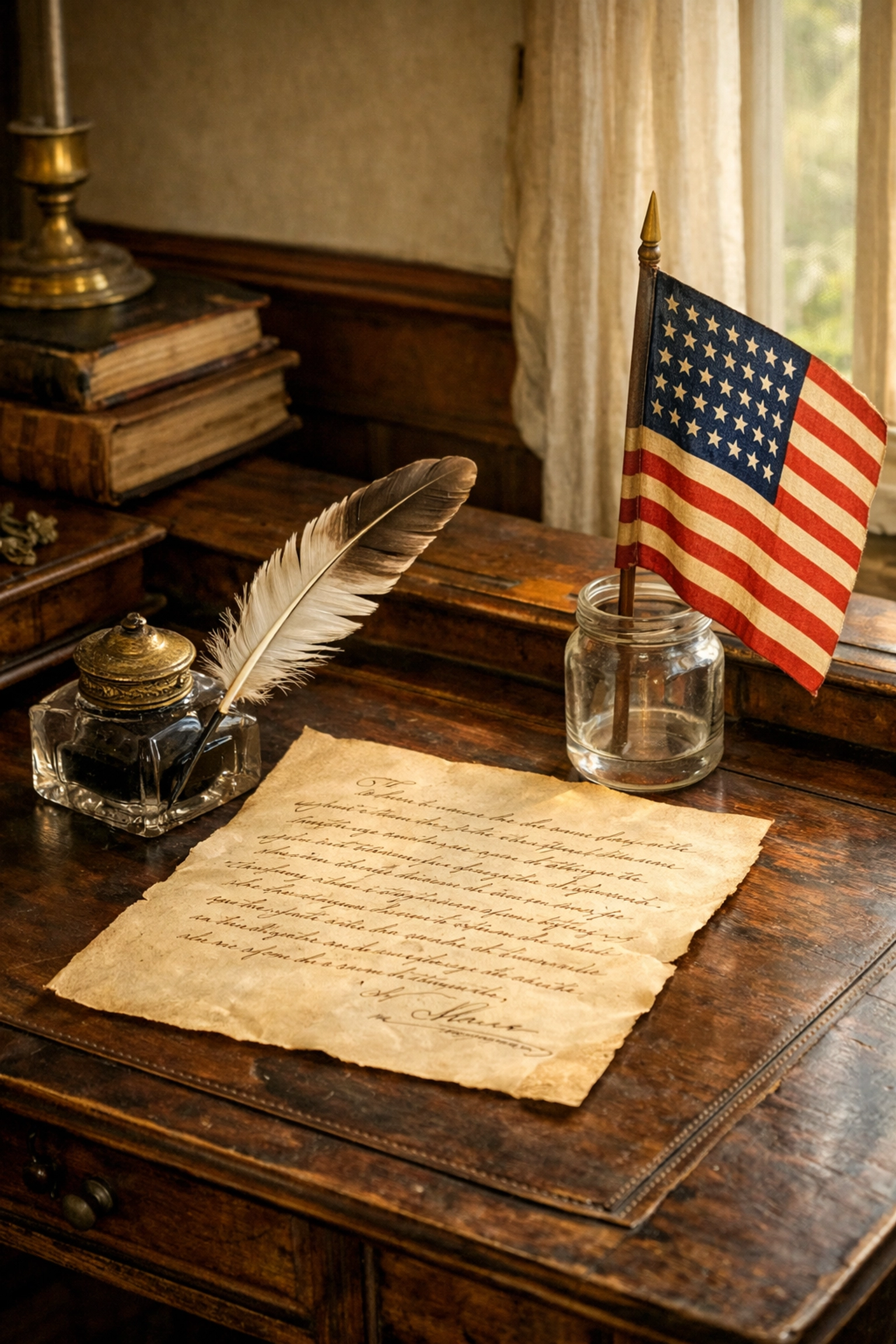
"I pledge allegiance to my Flag and the Republic for which it stands, one nation, indivisible, with liberty and justice for all."
That’s it. No "United States of America." No "Under God." Just a lean, mean, patriotic machine of a sentence. Bellamy’s goal wasn't just to give kids something to say; it was to spark a sense of shared destiny in a country that was still healing from the scars of the Civil War. When he wrote "indivisible," he wasn't just choosing a fancy word: he was making a definitive statement that the Union could never be torn apart again.
The Missing Pieces: What Was Different?
You might notice a few things missing from that 1892 version. If you’re a veteran or an educator, the absence of "the United States of America" might feel a bit jarring.
Bellamy originally used the phrase "my Flag" because he wanted the Pledge to be universal. He actually considered using the words "equality" and "fraternity" alongside "liberty and justice," but he decided against it because, at the time, those words carried too much political baggage from the French Revolution.
Instead, he focused on the "Republic." By directing the pledge to the Republic, he was reminding citizens that our loyalty isn't to a person or a king, but to a system of laws and a shared promise. If you’ve ever wondered does the pledge of allegiance still matter in 2026, look no further than Bellamy’s focus on that "indivisible" Republic.
The "Bellamy Salute": A Gesture Lost to History
Now, here is the part that usually shocks people. When those 12 million school children first recited the Pledge on October 12, 1892, they didn't put their hands over their hearts.
They used what was known as the "Bellamy Salute."
It began with the hand over the heart, but at the words "to my Flag," the right arm was extended straight out, palm upward, pointing directly at the Stars and Stripes. It was meant to be a gesture of reaching out toward the symbol of our nation.
Of course, if you fast-forward to the 1930s and 40s, you can imagine why this gesture became problematic. As the Nazi party in Germany adopted a very similar salute, the United States realized we needed a change. In 1942, Congress officially amended the Flag Code, instructing Americans to keep their right hand over their heart throughout the entire recitation.

Why the Words Changed (and Why They Stayed the Same)
The Pledge has always been a living document of sorts, evolving as the nation’s priorities shifted.
- 1923: Adding the Name. The National Flag Conference decided that "my Flag" was too ambiguous. They worried that immigrants might be pledging allegiance to the flags of their birth countries while standing in American classrooms. So, they changed it to "the Flag of the United States." A year later, they added "of America" just to be absolutely certain.
- 1954: Under God. During the height of the Cold War, President Dwight D. Eisenhower pushed for the addition of "under God" to distinguish the United States from the officially atheistic Soviet Union.
For many families today, these changes are part of the complex tapestry of our history. Whether you are answering kids' toughest questions about the pledge or discussing the forgotten history behind 'under God', knowing the timeline helps you become a better guide for the next generation.
Bringing 1892 into 2026
As we gear up for the 250th anniversary of the United States, we have a unique opportunity to look back at 1892. Bellamy’s original vision was about unity and civic education. He believed that if you teach a child the meaning of "liberty and justice for all" before they can even vote, you are planting the seeds of a stronger democracy.
If you’re an educator, don't just have your students recite the words. Challenge them. Ask them why Bellamy chose "indivisible." Use our educator toolkit for creative ways to teach the pledge to help them understand that these aren't just words on a poster: they are a commitment.
For the veterans among us, the Pledge represents the "why" behind the "what." It is the verbal representation of the oath taken upon enlistment. When we stand, we aren't just performing a ritual; we are honoring the 1892 promise that this nation remains one, despite our differences.

How You Can Keep the Story Alive
History isn't something that just lives in dusty textbooks. It lives in our conversations, our classrooms, and our communities. As we approach the 250th, it’s time to start telling America's stories again.
Here are three ways you can take action today:
- Educate: Share the story of the original 1892 Pledge with your children or students. Tell them about the 15-second goal and the "indivisible" promise.
- Engage: Join us for community dialogue nights to discuss how civic traditions can bring us together in divided times.
- Honor: Recognize the veterans in your life who have lived out the meaning of "allegiance" every day.

The 1892 Pledge was born out of a desire to unite a fractured nation. Today, in 2026, that mission is more relevant than ever. By understanding the roots of our most famous 31 words (or the original 22!), we reinforce the foundation of our future.
Lead with action. Outline the history. Dive deep into the meaning. And most importantly, stay patriotic. We are one nation, indivisible, and our story is only just beginning.
If you want to dive deeper into the legal side of things, check out what the law actually says about students and the pledge, or help us continue this educational mission by supporting our work through donations. Let's make the 250th anniversary a year of true civic renewal.