
What if everything you've been told about division in America is wrong?
We hear it constantly, the nation has never been more divided. Neighbors argue over politics. Families avoid holidays together. Social media feels like a battlefield. But here's the truth nobody wants to admit: unity has always required effort. It has always demanded intention. And right now, with America's 250th birthday approaching in 2026, you have the perfect opportunity to be part of something bigger than the noise.
Building unity doesn't require you to agree with everyone. It doesn't mean ignoring real differences or pretending problems don't exist. Unity means choosing connection over division, even when it's hard. Especially when it's hard.
Let's talk about how you can actually do that.
Why Unity Matters More Than Ever
Picture this: 250 years ago, a ragtag group of colonists decided they'd had enough. They came from different backgrounds, held different beliefs, and had plenty of reasons to distrust each other. But they found common ground in a single, audacious idea, that all people deserve liberty and the pursuit of happiness.
That founding vision didn't erase their differences. It gave them something bigger to rally around.
Today, you're living in the continuation of that experiment. And experiments require participation. They require people willing to show up, speak up, and stand together, not because they agree on everything, but because they believe the whole is worth preserving.

Unity isn't about uniformity. It's about finding shared values beneath the surface disagreements. It's about remembering that the person across the aisle, across the street, or across the Thanksgiving table is still your fellow American.
Start Small: Unity Begins in Your Own Backyard
You don't need to launch a national movement to make a difference. Unity starts where you are, in your home, your neighborhood, your workplace.
Here are practical steps you can take today:
Have a real conversation. Not a debate. Not an argument. A conversation. Ask someone with different views why they believe what they believe. Listen without planning your rebuttal. You might be surprised what you learn.
Find common ground first. Before diving into divisive topics, establish what you agree on. Most Americans share core values, family, fairness, freedom, opportunity. Start there. Build from that foundation.
Model the behavior you want to see. Kids, coworkers, and neighbors watch how you handle disagreement. When you stay calm, respectful, and curious, you give others permission to do the same.
Show up for your community. Volunteer at a local food bank. Attend a town hall. Coach a youth sports team. Shared experiences create bonds that political differences can't easily break.
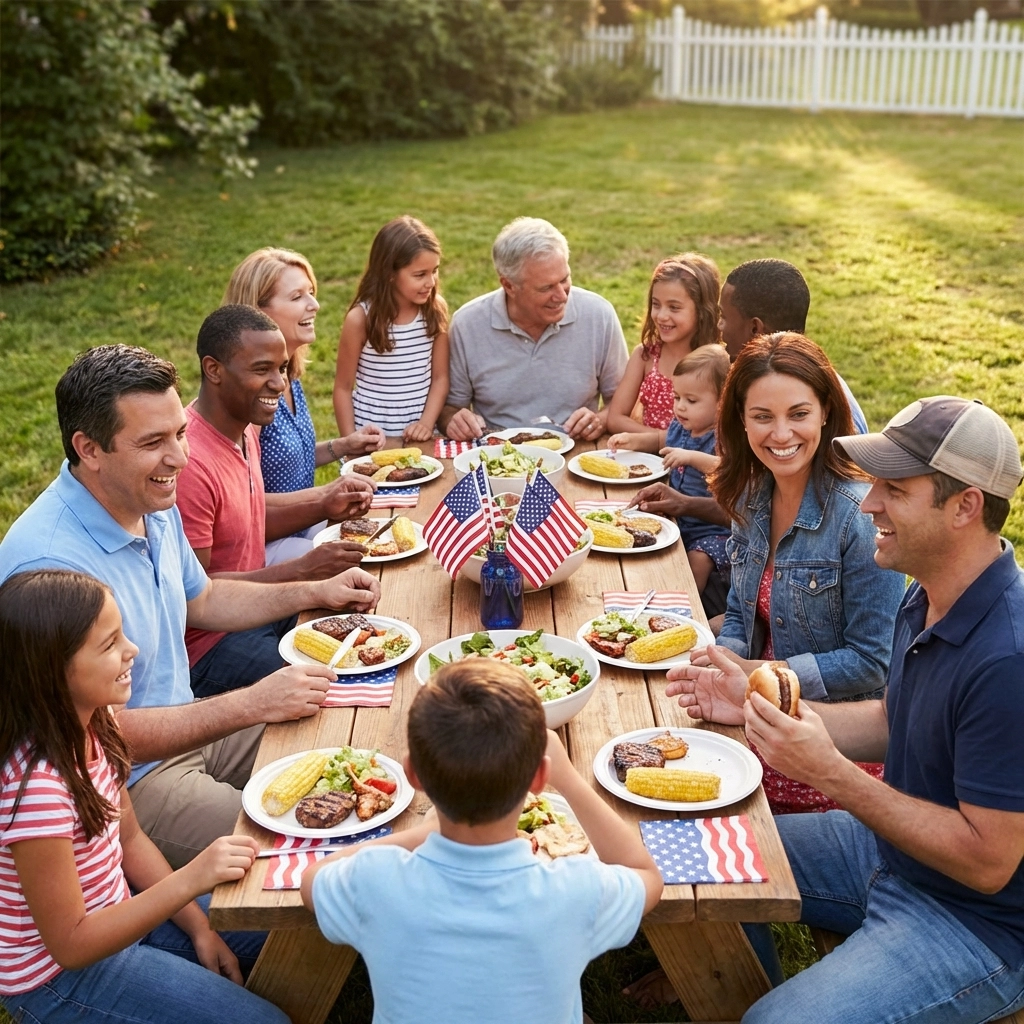
These aren't grand gestures. They're daily choices. And daily choices, repeated over months and years, shape the culture around you.
The Power of Symbols in Bringing People Together
Humans are wired for symbols. We rally around flags, songs, and shared rituals because they remind us who we are and what we stand for.
Think about the last time you stood for the Pledge of Allegiance. Or placed your hand over your heart during the National Anthem. Those moments aren't about politics, they're about belonging. They're about acknowledging that you're part of something larger than yourself.
As America approaches its 250th birthday, symbols of patriotism take on renewed significance. They become conversation starters. They become bridges.
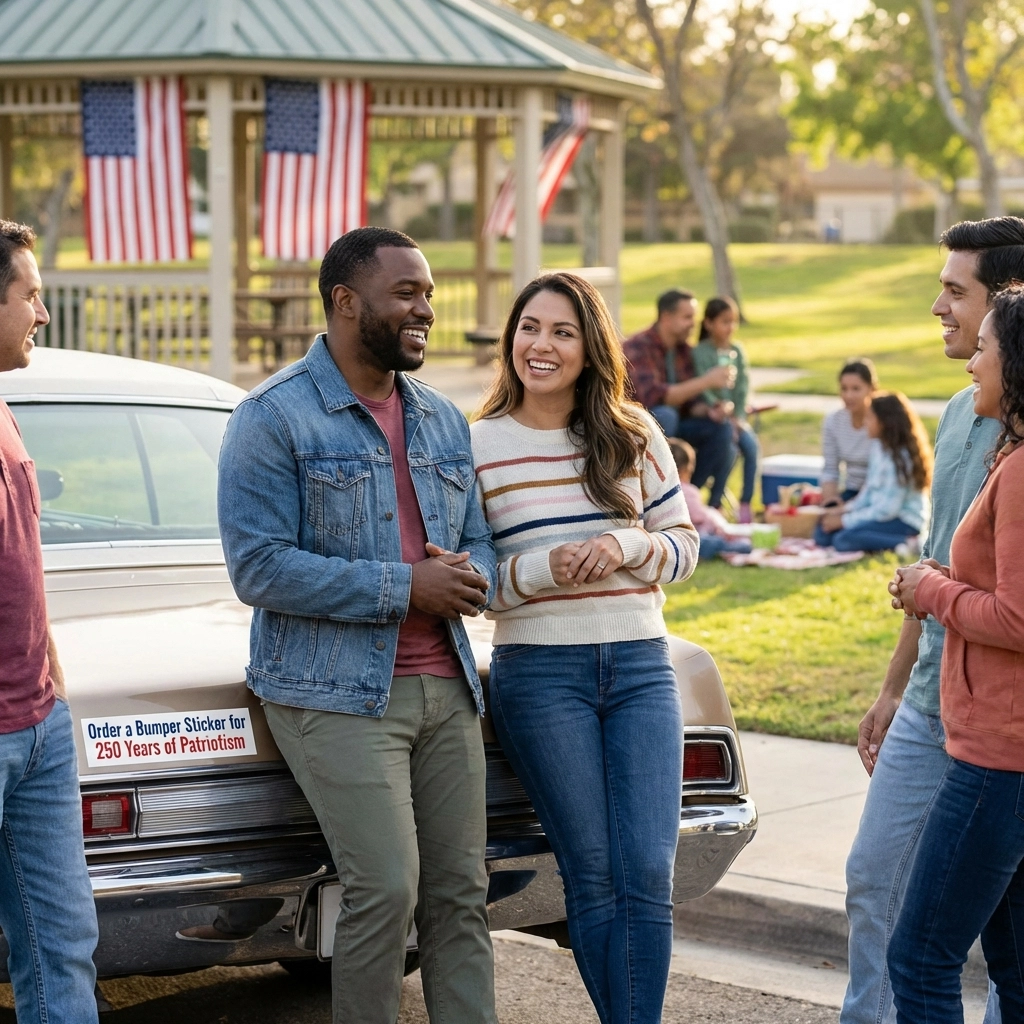
Something as simple as a bumper sticker can spark connection. It signals to the person in traffic behind you, "Hey, I believe in this country too." It's a small act of public optimism: a quiet declaration that despite everything, you still have hope.
Ready to show your support for America's 250th? Head over to our shop and grab a patriotic bumper sticker. It's a small way to celebrate 250 years of American resilience: and remind everyone on the road that unity still matters.
Teach the Next Generation What Unity Looks Like
If you're a parent, teacher, or mentor, you hold enormous influence over how young people view their country and their neighbors.
Kids absorb more than you realize. They hear how you talk about people who disagree with you. They notice whether you treat others with respect or contempt. They learn whether differences are threats or opportunities for growth.
Here's how to model unity for the next generation:
Tell stories of Americans working together. History is full of examples: neighbors rebuilding after disasters, communities rallying around causes, ordinary people doing extraordinary things for each other. Share those stories at the dinner table.
Encourage curiosity over judgment. When your child asks why someone believes something different, resist the urge to dismiss the other view. Instead, explore it together. Teach them that understanding doesn't equal agreement.
Celebrate civic traditions. Recite the Pledge. Discuss what the words mean. Attend local parades and community events. These shared experiences create lasting memories and instill a sense of belonging.
Lead by example. Let your kids see you having respectful conversations with people who think differently. Let them watch you choose kindness over contempt.
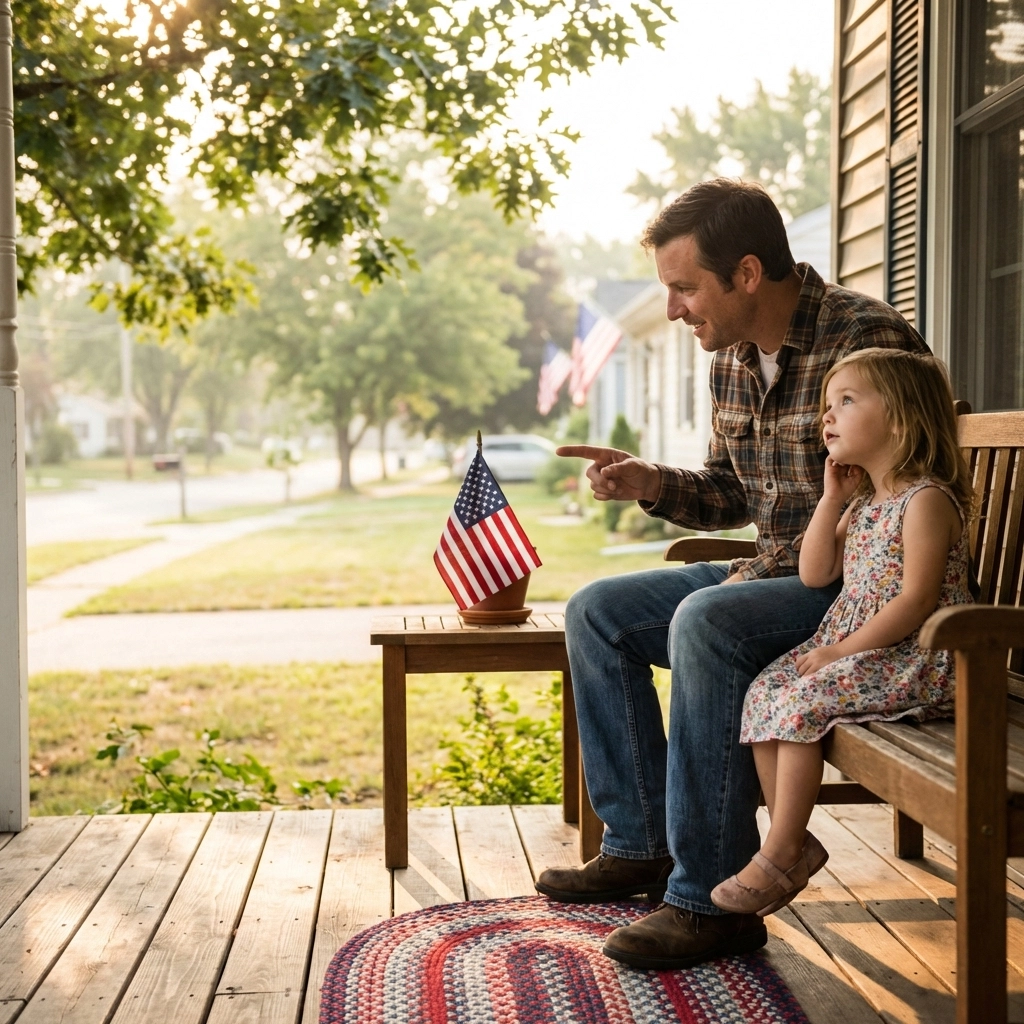
The generation you're raising will inherit this country. The habits you model now will shape the nation they build.
Reclaiming Patriotism as a Unifying Force
Somewhere along the way, patriotism became controversial. It got tangled up in partisan battles and cultural wars until many people felt uncomfortable expressing love for their country.
But patriotism: at its core: isn't about any political party. It's about gratitude. It's about recognizing that despite its flaws, America has offered opportunity, freedom, and hope to millions of people for nearly 250 years.
You can love your country and still want it to improve. In fact, that's exactly what patriotism should look like: caring enough to demand better while honoring what's already been achieved.
As we approach America's semiquincentennial, there's an opportunity to reclaim patriotism as a unifying force. Not as a weapon. Not as a dividing line. But as a shared celebration of an ongoing experiment in self-governance.
Small Acts, Big Impact
Unity doesn't require grand gestures or viral moments. It's built through countless small acts: a respectful conversation here, a community volunteer day there, a bumper sticker that sparks a smile from a stranger.
Every time you choose connection over division, you're casting a vote for the kind of country you want to live in.
Every time you listen instead of argue, you're modeling the behavior that heals communities.
Every time you celebrate what unites rather than what divides, you're honoring the vision of those founders who somehow managed to forge a nation from thirteen fractious colonies.
Join the Celebration of 250 Years
America's 250th birthday isn't just a date on the calendar. It's an invitation to reflect on how far we've come: and recommit to the journey ahead.
You don't have to do anything dramatic. Start where you are. Have that conversation. Show up for your neighbor. Model unity for the young people watching.
And if you want a simple way to show your patriotic pride, visit our shop and order a bumper sticker celebrating 250 years of American resilience. Stick it on your car, your laptop, your water bottle: wherever it might catch someone's eye and remind them that unity is still possible.
Because it is. It always has been. And with your help, it always will be.
Here's to 250 more years of building something together.