
You've probably seen the headlines. Maybe you've overheard the debates at family gatherings or scrolled past heated arguments in your social media feeds. The Pledge of Allegiance: those 31 words that generations of Americans grew up reciting every morning: has become a lightning rod for controversy.
But here's the real question you're probably asking: Does it actually still matter in 2026?
The short answer? Yes. But the longer answer requires us to look beyond the noise, examine the facts, and reconnect with what this simple pledge truly represents. Let's dig in.
The Current State of the Pledge in America
First, let's get grounded in reality. The Pledge of Allegiance isn't disappearing: not by a long shot.
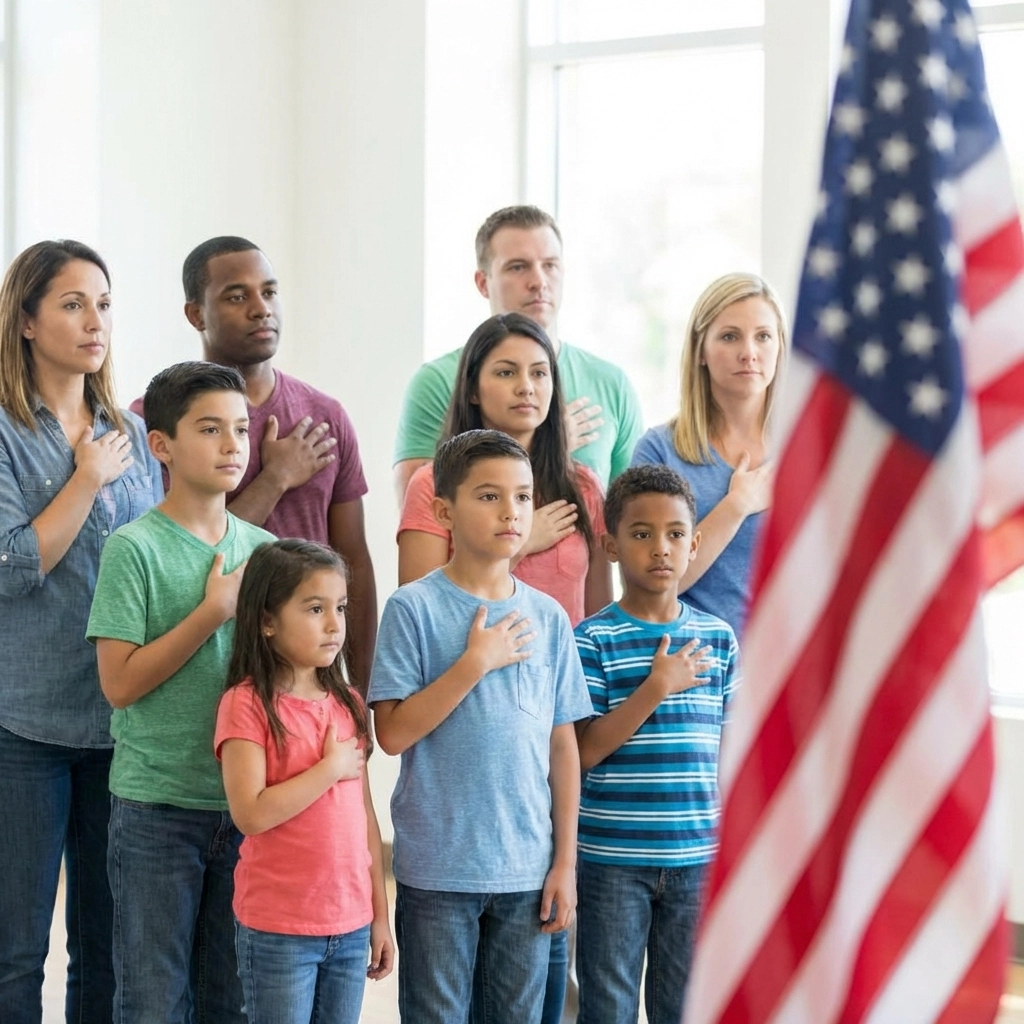
Currently, 45 states have laws requiring schools to offer students the opportunity to recite the Pledge daily. Most public schools across the nation continue the tradition, and millions of students still stand, place their hands over their hearts, and speak those familiar words each morning.
However, support has shifted. A 2024 Rasmussen survey found that 55 percent of American adults favor requiring daily recitation in schools: down from 61 percent just five years earlier. That's a notable decline, and it tells us something important: Americans are wrestling with what the Pledge means in today's world.

This isn't necessarily cause for alarm. It's an invitation: an opportunity to have honest conversations about patriotism, unity, and what it means to be American in 2026.
Why the Pledge Still Matters
Let's cut through the polarization and talk about what the Pledge of Allegiance actually does for us as a nation.
It Unites Us Around Shared Values
In an era defined by division: political, cultural, and social: the Pledge offers something increasingly rare: common ground.
Think about it. When you recite "one nation, under God, indivisible, with liberty and justice for all," you're not making a partisan statement. You're affirming ideals that transcend political parties, income levels, and backgrounds. You're declaring that, despite our differences, we share a commitment to something bigger than ourselves.
That's powerful. And in 2026, we need that unifying force more than ever.
It Plants Seeds of Civic Responsibility
Here's something that often gets overlooked: the Pledge isn't just about patriotism. It's about citizenship.
When young people recite the Pledge, they're engaging: even at a basic level: with the concept of civic duty. They're reminded that being American comes with responsibilities, not just rights. They're introduced to the idea that liberty and justice aren't automatic; they require active participation from every generation.
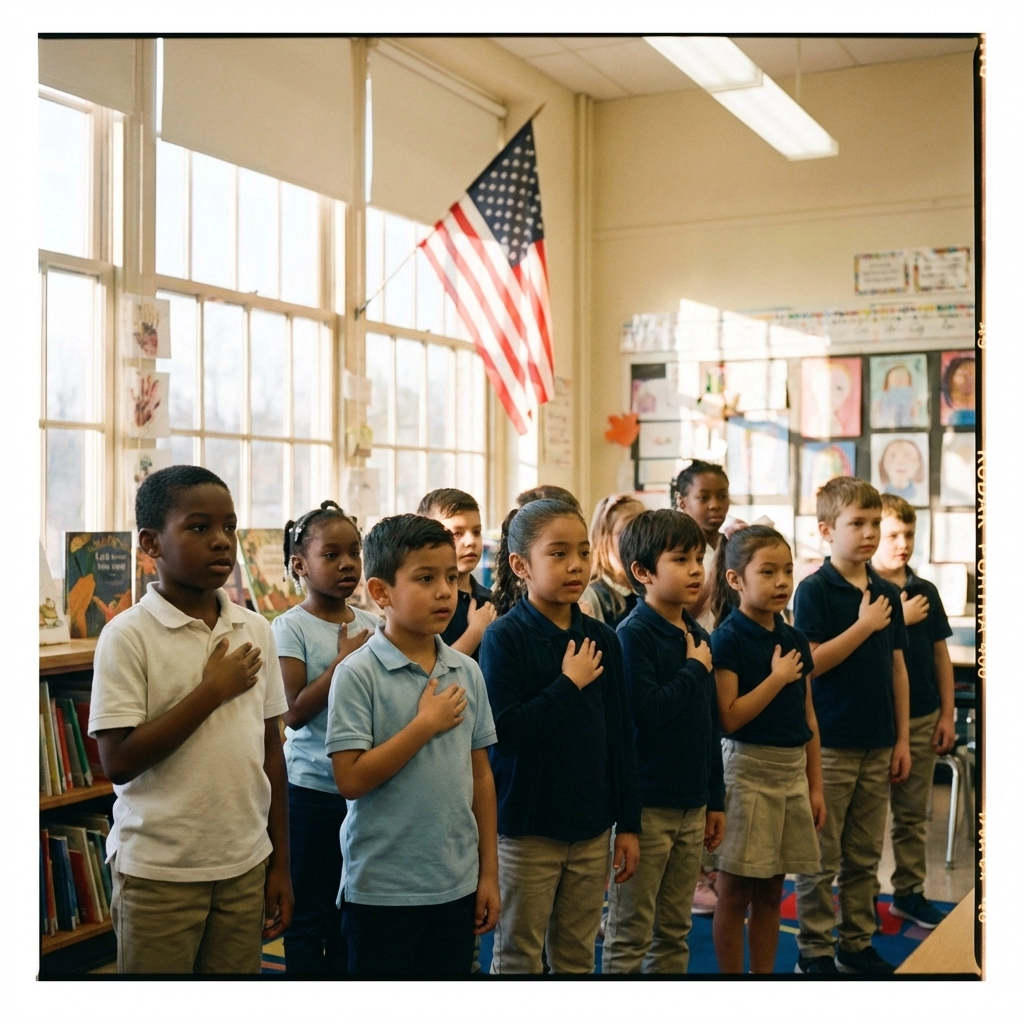
This daily ritual plants seeds. And those seeds, nurtured by quality civic education, grow into engaged citizens who vote, volunteer, serve their communities, and hold their leaders accountable.
It Honors Those Who Serve
Every time you say the Pledge, you're acknowledging the sacrifices of countless Americans who have served: and continue to serve: this nation.
Military members. First responders. Public servants. Veterans who gave years of their lives: and sometimes their lives themselves: to protect the freedoms we enjoy. The Pledge is a moment of recognition, a quiet "thank you" woven into our daily routine.
For many veterans and their families, hearing those words still carries profound meaning. It's a reminder that their service matters, that their sacrifices haven't been forgotten.
The Challenges We Need to Address
Now, let's be honest. The Pledge faces real challenges, and ignoring them won't make them disappear.
The Gap Between Words and Reality
One of the most common criticisms you'll hear is this: the phrase "liberty and justice for all" doesn't match everyone's lived experience.
For some Americans, those words feel aspirational rather than descriptive. They point to inequalities in our justice system, barriers to opportunity, and moments in our history when "all" clearly didn't mean everyone.
This criticism isn't unpatriotic: it's deeply American. Our nation was founded on the idea that we can always strive to form a "more perfect union." Acknowledging the gap between our ideals and our reality isn't a rejection of the Pledge; it's a commitment to making those words truer for every American.
The Legal and Philosophical Debates
You should also know that the First Amendment protects every student's right not to participate in the Pledge. This has been settled law since the Supreme Court's 1943 decision in West Virginia State Board of Education v. Barnette.
This means the Pledge must always be voluntary: never coerced. And that's actually a good thing. Forced patriotism isn't patriotism at all. When someone chooses to stand and recite the Pledge, that choice carries weight. It's meaningful precisely because it's free.
The Erosion of Shared National Identity
Perhaps the most significant challenge is broader: many observers note a decline in shared national values and a weakening sense of collective identity.
The Pledge alone can't fix this. But it can serve as a starting point: a daily reminder that, whatever our differences, we're all part of the same American story.
Bridging the Divide Through Civic Education
Here's where you come in. And here's where organizations like Pledge Allegiance play a crucial role.
The Pledge of Allegiance isn't magic. Reciting words without understanding them is just ritual. But when paired with genuine civic education: when students learn the history behind each phrase, explore the sacrifices that secured our freedoms, and grapple with the ongoing work of democracy: those 31 words come alive.
That's the mission we're committed to: not just preserving the Pledge, but deepening its meaning. Helping educators, families, and communities connect the dots between a daily recitation and the living, breathing experiment that is American democracy.

What You Can Do
- Start conversations. Talk to your kids, your students, or your neighbors about what the Pledge means to them. Listen without judgment. Share your own perspective.
- Learn the history. Understand where the Pledge came from, how it's evolved, and why each phrase was chosen.
- Support civic education. Organizations like ours exist to provide resources, training, and programs that make civic learning accessible and engaging. Consider donating or exploring our offerings.
- Model engaged citizenship. The best way to teach the values of the Pledge is to live them: vote, volunteer, serve, and participate in your community.
The Bottom Line
So, does the Pledge of Allegiance still matter in 2026?
Absolutely. But not because it's mandatory. Not because it's tradition. It matters because the ideals it expresses: unity, liberty, justice: are timeless. They're worth striving for, worth teaching, and worth passing on to the next generation.
The Pledge isn't perfect. Neither is our nation. But that's precisely the point. The Pledge is a promise: a daily commitment to keep working toward the country we aspire to be.
And that work? It starts with you.
Want to dive deeper into the meaning behind the Pledge? Check out our blog for more resources, or get in touch to learn how you can bring civic education to your school or community.