
Most people think a veteran’s story is safe just because it’s lived within the family for years, until they realize that without a deliberate effort to record it, a legacy can vanish in a single generation.
If you’ve ever sat across from a grandparent, a parent, or a sibling who served and felt that tug at your heart, the one that says, I need to remember this exactly as they told it, then you already know how precious these moments are. At Pledge Allegiance, we believe that the heartbeat of American history isn’t found in textbooks; it’s found in the living rooms and around the kitchen tables of those who wore the uniform.
Preserving these stories isn’t just about dates and battles. It’s about the smell of the diesel, the weight of the pack, the fear, the boredom, and the brotherhood. It’s about the values that define us as a nation.
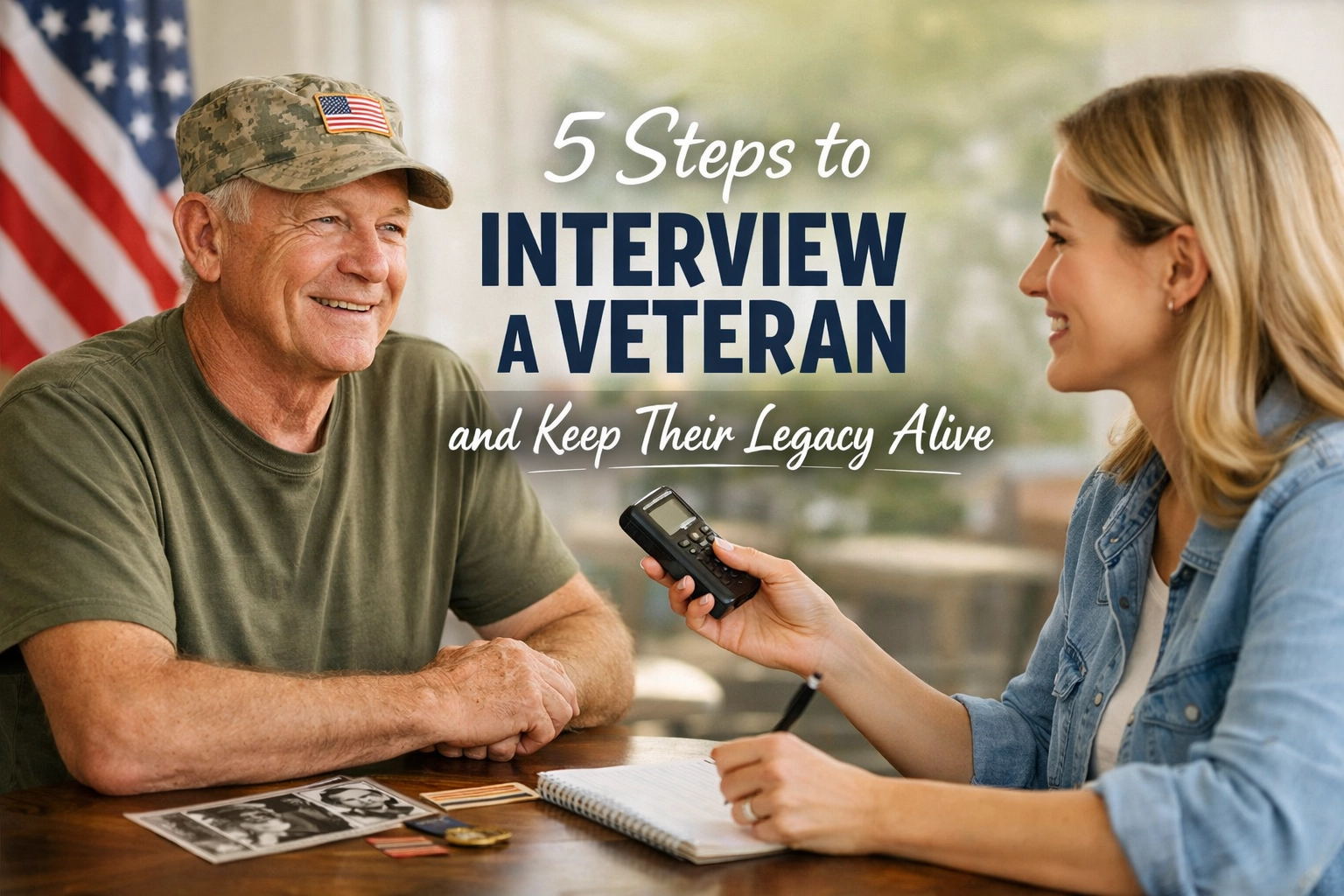
Here is your guide to conducting a heartwarming, professional, and deeply meaningful interview with the hero in your life.
Why Preserving These Stories Matters for Your Family
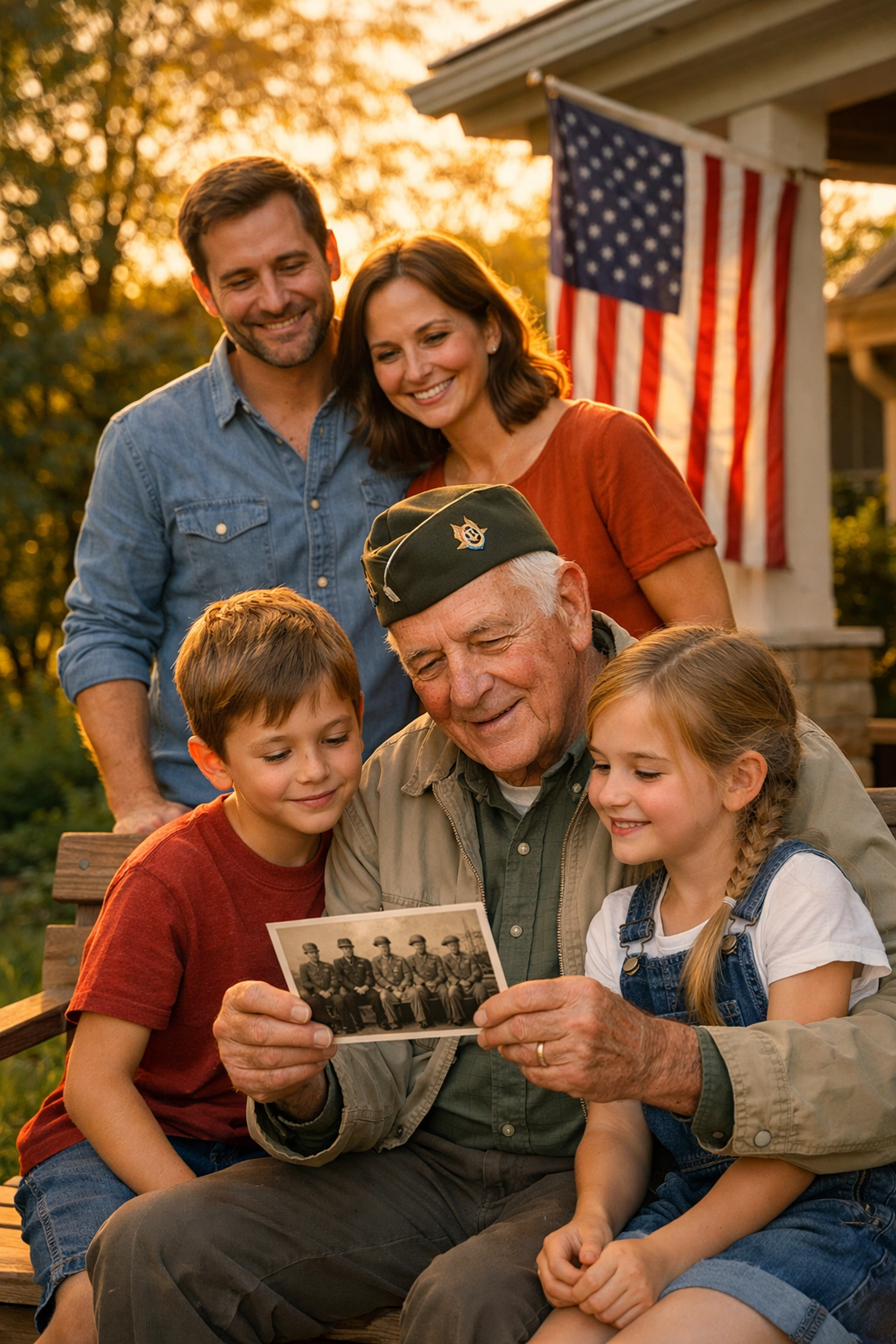
Before you hit "record," take a second to realize what you’re actually doing. You aren’t just "doing an interview." You are building a bridge between the past and the future. In a world that often feels divided, these stories of service and sacrifice remind us of what it means to be an American.
When you capture a veteran’s account, you’re providing your children and grandchildren with a roadmap of resilience. You’re showing them that they come from a line of people who stood up for something bigger than themselves. That is the essence of civic education.
Step 1: Do Your Homework (With Heart)
Most people make the mistake of showing up with a blank notepad and a "tell me about the war" attitude. To truly honor a veteran’s experience, you need to prepare thoroughly.
Start by researching the historical context of their service. If your Uncle Joe was in the Navy during the 1960s, look up the ships he might have served on or the specific conflicts of that era. Familiarize yourself with maps and timelines. When you show up knowing the difference between a battalion and a platoon, or you recognize the significance of a specific campaign, it shows the veteran that you value their time and their sacrifice.
Pro Tip: Ask them to fill out a simple biographical data form a few days before you meet. This helps you understand their specific background, where they trained, what their MOS (Military Occupational Specialty) was, and where they were stationed, so you can tailor your questions to their unique journey.

Step 2: Set the Stage for a Great Conversation
The environment is everything. You want a quiet location with minimal background noise. Turn off the TV, put the phones on silent, and maybe even find a spot where the lighting is soft and natural.
Create a Proper Recording Setup
Whether you’re using a smartphone or a high-end camera, stability is key. Use a tripod if possible. Before you dive into the deep stuff, record a "lead-in." This is a standard practice for historians. State the narrator’s name, your name, the full date (day, month, and year), the location of the interview, and the general subject matter.
This simple step ensures that fifty years from now, a researcher or a great-grandchild will know exactly who is speaking and why the recording was made. It anchors the story in time.
Step 3: Ask the Questions That Spark Memories
This is where the magic happens. The goal is to move past the "yes" or "no" answers and get to the heart of their experience. Avoid leading questions like, "Were you scared during the landing?" Instead, ask open-ended questions like, "Can you describe what was going through your mind as you approached the shore?"
Focus on Firsthand Experience
Stay away from hearsay or what they "heard" happened from other units. You want to know what they saw, what they did, and how they felt. If they make a generalization like, "The food was always terrible," follow up with a specific request: "Can you tell me about the worst meal you remember having?"
Specific examples turn a dry history lesson into a captivating narrative. For more inspiration on why these stories are the glue of our nation, check out our post on why telling America’s stories still matters.
Step 4: Master the Art of Active Listening
The most powerful tool an interviewer has isn’t a microphone, it’s silence.
When you ask a question, give them space to answer. Veterans are often processing memories that haven't been touched in decades. Do not rush the silence. A long pause often means they are formulating a response to a difficult or complex memory. If you jump in too quickly, you might cut off the most profound part of the interview.
Remain Flexible
While it’s great to have a list of questions, don’t be a slave to it. If the veteran mentions something fascinating that you didn't plan for, like a stray dog the unit adopted or a surprise visit from a USO performer, follow that lead! These "rabbit holes" are often where the most heartwarming and humanizing stories live.
Step 5: Honor and Preserve the Narrative
Once the interview is over, your job isn't quite finished. You have a responsibility to keep this legacy safe.
Obtain Agreement
Make sure you have a clear agreement (written is best) that the interview can be used for family history or research. This respects the veteran's privacy and ensures that their story can be shared with future generations legally and ethically.
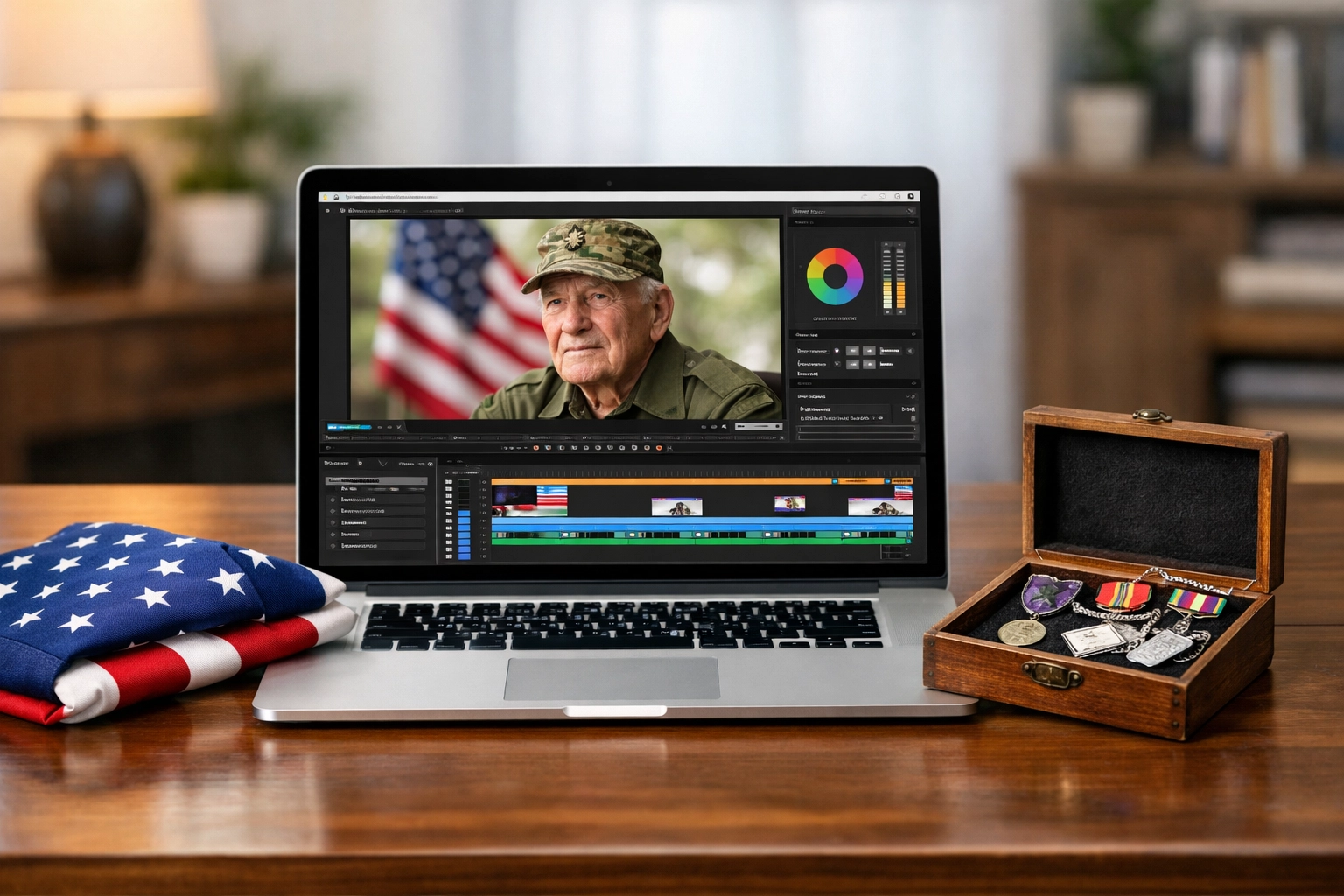
Digitize and Share
Don't let that recording sit on a single hard drive that might fail. Back it up to the cloud. Share it with other family members. Consider donating a copy to a local historical society or the Library of Congress Veterans History Project.
By preserving these accounts, you’re contributing to the collective memory of our country. You’re helping us build unity by reminding everyone of the common threads of service that bind us together.
The Bigger Picture: Civic Education and Unity
At Pledge Allegiance, we believe that when we listen to our veterans, we learn what it truly means to be a citizen. Their stories teach us about duty, honor, and the cost of the freedoms we enjoy every day.
If you’re inspired to help us keep these patriotic values alive in schools and communities across the country, please consider visiting our donation page. Your support helps us provide resources that teach the next generation why the American flag and the Pledge of Allegiance still matter today.
Quick Checklist for Your Interview:
- Research: Know their unit and where they served.
- Equipment: Test your audio/video before they arrive.
- Lead-in: Record the date, names, and location first.
- Open Questions: Focus on "how" and "why" rather than "what."
- Patience: Let the silence breathe.
- Backup: Save the file in at least three places.
Your family’s history is a vital piece of the American puzzle. Don't wait until the stories are gone to realize how much they meant. Grab a camera, sit down with your hero, and start the conversation today.
If you’re looking for more ways to celebrate American heritage or want to pick up some gear to show your pride, head over to the Pledge Allegiance shop. Together, we can ensure that no veteran’s legacy is ever forgotten.
Want to learn more about our mission? Visit our About Us page to see how we are working to strengthen civic education across the nation.