
Most people think they know everything there is to know about the Pledge of Allegiance: after all, we’ve been reciting it since kindergarten: until they realize the version we say today is worlds away from how it started.
Think about it: those thirty-one words are the heartbeat of our morning assemblies, the opening of our veteran’s tributes, and the foundation of our shared civic identity. But history is rarely a straight line. As we approach America’s 250th anniversary, there’s never been a better time to dive deep into the roots of our national promise. Whether you are an educator looking to spark a classroom discussion or a veteran preparing a speech for a community event, these ten facts will give you the conversational "ammunition" you need to inspire your audience.
Let’s pull back the curtain on the history of the Pledge of Allegiance.
1. It Was Created by a 13-Year-Old (With a Twist)
You might have heard the name Francis Bellamy associated with the Pledge, but there’s a captivating piece of history involving a young man named Frank E. Bellamy. According to historical records and research, Frank: a 13-year-old boy from Kansas: created the essence of the Pledge we know today back in 1892. He submitted his words as part of an essay for a magazine contest. Imagine that: a teenager’s perspective on loyalty and unity becoming the standard for an entire nation.
When you share this at your next event, remind your audience that civic leadership doesn't have an age limit. If a 13-year-old could help define our national loyalty, imagine what the next generation can achieve with the right civic education.
2. The Original "Marketing" Campaign
Most people assume the Pledge was born out of a government decree. The truth? It was originally published in a youth magazine called The Youth's Companion on September 8, 1892. It wasn't just a patriotic gesture; it was part of a massive schoolhouse flag fundraising campaign. The goal was to sell American flags to public schools across the country. It was a grassroots movement designed to instill a sense of national pride in the hearts of children during a time of massive national growth.
3. It was Supposed to be a One-Hit Wonder
Believe it or not, the Pledge was originally intended to be used for just one day. It debuted on Columbus Day, October 21, 1892, to mark the 400th anniversary of Columbus's arrival in the Americas. The organizers thought it would be a nice, one-time sentiment for the celebration. However, the response was so overwhelming that it quickly became a permanent fixture in American schools. It goes to show that when a message resonates with the "heart of your message," it lingers far longer than its creators ever intended.
4. The Original Salute Looked… Familiar
This is often the most shocking fact for people to hear. From 1892 until the early 1940s, the official salute during the Pledge was known as the "Bellamy Salute." It involved extending the right arm straight out, slightly upward, with the palm facing down. If that sounds like the Nazi salute used by Germany during World War II, you’re right: it looked almost identical.
As the war progressed and the horrors of the Nazi regime became clear, the resemblance became deeply problematic for the American public. We needed a way to express our loyalty that was distinctively American and removed from the shadow of tyranny.
5. FDR Intervened to Change the Salute
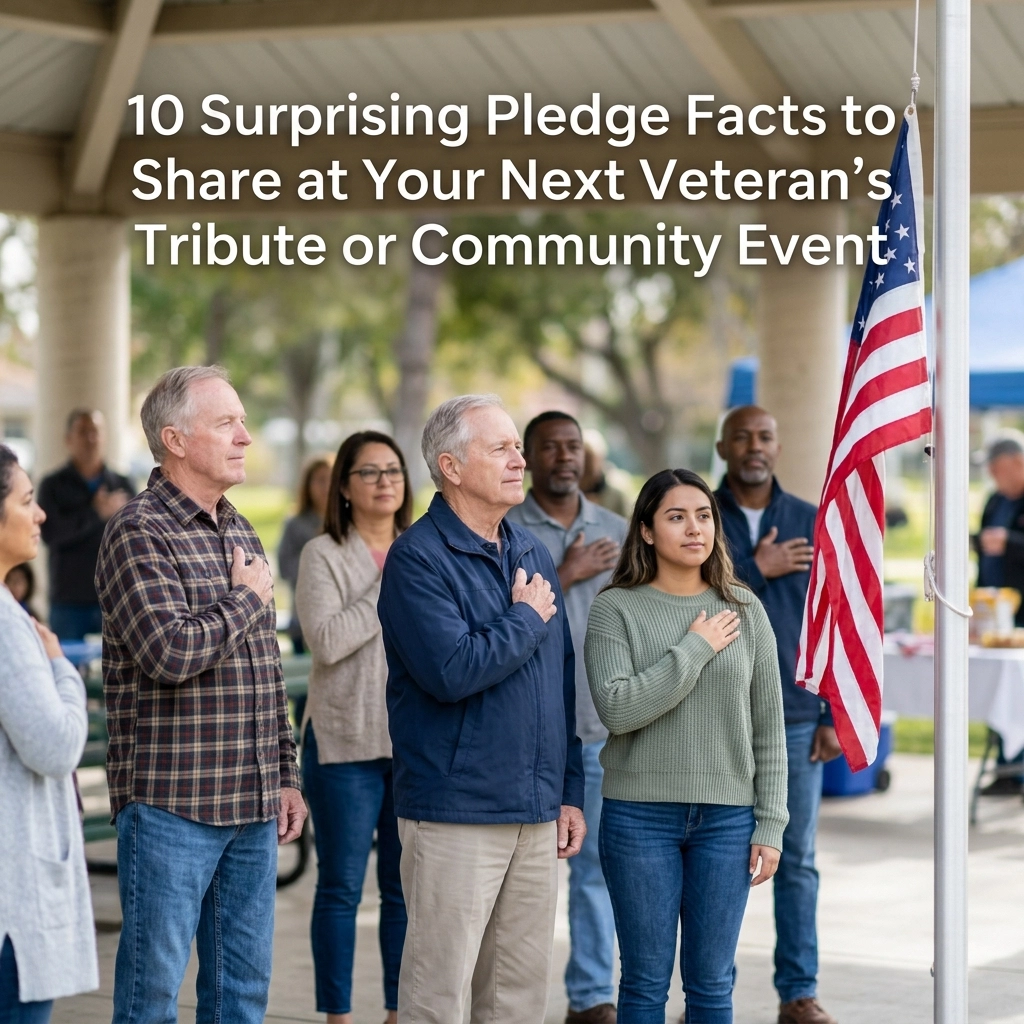
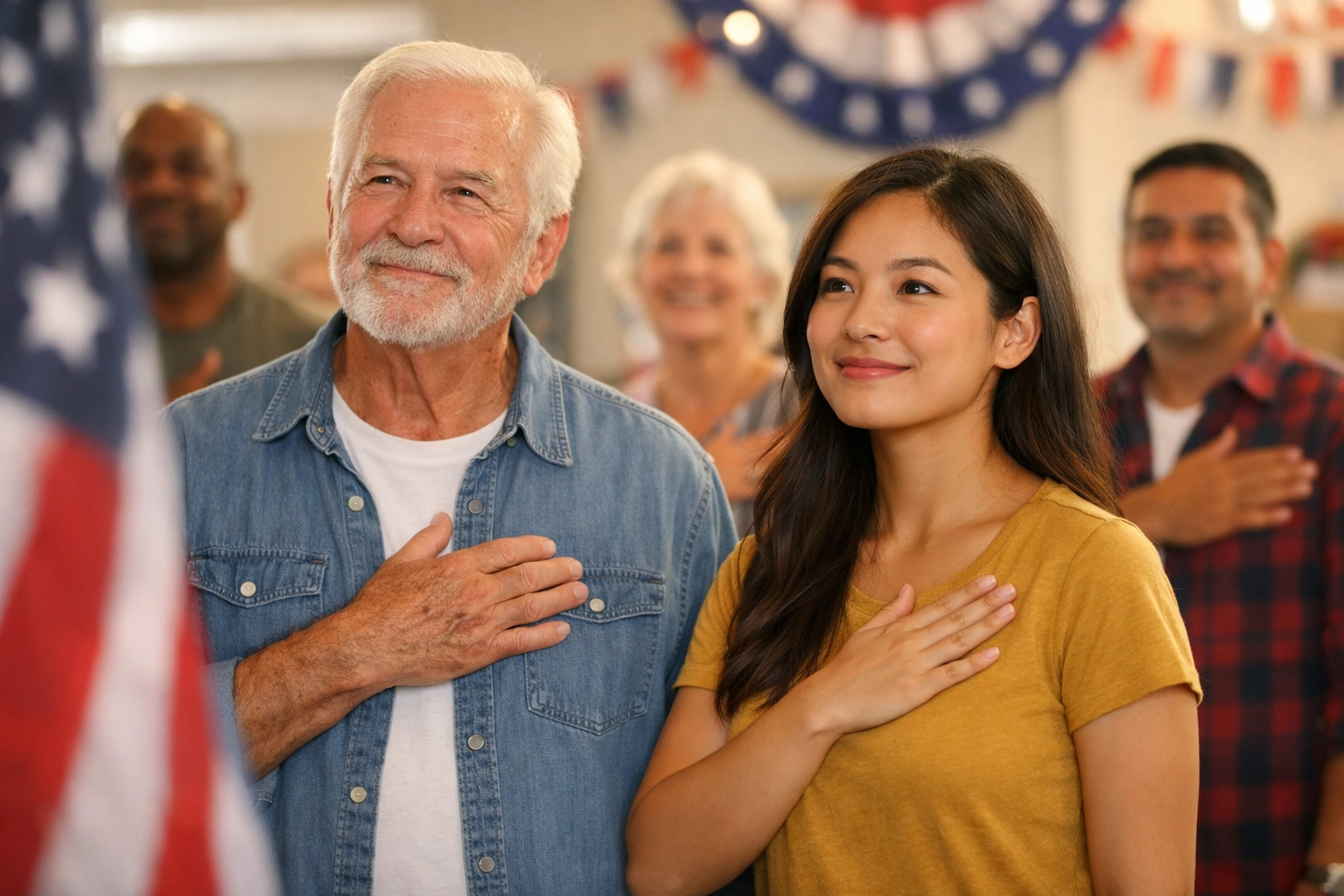
By 1942, the Bellamy Salute had to go. On December 22, 1942, President Franklin D. Roosevelt signed a law officially changing the salute to what we use today: the right hand placed firmly over the heart. This change wasn't just about aesthetics; it was a powerful shift toward a more internal, heartfelt expression of patriotism. When you lead a crowd in the Pledge today, you are participating in a tradition that was refined during one of our nation's most challenging eras.
6. The "Other" Pledge That Almost Won
Before our current version reigned supreme, there was a competing pledge created by Civil War veteran Colonel George T. Balch in the mid-1880s. His version read: "We give our heads and hearts to God and our country; one country, one language, one flag!"
While Balch’s version was used in many schools for years, critics (including Bellamy) found it a bit too "juvenile." Eventually, the more rhythmic and formal Bellamy version won out. However, Balch’s emphasis on "one country" highlights the post-Civil War desire for a unified national identity that we still strive for today. You can learn more about these early efforts in our about section.
7. Changing Wording for Immigrant Unity
The original wording was: "I pledge allegiance to my Flag…"
In 1923, at the National Flag Conference, the words were changed to "the Flag of the United States." Why? The American Legion and the Daughters of the American Revolution were concerned that immigrants might be confused about which flag they were pledging to: their home country or their new home. A year later, they added "of America" to make it crystal clear. This change reminds us that the Pledge has always been a tool for unity and clarity.
8. "Under God" was a Cold War Addition
Many Americans believe "under God" has been there from the start. In reality, these words were added in 1954 during the height of the Cold War. President Dwight D. Eisenhower encouraged the change to distinguish the United States from the officially atheistic Soviet Union. It was a move to emphasize the spiritual foundations of American liberty. This fact often sparks great discussions about the intersection of faith and civic duty in American history.
9. The Supreme Court Protects Your Right to Stay Silent
In 1943, the U.S. Supreme Court made a landmark ruling in West Virginia State Board of Education v. Barnette. The court ruled that no school or government entity can compel a person to recite the Pledge. This was largely a response to Jehovah’s Witnesses, whose religious beliefs prohibited them from pledging to a secular symbol.
It might seem counterintuitive to share this at a patriotic event, but it is actually one of the most patriotic facts of all. It proves that in America, we don’t force loyalty: we inspire it. Our freedom not to speak is just as vital as our freedom to speak.
10. Competing for Acceptance
For decades, there was no "official" national pledge. Different regions and schools used different versions (like Balch's) well into the early 20th century. It wasn't until the 1940s that the version we know today was officially recognized by Congress as the National Pledge. This slow burn to national consensus reminds us that unity is a process, not an overnight achievement.
Why Sharing These Facts Matters Today
As we look toward America’s 250th anniversary, it’s easy to feel like our history is static: like it’s just something in a textbook. But the history of the Pledge shows that our national identity is a living, breathing thing. It evolves, it reacts to global events, and it is shaped by the people who say it.
When you stand up at your next community event, don't just lead the recitation. Share a story. Tell them about the 13-year-old boy from Kansas. Tell them about the salute that had to change to save our dignity. Tell them about the Supreme Court’s protection of our individual conscience.
Take Action for Your Community
At Pledge Allegiance, we believe that understanding our past is the key to a stronger future. We invite you to explore our blog for more daily insights or visit our shop to find resources that help bring these stories to life in your classroom or local VFW post.
If you’re feeling inspired to support our mission of civic education, consider making a donation. Every bit helps us ensure that the next generation knows not just the words of the Pledge, but the powerful history behind them.
Hook, Address, and Outline
- Hook: Start your next meeting by asking, "Did you know we used to give the Pledge with a salute that looked like a Nazi salute?" Watch the room lean in.
- Address: Acknowledge the complexity of our history. It's okay that the Pledge has changed: it shows we are a nation capable of growth.
- Outline: Use these ten facts as a roadmap for a short presentation or a series of social media posts to engage your followers.
Dive deep into the history, stand tall with your hand over your heart, and let’s keep the spirit of American unity alive for another 250 years. If you have questions or want to share how you used these facts, contact us today. We’d love to hear from you!