
Picture this: eleven days ago, the sky across our nation was a canvas of red, white, and blue. We stood together on July 4th, 2026, celebrating a monumental milestone: the 250th anniversary of the United States. You likely felt that surge of pride as fireworks lit up the horizon, marking two and a half centuries of an experiment in self-governance. But now that the smoke has cleared and the parades have ended, how do we carry that spirit forward into our everyday lives?
The answer lies in thirty-one simple words you’ve likely spoken thousands of times.
The Pledge of Allegiance isn’t just a classroom ritual or a prelude to a ballgame; it is a living connective tissue that binds your story to the 250-year epic of America. As we settle into this post-Semiquincentennial era, understanding the Pledge of Allegiance history and its profound meaning is the key to moving from a passive observer to an active, informed participant in our democracy.
The 1892 Spark: A Promise for a New Generation
Most people think the Pledge has been around since the Founding Fathers signed the Declaration… until they realize it actually began in a magazine office in 1892.
At that time, the nation was preparing for the 400th anniversary of Columbus’s arrival. A Baptist minister and editor named Francis Bellamy wanted to create a way for schoolchildren across the country to feel a sense of shared national identity. He penned a short, powerful oath designed to instill civic education through daily practice.

When you look back at that original 1892 flag: with only 44 stars: you realize how much the nation has grown since Bellamy first wrote those lines. His original version didn’t even mention the "United States." It simply said, "I pledge allegiance to my Flag and the Republic for which it stands…" The focus was on the "Republic": a government where the power belongs to you, the people, through your elected representatives.
The Evolution of Your Oath: Why the Words Changed
You might wonder why we don’t say it the same way Bellamy wrote it. The truth is, the Pledge has evolved alongside the American people. These changes weren’t accidental; they reflected the challenges and values of each era.
- 1923 & 1924: Defining the Flag. During the National Flag Conference, the words "my Flag" were replaced with "the Flag of the United States of America." Why? Leaders wanted to ensure that the millions of new immigrants arriving at our shores knew exactly which flag they were honoring. It was a move toward clarity and inclusion in a rapidly growing nation.
- 1942: The Hand Over Heart. Did you know that before WWII, people often used an extended-arm salute (the Bellamy salute)? As the rise of fascism in Europe made that gesture uncomfortable, Congress officially changed the Pledge of Allegiance meaning and etiquette to the hand-over-heart gesture we use today. This was codified in the U.S. Flag Code, which you can learn more about in our guide on how to explain the Pledge's history to your kids.
- 1954: "Under God." At the height of the Cold War, President Dwight D. Eisenhower encouraged the addition of "under God." This change was meant to distinguish American values from the secular ideologies of the time, emphasizing a moral foundation for our rights.
Each of these shifts tells us something about who we were and who we wanted to be. For more deep dives into these milestones, check out our top 10 Pledge facts for your classroom.
Decoding the Promise: What Are You Actually Saying?
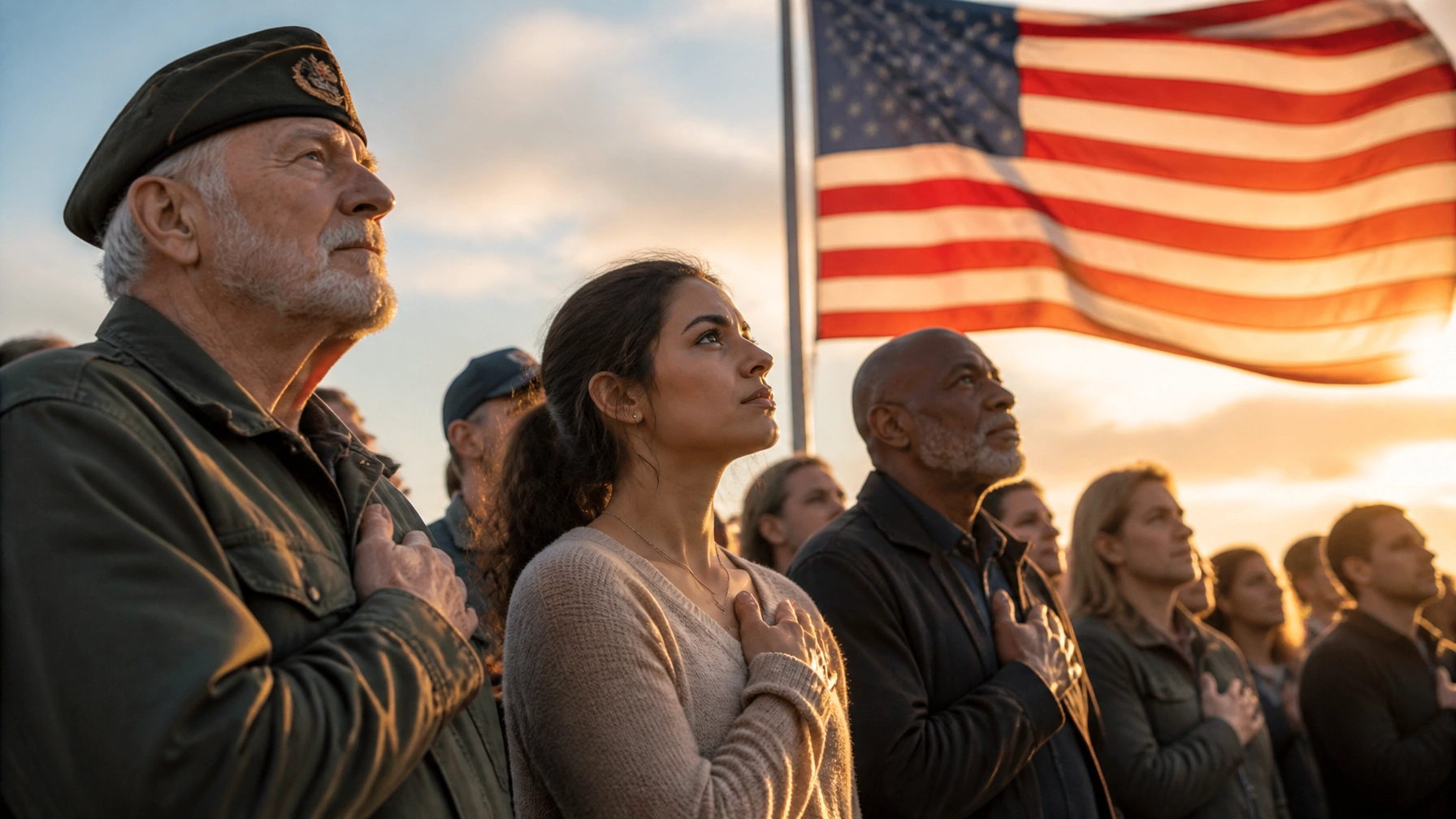
When you stand and place your hand over your heart, you aren't just reciting a poem. You are making a legal and moral commitment to the principles that have sustained us for 250 years. Let’s break down the "heart of the message" that should linger in your mind long after the recitation ends:
"And to the Republic…"
You aren't pledging to a king, a person, or even a specific political party. You are pledging to a Republic: a system where the law is king, and you have a voice. This is the cornerstone of civic participation.
"One Nation, Indivisible…"
This phrase was a powerful reminder in the post-Civil War era that we are one people. In 2026, as we reflect on our 250th anniversary, "indivisible" reminds us that our strength comes from our ability to debate, disagree, and yet remain committed to the same American project. If you're looking for ways to teach this, we have 50 real-world examples of indivisibility.
"With Liberty and Justice for All."
These are the most important seven words in the Pledge. They represent the "unfinished work" of our nation. By saying "for all," you are acknowledging that the American story is one of constant expansion: moving closer to a reality where every single person experiences the same level of freedom and fairness.

The Power of the "Quiet" Participant
One of the most profound aspects of the Pledge in a constitutional democracy is that saying it is a choice. In 1943, the Supreme Court ruled in West Virginia State Board of Education v. Barnette that students cannot be forced to recite the Pledge.
This might seem counterintuitive to a patriotic organization, but here is the secret: Patriotism is most powerful when it is voluntary.
When you choose to stand, you are making a personal statement of conscience. We believe that civic leadership matters, and true leadership involves respecting the freedoms of your neighbors: even their freedom to stay silent. This respect for dissent is, in itself, a profoundly American value.
Beyond the Words: Taking Action After America 250
The 250th anniversary was a beautiful celebration, but the "real" work of being an American happens on July 15th: and every day after. How can you turn the words of the Pledge into action?
- Educate the Next Generation: If you are an educator or a parent, use the Pledge as a starting point for discussions about history and rights. Don't let it be a rote memorization exercise. Check out our 50 creative ways to teach Pledge history.
- Honor Our Veterans: The Pledge is a tribute to those who defended the Republic. Take time to listen to a veteran’s story. Their service is the living embodiment of the "allegiance" we speak of.
- Engage in Civil Dialogue: In a nation of 340 million people, we won't always agree. Practice "liberty and justice" by listening to those with different perspectives.

Your Role in the Next 250 Years
You are now a part of the post-250 generation. The history of the Pledge of Allegiance shows us that we are a work in progress. We change our words, we change our gestures, and we refine our understanding of what it means to be free.
As you go about your day, remember that the Pledge is a roadmap. It points toward a destination where "liberty and justice for all" isn't just a phrase at the end of a sentence: it's the reality of our community.
Hook into your local community, address the challenges in your neighborhood, and outline a path for a better future. You have the power to make these 31 words mean more than they ever have before.

Ready to lead your community with integrity? Join our mission to keep the American spirit alive through education and tribute. Subscribe to our daily updates and become the informed participant our democracy needs. Together, we can ensure that the next 250 years are even brighter than the last.
Learn more about our Veterans Initiatives and Civic Programs here.