
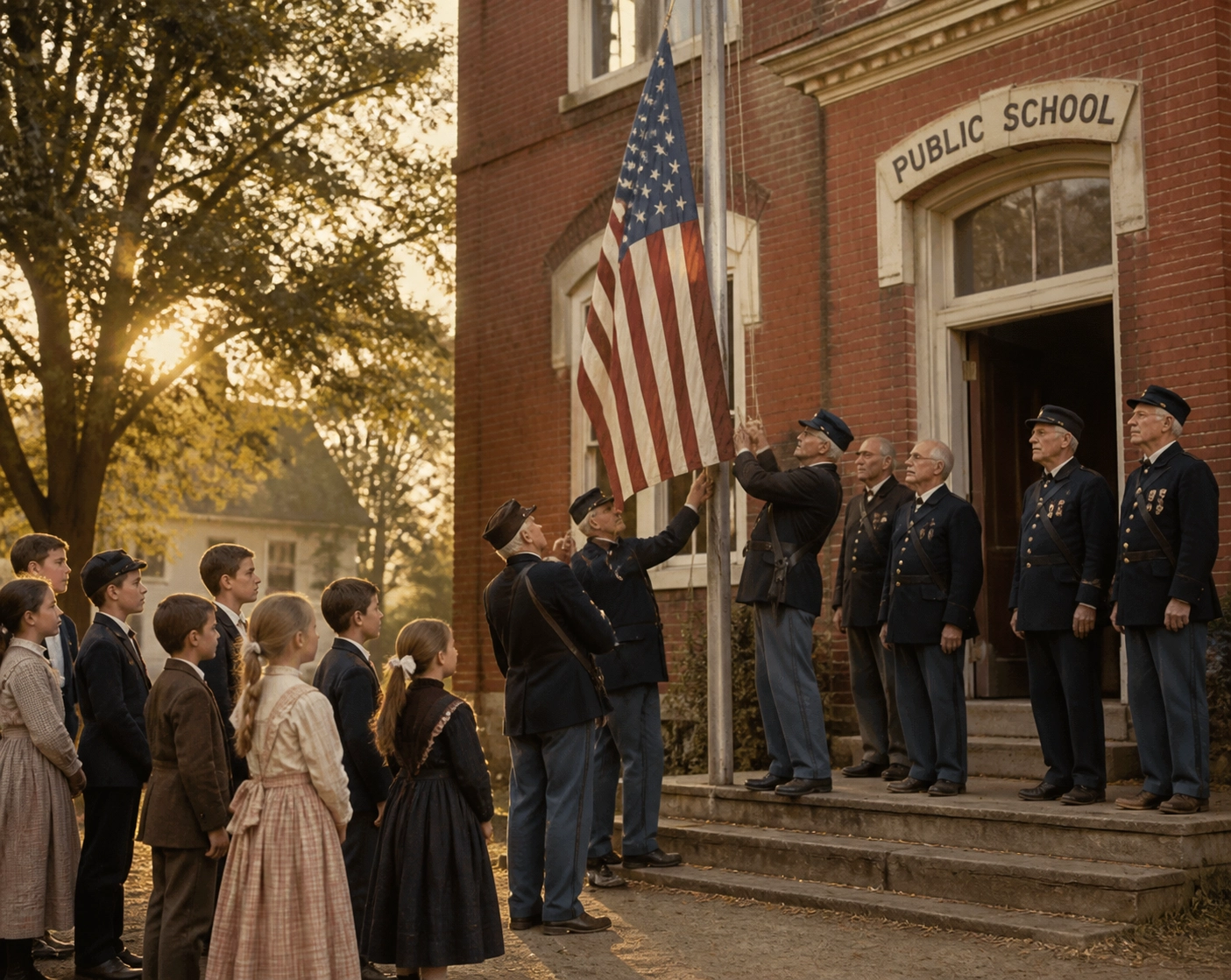
Picture this: You stand in a quiet schoolyard in 1892, surrounded by towering oaks and children in crisp pinafores and woolen knickers. Now, imagine the men standing tall beside them: not politicians or school board presidents, but weary, battle-scarred veterans of the Union Army, their chests bearing the badges of the Grand Army of the Republic. They didn't just carry muskets through the smoke of Gettysburg and Antietam; they carried a profound conviction that a nation sewn back together after civil war needed a shared anchor for its soul.
As we reflect on America’s monumental 250th anniversary milestone, it is time to look beyond the textbook summaries and rediscover the extraordinary veterans who brought the Pledge of Allegiance into our nation’s classrooms. Their story isn't just history stored away in archives: it is a living blueprint for how we build unity today.
The Wounds of a Divided House
Most people think national traditions appear out of thin air, crafted by committees in comfortable boardrooms: until they discover the raw, urgent desperation that birthed the Pledge.
In the decades following the American Civil War, the United States was a nation stitched together with scar tissue. Families had been torn apart, state loyalties had clashed in mortal combat, and millions of new immigrants were arriving on American shores seeking a place to call home. Leaders and citizens alike wrestled with a terrifying question: How do you unite a fractured continent into a single, cohesive republic?
Enter the Grand Army of the Republic (GAR): a powerful fraternal organization of Union Civil War veterans. They understood the cost of division better than anyone. They had watched young men fall on bloody fields, and they knew that preserving the Union didn't end at Appomattox. It required winning the hearts and minds of the next generation.
Through what became known as the Schoolhouse Flag Movement, these veterans launched a grassroots crusade to place the American flag in every schoolyard and classroom across the country. They believed: with absolute conviction: that when children looked up at the Stars and Stripes, they would see not a symbol of regional victory, but a covenant of shared destiny.
From Battlefield to Blackboard
The veterans’ patriotic vision quickly leaped from flagpoles to lesson plans. Captain George T. Balch, a decorated Civil War veteran and New York City educator, recognized that symbols needed words to give them voice. He penned one of the earliest school pledges: "We give our heads and hearts to God and our country; one country; one language; one flag!": which was enthusiastically embraced by GAR posts nationwide.

When Francis Bellamy composed the modern Pledge of Allegiance in August 1892 for The Youth’s Companion magazine, it was specifically designed to anchor the massive national school celebrations organized for the 400th anniversary of Columbus's arrival. And who stood at the center of those historic schoolhouse ceremonies? Civil War veterans, raising the flag with trembling hands and leading children in a unified salute.
When you recite the Pledge today, you are echoing words forged by veterans who refused to let the American experiment fracture. Every syllable was chosen to remind us that our unity is hard-won and precious.
The Weight of the Word: "Indivisible"
Notice the deliberate brilliance of the phrase crafted in that post-war era: “one nation, indivisible.”
Those four words were not casual poetry. They were a shield forged in fire. For Civil War soldiers who had survived the horrors of brother fighting brother, "indivisible" was a solemn vow. It was a daily reminder whispered in schoolrooms from Maine to California that no political grievance, no regional divide, and no cultural storm could ever be allowed to tear the republic apart again.
When you teach your children or students the Pledge, you aren't just reciting a morning routine: you are passing down an unbreakable firewall against division. You are reminding every listener that our shared identity as Americans rises far above our temporary disagreements. To explore more about how these historic values shape our modern civic life, take a look at our about page.
Bringing the Legacy into Your Classroom and Living Room
History isn't something that happened to us; it is a relay race, and the baton has just been handed to you. Whether you are an educator standing before a classroom of eager learners, a parent shaping your child’s worldview around the kitchen table, or a veteran continuing a lifetime of service, you have the power to breathe life into our civic traditions.

Here is how you can carry the torch forward today:
- Anchor the Context: Don't let the Pledge become background noise. Take five minutes this week to share the story of the Civil War veterans and the schoolhouse flag movement with your students or family.
- Connect Generations: Invite a local veteran into your home or classroom. Let young Americans hear firsthand what service, sacrifice, and commitment to country truly sound like.
- Explore Structured Programs: Utilize resources that break down the historical and civic significance of every phrase. Discover how our educational offerings provide engaging, depth-filled materials for schools and communities.
- Foster Civil Dialogue: Use civic traditions not as points of partisan debate, but as common ground where everyone: regardless of background: can stand together as equal citizens.
Your Call to Action: Honor the Tradition
The Civil War veterans who championed the Pledge of Allegiance left us an extraordinary legacy, but maintaining that unity is a daily choice. Now it is your turn to act.
Take a moment today to honor those who have served. Reach out to a veterans organization in your community, volunteer your time to support service members and their families, or share a veteran's story on social media using the hashtag #PledgeAllegiance.
If you believe in keeping civic education vibrant and honoring the veterans who built our traditions, consider supporting our mission. Visit our donate page to help us fund programs that bring authentic American history and civic understanding to classrooms nationwide.
Together, let's keep the republic strong, educated, and truly indivisible.