
Most people think the Pledge of Allegiance is an ancient founding document written by the same hands that penned the Constitution: until they see that it actually started as a 19th-century magazine ad campaign.
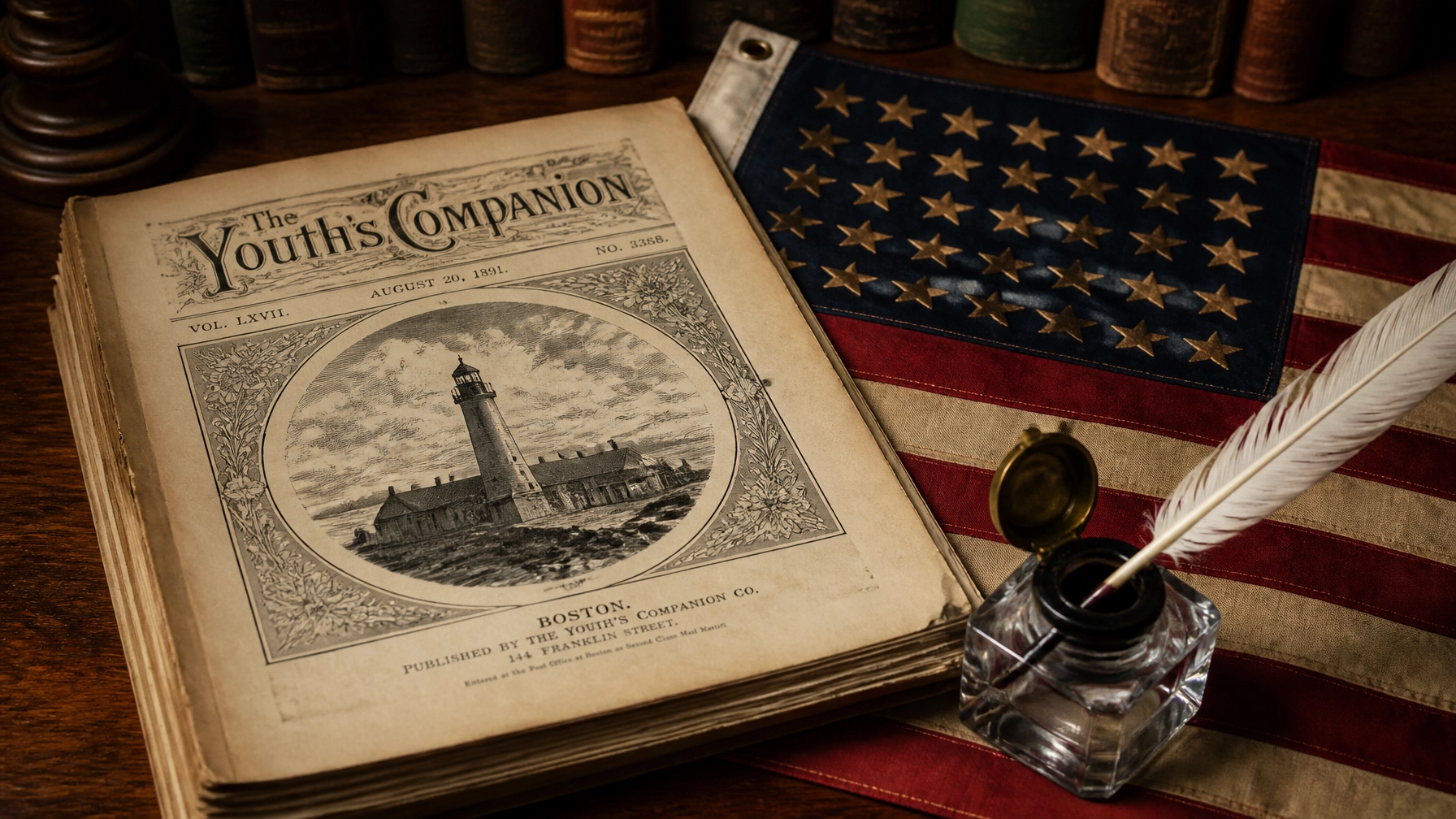
If you’ve ever stood in a classroom or at a local ballgame and wondered where these sixty seconds of tradition truly came from, you are not alone. Many Americans assume our national promise was born in the fires of the Revolution. In reality, it was born in the bustling editorial offices of a Boston-based family magazine called The Youth's Companion.
At Pledge Allegiance, we believe that understanding the Pledge of Allegiance history doesn't weaken your patriotism; it strengthens it. When you know the "why" behind the "what," your civic participation moves from habit to heart. Let’s dive deep into the fascinating marketing genius that gave us our most recited words of national unity.
The Man with a Mission: Francis Bellamy and the 1892 Campaign
Picture this: It’s the late 1800s. The United States is healing from the wounds of the Civil War and welcoming waves of new immigrants. The sense of a unified national identity feels fragile. Enter James B. Upham, a marketing mastermind for The Youth’s Companion.
Upham had a vision – he wanted a flag over every single public schoolhouse from the Atlantic to the Pacific. But he didn't just want to sell flags; he wanted to sell the idea of America. To do that, he needed a script. He turned to Francis Bellamy, a former minister and a writer for the magazine, and gave him a deadline that would change history.
Bellamy sat down in August 1892 to craft a "salute to the flag" for the upcoming 400th anniversary of Christopher Columbus’s arrival in the Americas. He didn't have months to deliberate; he had a few hours. He wanted something rhythmic, something brief, and something that every child could say in unison to feel like they were part of something bigger than themselves.

The Original Script: Before "Under God" and "The United States"
When you recite the Pledge today, you are using a version that has been edited four times since its inception. However, the core history of the Pledge of Allegiance starts with these original words published on September 8, 1892:
"I pledge allegiance to my Flag and the Republic for which it stands; one nation indivisible, with liberty and Justice for all."
Notice what’s missing? There was no "under God" (added in 1954) and no "of the United States of America" (added in 1923). Bellamy purposely kept it universal. He wanted it to be a pure statement of American values that could be shared by anyone, regardless of their background or religious belief.
His goal was to create a "civic ritual" that would bind the country together during a time of massive social change. By the time October 21, 1892, rolled around: the official Columbus Day celebration that year: millions of schoolchildren across the country recited these words for the very first time.
From Marketing to Meaning: The Power of Civic Education
It’s easy to look back and call it a "marketing campaign," but that dismisses the profound civic leadership Upham and Bellamy displayed. They recognized that a republic cannot survive on laws alone; it needs a shared culture and a common promise.
They used their platform to foster civic education at a grassroots level. By putting flags in schools and words in the mouths of the youth, they were planting the seeds of the modern American spirit. This wasn't just about selling magazines; it was about ensuring that the next generation understood their role in the Republic.
As we look toward the America 250th anniversary, we have a unique opportunity to bridge the gap between our past and our future. Just as Bellamy used a milestone anniversary to reinvigorate national pride, we can use our upcoming semi-quincentennial to reflect on what it means to be "one nation indivisible" in the 21st century.

Why This History Matters for You Today
You might ask, "Does it matter that it started as a magazine promotion?"
The answer is a resounding yes. It matters because it shows that patriotism isn't something that just happens: it is something we build together. It shows that private citizens, educators, and writers can have a massive impact on the national character.
Understanding the Pledge of Allegiance meaning requires you to see it as a living document. It has grown with us. It has been refined by conferences, influenced by world wars, and debated in the Supreme Court. It is a reflection of our ongoing journey to define "liberty and justice for all."
To explore more about how the Pledge has evolved over the last century, check out our deep dive on when 'my flag' became 'our flag' or learn how the Pledge has bridged the gap between major American milestones.
Your Role in the America 250th Anniversary
We are standing on the precipice of a historic moment. July 2026 marks the 250th anniversary of the United States. This isn't just a time for fireworks and parades; it is a time for a national "check-up" on our civic health.
Address your local community leaders, schools, and veterans' groups. How are you honoring the promise of the Pledge? Are you participating in the dialogue that keeps our "Republic for which it stands" strong?

Summarize your commitment to your country by taking these three steps today:
- Educate: Share this origin story with a friend or a teacher. Replacing assumptions with historical facts is the first step toward true civic engagement.
- Participate: Look for local America 250th anniversary planning committees in your city. Your voice is needed to shape how we celebrate this milestone.
- Reflect: The next time you say the Pledge, think about Bellamy’s original vision. Think about the "indivisible" nature of our nation and what you can do to mend the divides in your own neighborhood.
As our CEO recently noted in a special letter about America at 250, the Pledge is more than just a tradition: it is a call to remember what holds us together.
The story of the Pledge of Allegiance reminds us that even a simple idea, born in a magazine office, can become the heartbeat of a nation if enough people believe in the promise it makes.

Frequently Asked Questions About the Pledge of Allegiance
Who wrote the original Pledge of Allegiance?
The Pledge was written by Francis Bellamy in 1892 for The Youth’s Companion magazine.
When was the Pledge of Allegiance first recited?
It was first published in September 1892 and first recited en masse by millions of students on October 21, 1892, to mark Columbus Day.
How has the Pledge changed over time?
The wording was changed in 1923 to specify "the flag of the United States of America" and again in 1954 to include the phrase "under God."
What is the America 250th anniversary?
It is the upcoming 250th anniversary of the signing of the Declaration of Independence in 1776, occurring in July 2026.