
Most people think the Pledge of Allegiance has been part of our national fabric since the Founding Fathers first dipped their pens in ink: until they discover it actually started as a 19th-century magazine promotion to sell flags and subscriptions.
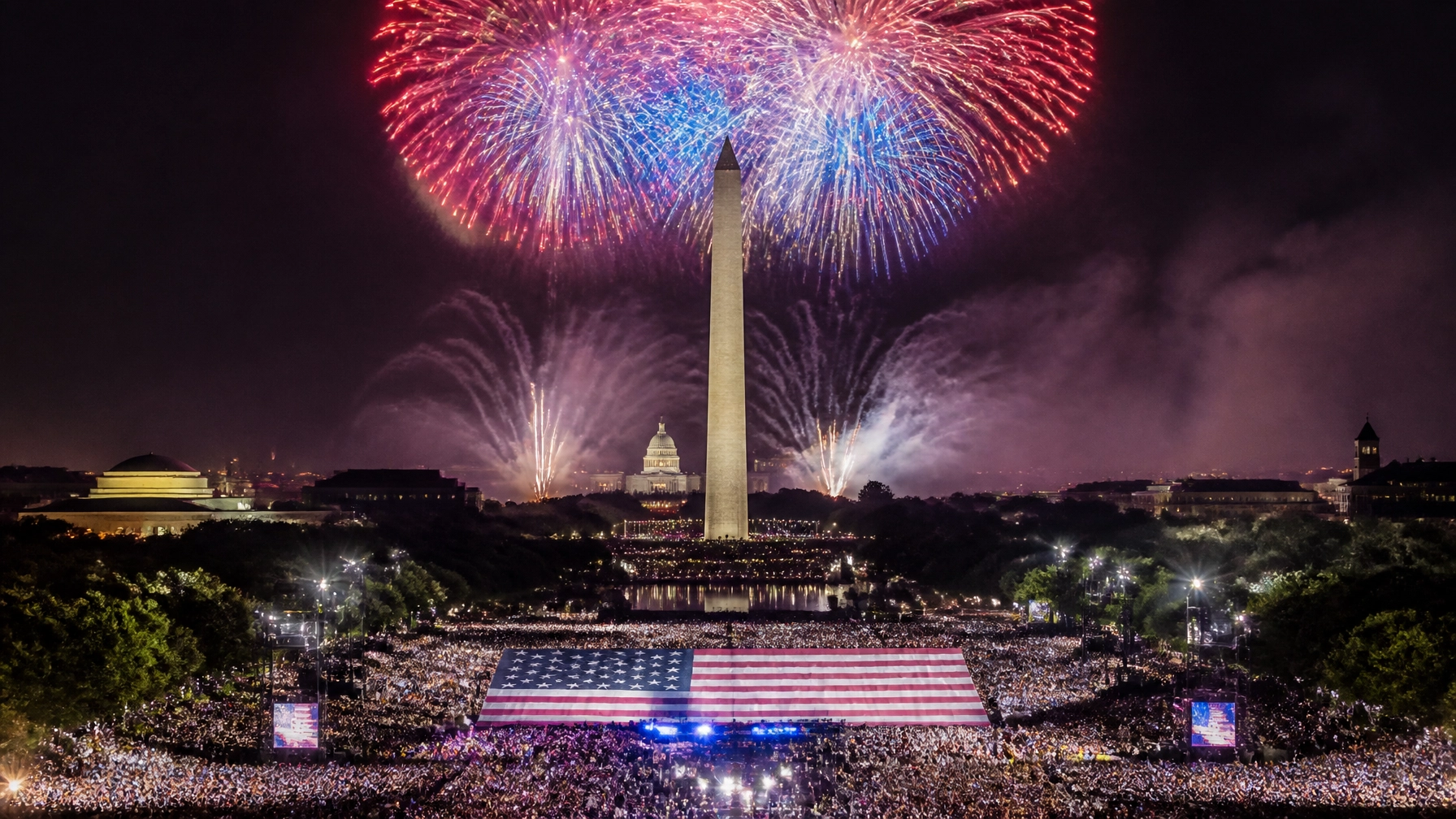
As we catch our breath from the monumental America 250th anniversary celebrations that swept the nation this past July 4, 2026, it’s the perfect time to look back. We’ve just witnessed the largest coordinated Independence Day in history, from the tall ships in New York Harbor to the record-breaking fireworks over the National Mall. But amidst the grand spectacles, the simple act of reciting the Pledge remains our most consistent heartbeat of patriotism.
You might be surprised to learn that this "sacred" vow wasn't born in a hall of government, but in the marketing department of a popular family magazine.
The Surprising 1892 Origin Story
Picture this: the year is 1892. America is preparing to celebrate the 400th anniversary of Christopher Columbus’s arrival in the New World. In a bustling office in Boston, a man named Francis Bellamy is working for The Youth’s Companion.
The magazine had a problem: and an opportunity. They wanted to boost their circulation, and they decided the best way to do it was through a "patriotic gimmick." They launched a campaign to put an American flag in every public school across the country. To make the flag-raising ceremony more impactful (and to sell more magazine subscriptions through flag premiums), they needed a salute.
Bellamy, a former minister with a passion for social justice, sat down and reportedly penned the original Pledge in just two hours. It was published anonymously in the September 8, 1892, issue of the magazine.

Think about that for a second: the words you’ve recited thousands of times began as a promotional strategy to get more eyes on a periodical. Yet, the genius of Bellamy was how he infused that "marketing campaign" with deep American values. He didn't just want to sell flags; he wanted to "Americanize" a rapidly changing nation and create a sense of unity following the divisions of the Civil War.
How the Words Evolved Over Time
The Pledge you say today isn't exactly what Bellamy wrote. In fact, if you had stood in a classroom in 1892, you would have said: "I pledge allegiance to my flag and to the Republic for which it stands; one nation, indivisible, with liberty and justice for all."
Notice what’s missing? There was no mention of "the United States of America" or "under God."
Changes didn't happen by accident; they were deliberate shifts reflecting our evolving national identity. In 1923, during the National Flag Conference, the words "my flag" were replaced with "the flag of the United States of America." Why? Because leaders were concerned that the millions of immigrants arriving in the U.S. might still be thinking of the flags of their home countries.
Later, in 1954, at the height of the Cold War, President Dwight D. Eisenhower encouraged Congress to add "under God" to distinguish the United States from "godless" communism. Each tweak to the text was a response to the pressures and priorities of the era. Understanding this history of the Pledge of Allegiance helps us realize that our patriotic traditions are living things: they grow and adapt just as we do.
Why Civic Education Matters Post-250th
Now that the 250th-anniversary fireworks have faded, you might wonder: what’s next? The celebrations were exhilarating, but a nation isn't sustained by pyrotechnics alone. It’s sustained by civic education.
At Pledge Allegiance, we believe that patriotism shouldn't be a passive feeling: it should be an informed choice. When you understand the "why" behind the rituals, they transform from rote memorization into a powerful commitment.

Educators and families, you are the frontline of this mission. Teaching the next generation about the Pledge isn't just about the words; it's about exploring the concepts of "indivisibility" and "liberty and justice for all." It’s about replacing assumptions with actual knowledge. We need to foster community dialogue where we can discuss our responsibilities as citizens without falling into divisive traps.
Honoring Our Veterans through Tradition
For our veterans and their families, the Pledge carries a weight that most civilians can only imagine. When a service member stands for the flag, they aren't just reciting a 19th-century magazine promotion: they are reaffirming the oath they took to protect the Republic.
We’ve spent the last few weeks at Pledge Allegiance gathering stories from veterans who participated in the 250th-anniversary parades. One veteran, a retired Marine, told us, "I’ve said the Pledge in school, on base, and at my kids' graduations. Every time, those words remind me that we are one nation, no matter how much we argue in between."

Preserving these stories and honoring this service is at the heart of our veterans initiatives. We bridge the gap between the historical document and the lived reality of those who have sacrificed to keep those words true.
Your Call to Action: Participate in Democracy
The 250th anniversary wasn't just a birthday party: it was a renewal of our "subscription" to the American experiment. But this time, we aren't buying it from The Youth’s Companion. We’re earning it through our participation.
Here is how you can take action today:
- Educate Yourself: Dive deeper into the meaning of each phrase of the Pledge.
- Support Schools: Encourage your local school board to implement robust civic education programs that go beyond the surface.
- Engage in Dialogue: Join or host a community discussion about what "liberty and justice for all" looks like in your neighborhood.
- Honor a Veteran: Listen to and preserve the stories of service members in your family or community.

The Pledge of Allegiance may have started as a magazine marketing gimmick, but over the last 134 years, we: the people: have made it something much greater. We’ve turned a subscription-booster into a national vow. Let’s make sure that as we move into the next 250 years, we continue to recite it not just with our voices, but with our actions.
Stay informed. Stay involved. Stay patriotic.