

August 9, 2026
By Dan Kost, CEO of Pledge Allegiance
Most people think patriotism is something you watch – until you see it lived out through teamwork, service, and civic responsibility.
That is what I am thinking about as the 2026 Patriot Games begin this weekend at SPIRE Academy in Geneva, Ohio. From August 9 through 11, young athletes from across the country gather as part of America’s 250th anniversary celebrations. They compete in challenges that test strength, endurance, agility, and teamwork – but the deeper lesson reaches far beyond the scoreboard.
Patriotism means participation.
It means showing up, working together, honoring sacrifice, and accepting responsibility for the future we share.
A national moment for the next generation
The Patriot Games give us a powerful opportunity to see young Americans not as spectators of our national story, but as active participants in it.
These athletes represent states, territories, and communities across the country. They bring different backgrounds, experiences, and hometown traditions with them. Yet they meet on common ground – through discipline, perseverance, and a shared sense of purpose.
That image matters.
As we approach the 250th anniversary of the United States, we should ask what kind of example we are setting for the next generation. Are we teaching young people that citizenship is merely a collection of facts? Or are we showing them that civic life requires effort, courage, cooperation, and respect?
The Patriot Games cannot answer every question about American life. No single event can. But they can remind us that shared identity is built through shared experiences.
And that is where civic education begins.
The PLEDGE Act brings the conversation to Washington
This weekend also arrives as Senator Ashley Moody introduces the PLEDGE Act, S. 5147, a proposal focused on public schools in Washington, D.C.
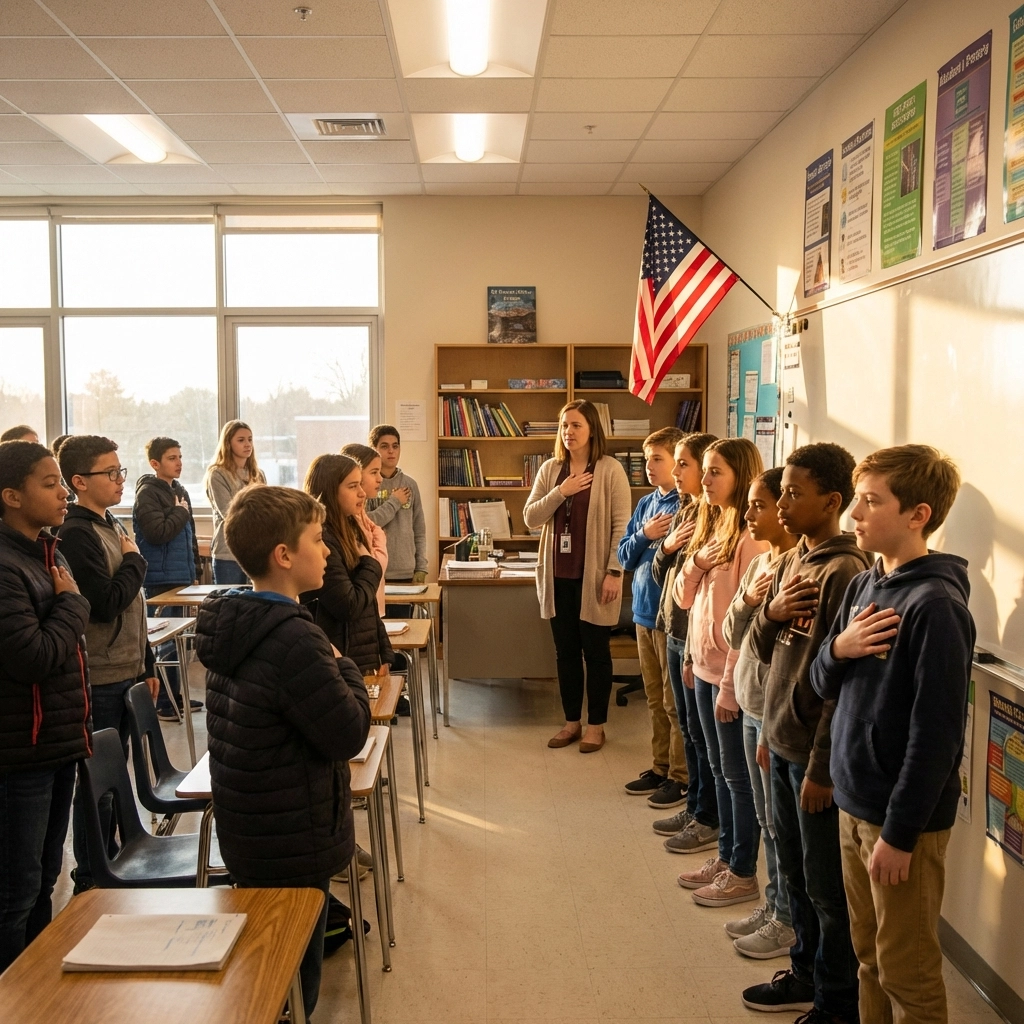
The bill would require American flags to be displayed in D.C. public school classrooms and would require schools to provide students the opportunity to recite the Pledge of Allegiance each day. As of this writing, the bill has been introduced and referred to committee – it is not yet law.
I believe the proposal raises an important national question: What do we want the Pledge to mean in the lives of students?
For me, the answer has never been simple compliance. The Pledge carries power when students understand the words they are saying and the ideals those words represent. It should open the door to conversations about liberty, justice, responsibility, sacrifice, and the ongoing work of forming a more perfect union.
We should also be clear about the distinction between an opportunity to participate and forced participation. Our earlier discussion of the Pledge in 2026 addresses that principle directly: meaningful patriotism cannot be manufactured through coercion.
A student’s choice matters. So does the quality of the education surrounding that choice.
Civics cannot stop at the classroom door
A recent report from the American School District Panel, a research partnership between RAND and the Center on Reinventing Public Education, reinforces something I have seen repeatedly in our work.
Most school districts offer some form of civics instruction. The report found that 74 percent of surveyed districts offer civics at the high school level, usually embedded in history or social studies. But only 36 percent report offering civics instruction at the elementary level, and hands-on opportunities such as service learning, student government, civil discourse, and community projects remain uneven.
That gap deserves our attention.
Students can learn how government works without ever experiencing what it means to contribute to a community. They can memorize the words “liberty and justice for all” without discussing how those ideals appear – or fail to appear – in daily life. They can recite the Pledge without hearing from someone who has personally served the nation it represents.
Knowledge matters. But knowledge becomes civic understanding when students connect it to real people, real responsibilities, and real communities.
That is why we are committed to programs that move beyond memorization. Through educational resources, classroom programs, community dialogue, and veterans initiatives, we help make civic learning more personal and more practical.
What we are building together
At Pledge Allegiance, we are not interested in turning the Pledge into a political litmus test.
We are building something more durable: a place where Americans can learn the history behind each phrase, ask difficult questions, listen to different perspectives, and connect national ideals to everyday responsibility.
That work includes:
- Helping educators teach the Pledge with historical context, so students understand where it came from and how its meaning has developed.
- Creating space for civil discussion, so communities can address disagreement without surrendering respect.
- Connecting students with veterans, whose experiences bring the words “I pledge allegiance” out of the abstract and into human focus.
- Encouraging meaningful participation, from service projects and volunteering to informed conversations about civic life.
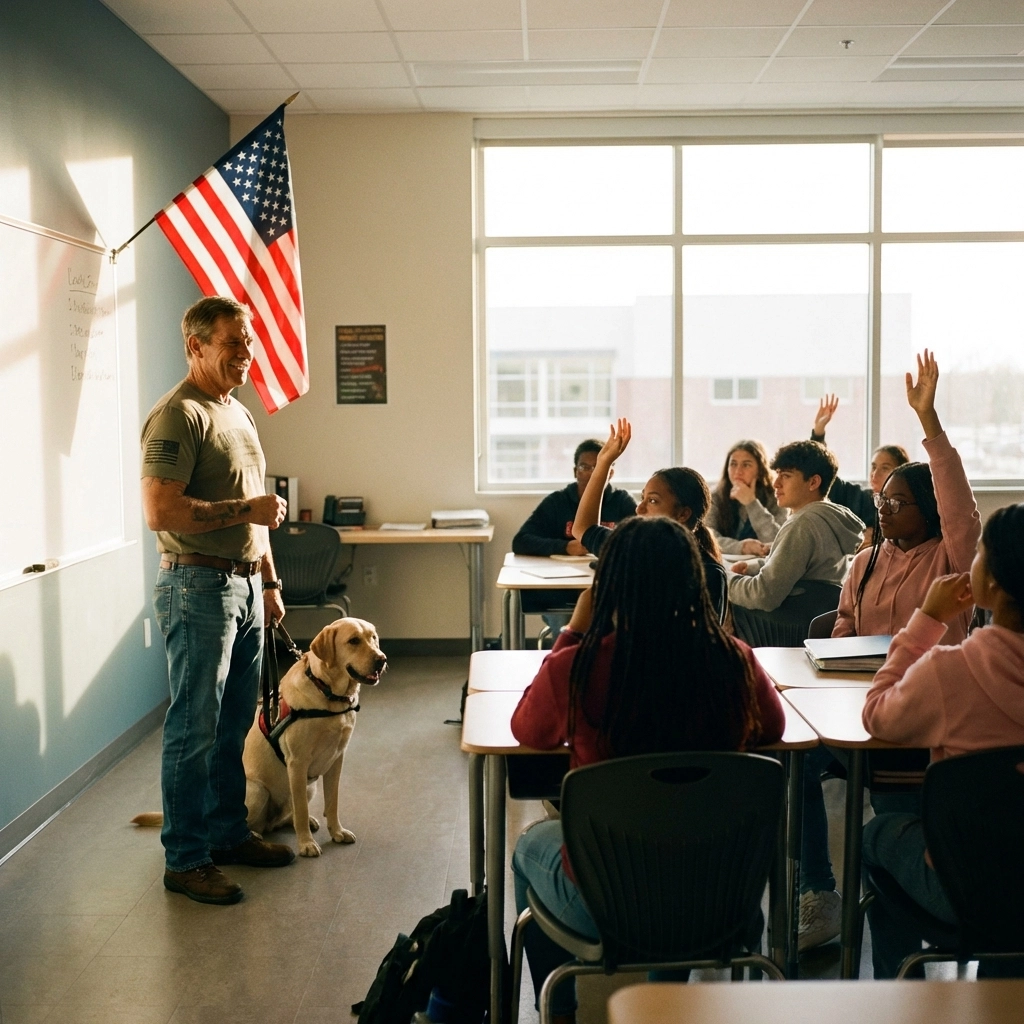
A veteran does not need to deliver a political speech to make an impact. Sometimes a personal story is enough. A memory of family. A difficult deployment. A moment when the flag carried a meaning that was impossible to explain in a textbook.
Those stories remind students that freedom is not an idea floating above us. It is protected, tested, and renewed by people.
The promise is bigger than the ritual
I value the tradition of reciting the Pledge. I also believe tradition becomes stronger when we understand it honestly.
The words point toward ideals that America has not always fulfilled perfectly. That does not make them irrelevant. It makes them a challenge – and a promise.
“Liberty and justice for all” is not merely a description of where we are. It is a standard that asks us to keep working.
That is the connection I see between the Patriot Games, the PLEDGE Act, and our mission. Each invites us to consider how national symbols and civic traditions can shape behavior. Do they encourage humility, courage, service, and unity? Do they help young people see themselves as responsible members of a larger community?
They can – when we teach them with care.
A brief invitation
As the Patriot Games begin, I invite you to watch with more than national pride. Look for the teamwork, discipline, and responsibility on display. Then bring that same spirit into your school, family, or community.
Explore our civic education offerings, share your own story about what the Pledge means to you, or learn how to support our veterans initiatives and classroom programs.
We are approaching 250 years as a nation. The next chapter belongs to all of us.
Let’s build it together.
( Dan)