
SEO Title: Community Dialogue: Building Stronger Communities
Meta Description: Discover how community dialogue strengthens civic education, civil discourse, and shared American values: and learn ways to bring respectful conversation home now.
Suggested URL: /community-dialogue-civil-discourse
Primary Keyword: community dialogue
Secondary Keywords: civic education, Pledge of Allegiance, civil discourse, patriotic leadership, American values
Friends,
Today, I want to talk about something our nation needs as much as ever: the courage to sit down, listen carefully, and speak with one another in good faith.
Most people think strong communities are built only through shared neighborhoods, schools, churches, workplaces, and traditions – until they realize that a community cannot remain strong when its members stop talking to one another. A healthy community dialogue does more than create conversation. It builds understanding, restores trust, and reminds you that disagreement does not have to destroy unity.
At Pledge Allegiance, we believe knowledge is the starting point. Our mission is to replace assumptions with actual knowledge about the Pledge of Allegiance, our history, our civic responsibilities, and the American values we share. But knowledge becomes truly powerful when you use it to engage your neighbors with respect.
That is where civil dialogue begins.
Why Community Dialogue Matters
Community dialogue gives you a structured way to explore important issues without turning every conversation into a contest.
A debate asks who is right. A meaningful dialogue asks what you have experienced, what you value, what you may have misunderstood, and what you can do together next. That distinction matters. When your goal is understanding rather than victory, you create room for honesty and learning.
The Community Tool Box at the University of Kansas describes dialogue as a community conversation that may include a handful of people around a kitchen table or hundreds gathered in a civic setting. Its purpose is to bring different voices together, identify common ground, and turn shared insight into constructive action.
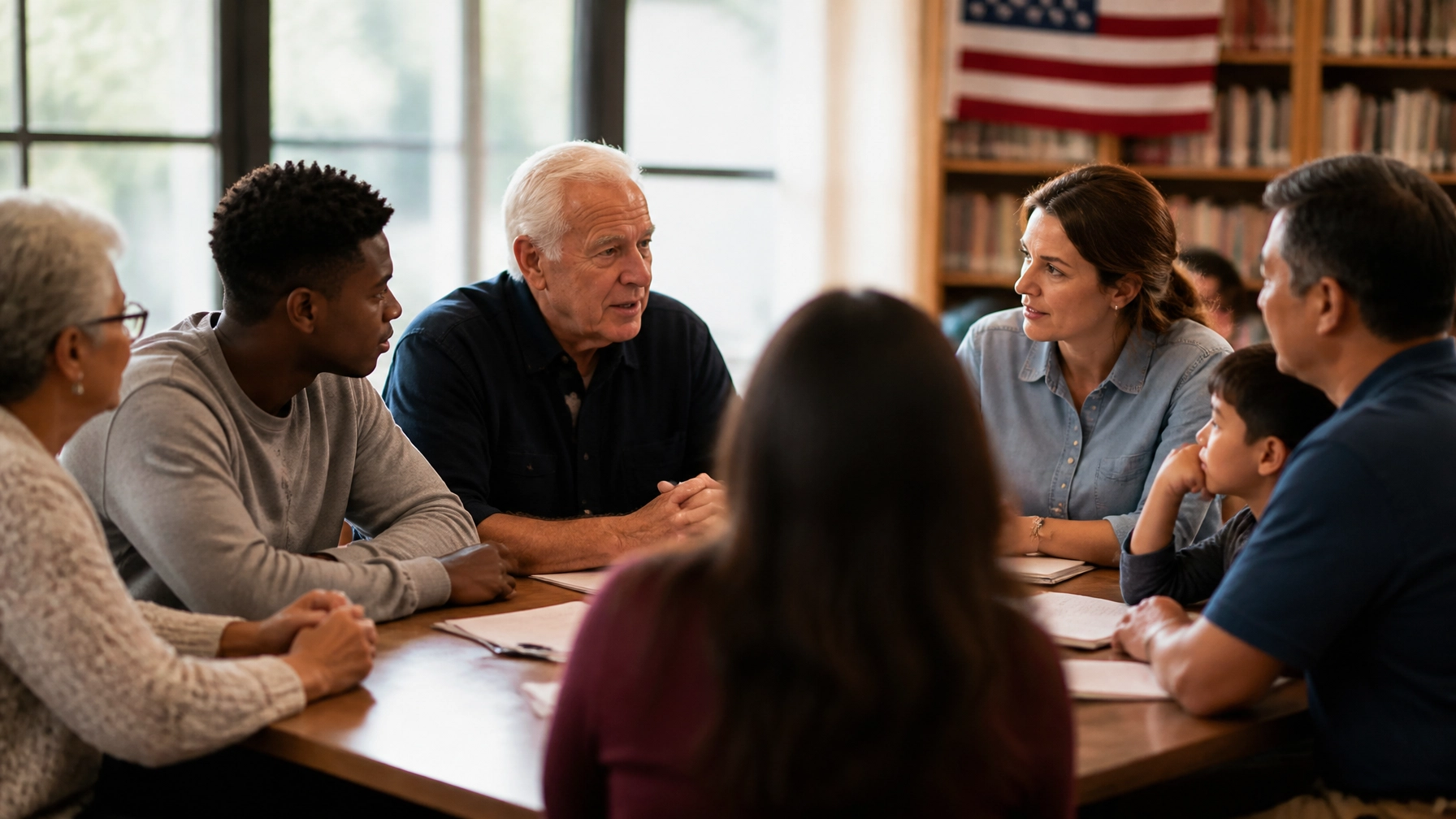
You do not need a large auditorium or a national platform to begin. You can start with a classroom, a library, a neighborhood association, or your own dinner table.
The setting matters less than the spirit you bring to it.

Civic Education Prepares You for Better Conversations
You cannot participate confidently in public life if you do not understand the history and principles shaping it.
That is why civic education must reach beyond memorizing dates, names, and vocabulary. It should help you understand how democratic institutions work, why rights come with responsibilities, and how shared traditions connect generations of Americans.
The Pledge of Allegiance offers a natural starting point.
When you say “one nation,” what does national unity mean in a country filled with different backgrounds, beliefs, and experiences? When you say “indivisible,” what responsibilities do you have to preserve the bonds that hold your community together? When you say “liberty and justice for all,” how do those ideals shape the way you treat your neighbor?
These questions do not have one-word answers. They invite reflection.
Our educational resources help you move beyond routine recitation and explore the history behind each phrase of the Pledge. Once you understand the context, you can approach civic conversations with greater clarity and less suspicion. You replace instinctive reactions with informed questions – and informed questions make better citizenship possible.
Civil Discourse Is a Civic Skill
Civil discourse does not mean avoiding difficult topics. It means learning how to address those topics without abandoning respect, evidence, or self-control.
The National League of Cities explains civic discourse as the rules and practices that guide public communication, particularly between public officials and the people they serve. Clear expectations can help communities conduct more productive meetings and make participation feel safer and more worthwhile.
You can apply the same principles in everyday conversations.
Try these four practices:
- Listen to understand. Give the other person your full attention before preparing your response. Ask a follow-up question instead of assuming you already know what they mean.
- Separate people from positions. Challenge an idea without attacking the character of the person presenting it. You can disagree with a conclusion while still treating your neighbor with dignity.
- Use accurate information. Check the history, quote the source, and acknowledge uncertainty when you do not know something. Patriotism is strengthened by truth, not weakened by it.
- Look for shared responsibilities. Ask what you can do together, even when you disagree about the best solution. Small acts of cooperation often rebuild trust faster than long arguments.
These practices require discipline. They also create lasting results.
When you practice them at home, your children see that disagreement can remain respectful. When you practice them at school, students learn that civic participation requires both courage and humility. When you practice them in public meetings, you help strengthen the institutions that serve your community.
Shared Values Can Bridge Real Differences
You do not need to agree on every policy to recognize the importance of liberty, justice, service, responsibility, and human dignity.
Those American values give you a starting point for conversation. They also give you a language for discussing differences without reducing your neighbor to a label.
At Pledge Allegiance, we bring people together around these shared values through civic education programs, community dialogue initiatives, and veterans initiatives. A veteran’s story can open a conversation about sacrifice. A teacher’s lesson can connect history to present responsibilities. A family discussion can help a child understand that citizenship involves more than receiving the benefits of freedom – it also involves caring for the community that sustains it.
I have seen how quickly a room can change when people stop treating one another as opposing camps and start listening as fellow Americans.
That change does not erase differences. It gives those differences a healthier place to exist.

How to Host a Community Dialogue
You can create a meaningful conversation in your community by following a simple framework.
1. Define the purpose
Choose one clear goal. You may want to explore the meaning of a civic tradition, discuss responsibilities in your community, learn from veterans, or identify a local service project.
A focused purpose keeps the conversation coherent.
2. Invite different voices
Reach beyond the people who already agree with you. Include students, educators, parents, veterans, community leaders, seniors, and neighbors with different experiences.
Diversity is not an obstacle to dialogue. It is what makes dialogue valuable.
3. Establish expectations
Begin by agreeing to listen without interruption, avoid personal attacks, speak from personal experience, and remain open to learning. Make sure every participant understands that the goal is not to force agreement.
Clear expectations create a welcoming environment.
4. Ask questions that invite reflection
Consider questions such as:
- What American value has shaped your life most deeply?
- When have you seen a community come together across differences?
- What does “liberty and justice for all” ask of you?
- What civic responsibility deserves more attention in our community?
- What is one practical action you can take with others?
Good questions do more than fill silence. They help people discover connections.
5. End with action
Summarize what you heard, including both agreement and disagreement. Then identify one next step. You might organize a service project, invite a veteran to speak with students, schedule another dialogue, or share reliable civic education resources with your family.
Conversation becomes community strength when it leads to responsibility.

Three Takeaways for This Week
I encourage you to put community dialogue into practice immediately.
- Start one conversation: Ask someone you trust what the Pledge of Allegiance means to them today.
- Learn one piece of history: Explore the history and meaning of the Pledge and share what you learn with someone younger.
- Join a civic effort: Explore our programs, connect with our team through the contact page, or support the work through our donation page.
You do not have to solve every national division in one conversation. You only need to take the next constructive step.
Let’s Keep the Conversation Going
Patriotic leadership is not measured only by how loudly you speak about America. It is measured by how faithfully you serve its people, how honestly you pursue knowledge, and how respectfully you treat those with whom you disagree.
The Pledge of Allegiance calls you toward unity, liberty, and justice. Community dialogue helps you practice those ideals in real life.
At Pledge Allegiance, we are committed to creating spaces where Americans can learn together, honor veterans, ask better questions, and participate in civic life with confidence. I invite you to explore our mission and programs, bring these conversations into your home or classroom, and encourage your community to replace assumptions with understanding.
Our country is strongest when you choose to remain engaged.
Keep listening. Keep learning. Keep serving.
And keep faith with the values that bind us together.
Dan Kost
CEO, Pledge Allegiance
Frequently Asked Questions
What is community dialogue?
Community dialogue is a structured conversation that brings people with different experiences or viewpoints together to listen, build understanding, identify shared concerns, and consider constructive action.
How does community dialogue support civic education?
Community dialogue turns civic knowledge into practice. It helps you connect historical ideas, public responsibilities, and American values to the decisions and relationships shaping your community today.
What is the difference between civil discourse and debate?
Debate usually focuses on defending a position or persuading an audience. Civil discourse focuses on respectful communication, careful listening, informed reasoning, and understanding across differences.
How can I start a community dialogue?
Choose a focused topic, invite a diverse group, establish respectful ground rules, ask open-ended questions, and conclude with a practical next step. A dialogue can begin in a classroom, library, neighborhood, or home.
How does the Pledge of Allegiance connect to community dialogue?
The Pledge provides a meaningful starting point for discussing unity, liberty, justice, responsibility, and the history of American civic life. Understanding its words can help you participate in more informed conversations.