
SEO title: Pledge of Allegiance History: Why “Under God” Was Added
Suggested URL: /under-god-pledge-allegiance-history
Meta description: Explore Pledge of Allegiance history, why “under God” was added in 1954, and what its meaning reveals about American values and patriotism.
Primary keyword: Pledge of Allegiance history
Secondary keywords: Pledge of Allegiance meaning, American values, patriotism
What if everything you have been told about the Pledge of Allegiance is missing one important chapter?
Most Americans learn the Pledge as children and assume its words have always sounded the same. But the phrase “under God” did not appear in the original Pledge. Congress added it in 1954, at the height of the Cold War, during a period when American leaders were searching for powerful ways to distinguish the United States from the Soviet Union.
That history does not make the Pledge less meaningful. It makes the words more worth understanding.
As you explore the Pledge of Allegiance history, you discover a tradition shaped by changing national priorities, religious convictions, political pressures, and an enduring commitment to liberty and justice for all.
The Pledge Did Not Begin with “Under God”
The original Pledge appeared in 1892, written by Francis Bellamy for The Youth’s Companion magazine. Bellamy created it as part of a national campaign to place American flags in public schools and encourage patriotic ceremonies.
The earliest wording read:
“I pledge allegiance to my Flag and to the Republic for which it stands, one nation, indivisible, with liberty and justice for all.”
Notice what you do not see: there is no reference to God, Christianity, or religion.
You also do not see the phrase “the flag of the United States of America.” That language came later. In 1923 and 1924, national flag conferences revised the opening from “my Flag” to a more specific reference to the United States flag. The goal was to remove ambiguity and establish a common national wording.

You can explore more of this early history in the story of the original 1892 Pledge. That first version already emphasized several civic ideals that remain central today: unity, representative government, liberty, and justice.
The wording changed before 1954 because the nation changed. That pattern matters. It reminds you that civic traditions are not frozen artifacts. They develop as Americans debate who they are, what they believe, and how they want to live together.
Why “Under God” Was Added in 1954
The phrase entered the Pledge during the Cold War, when the United States and the Soviet Union were competing for global influence. American leaders often described Soviet communism as “godless,” contrasting it with an American identity rooted in religious belief.
In that climate, “under God” became more than a spiritual expression. It became a political and cultural statement.
Religious organizations, including the Knights of Columbus, had promoted adding the phrase for several years. A significant moment came on February 7, 1954, when Reverend George Docherty delivered a sermon at New York Avenue Presbyterian Church in Washington, D.C. President Dwight D. Eisenhower attended the service.
Docherty argued that the words “under God” expressed what he viewed as the defining character of American life. The sermon helped inspire congressional action. Representative Charles Oakman introduced legislation the next day, and Senator Homer Ferguson later credited the sermon with influencing his own effort.
Congress approved a joint resolution amending the Flag Code. President Eisenhower signed it on Flag Day, June 14, 1954.
The revised Pledge read:
“I pledge allegiance to the flag of the United States of America and to the Republic for which it stands, one Nation under God, indivisible, with liberty and justice for all.”
You can read the official 1954 congressional resolution or review the GovInfo record for Public Law 83-396.
The process moved quickly, with relatively little debate recorded in Congress. That detail surprises many people today, because the phrase remains one of the most discussed and disputed parts of the Pledge.
What Did the Words Mean at the Time?
The phrase “under God” carried several meanings in 1954.
For President Eisenhower and many supporters, it affirmed humility. The nation possessed enormous military and economic power, but its leaders believed the country should recognize moral limits beyond government authority.
The phrase also served as a Cold War message. It positioned the United States as a nation that recognized religious faith and individual conscience, in contrast to the Soviet system’s official atheism.
At the same time, the addition introduced a new question into a civic ritual: What happens when the government includes religious language in a pledge recited in public schools?
That question remains relevant because the United States includes people with many faiths, no faith, and deeply personal understandings of spirituality. A patriotic tradition can be meaningful to one person and uncomfortable to another. Both experiences deserve a thoughtful, constitutional, and respectful conversation.
Understanding this context helps you avoid two common mistakes. First, you do not have to pretend “under God” was part of the Pledge from the beginning. It was not. Second, you do not have to treat the phrase’s history as proof that the Pledge has only one possible meaning.
Good civic education makes room for both historical accuracy and sincere disagreement.
The Pledge of Allegiance Meaning Is Larger Than One Phrase
So, what is the Pledge of Allegiance meaning today?
At its heart, the Pledge expresses allegiance to the flag as a symbol of the United States and to the republic represented by that flag. It points you toward the nation’s stated ideals – not toward perfection, but toward a continuing responsibility to pursue liberty and justice for all.
Each phrase invites reflection:
- “I pledge allegiance” asks you to consider commitment and responsibility.
- “To the flag” directs your attention to a symbol that represents the country.
- “And to the Republic” connects patriotism to constitutional government and citizenship.
- “One nation, indivisible” challenges you to seek unity without denying real differences.
- “With liberty and justice for all” sets a standard the country must continually work to fulfill.
- “Under God” reflects the 1954 historical context and invites discussion about faith, conscience, and the limits of government power.
These ideas connect directly to American values such as freedom, equal dignity, responsibility, pluralism, and informed participation. Patriotism becomes stronger when you understand what you are affirming – and when you recognize that the nation’s ideals require action, not merely repetition.
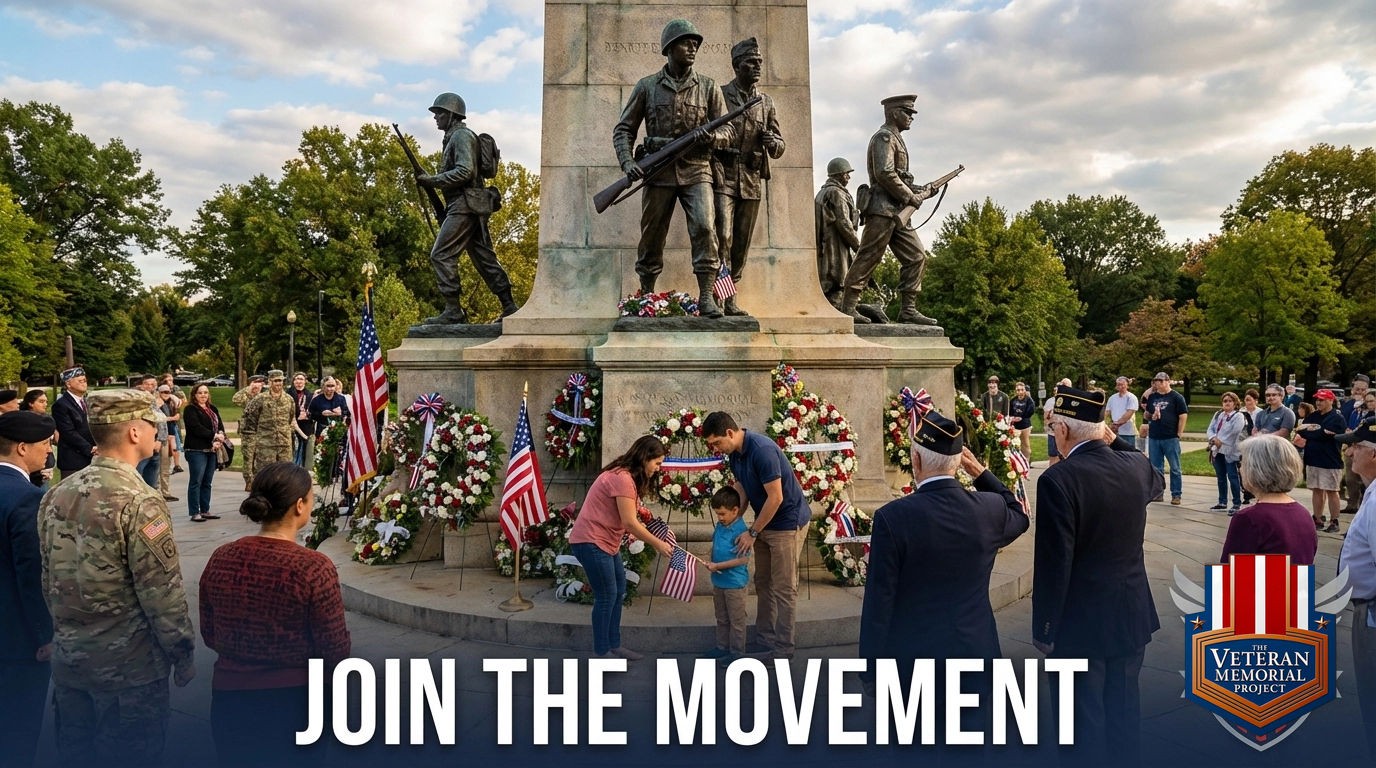
For veterans and their families, the Pledge can also carry a personal connection to service. Many veterans have heard or recited it in classrooms, ceremonies, bases, and community gatherings. Their experiences can help younger Americans understand that civic symbols are connected to real sacrifice, duty, and shared memory.
Explore Pledge Allegiance’s veterans initiatives and civic education offerings to find ways to connect historical learning with service and community life.
How to Teach This History in Your Classroom or Home
Make the history memorable by turning it into a conversation rather than a quiz.
Try these four prompts:
- Compare the versions. Read the 1892 wording beside the 1954 wording. What changed? What stayed the same?
- Examine the era. Discuss how the Cold War may have influenced the decision to add “under God.”
- Define civic values. Ask what “indivisible,” “liberty,” and “justice” look like in your school or neighborhood.
- Respect conscience. Explain that informed patriotism includes the freedom to think, question, participate, or respectfully decline a civic ritual.
This approach helps students and families understand that learning about patriotism does not require shutting down discussion. In fact, a free society depends on people who can examine national traditions honestly and still work together.

Your 250th-Anniversary Call to Action
America’s 250th anniversary offers more than a reason to celebrate. It gives you a reason to ask what kind of citizen you want to be during the next chapter of the American experiment.
Start with one action:
- Learn one fact about the Pledge and share it with a child, student, friend, or family member.
- Invite a veteran to talk about what civic duty means in everyday life.
- Attend a school board, city council, or community meeting.
- Listen to someone whose interpretation of the Pledge differs from yours.
- Volunteer with an organization that strengthens civic education or community connection.
The most important lesson in the Pledge of Allegiance history is not that the words never changed. The lesson is that Americans have always had to decide how their symbols reflect their values.
“Under God” was almost not part of the Pledge. Its addition in 1954 tells you about the Cold War, religious identity, political persuasion, and the search for national unity. Its continued presence invites you to think carefully about faith and freedom in a diverse republic.
Recite the words if they express your convictions. Study the history if you want to understand them. Discuss the meaning with respect. Then put the ideals into practice.
That is patriotism with purpose – and civic participation worthy of America’s next 250 years.
Frequently Asked Questions
When was “under God” added to the Pledge of Allegiance?
Congress added “under God” in 1954. President Dwight D. Eisenhower signed the joint resolution into law on June 14, 1954, which was Flag Day.
Was “under God” in the original Pledge?
No. Francis Bellamy’s original 1892 Pledge did not include the phrase. The original wording referred to “my Flag” and the republic, with “liberty and justice for all.”
Why was “under God” added?
The phrase was added during the Cold War, partly to distinguish the United States from the officially atheistic Soviet Union and to emphasize religious faith as part of the nation’s identity.
What does the Pledge mean today?
The Pledge expresses allegiance to the United States and its republic while highlighting unity, liberty, and justice. Its meaning can be explored through historical study, personal reflection, and participation in civic life.