
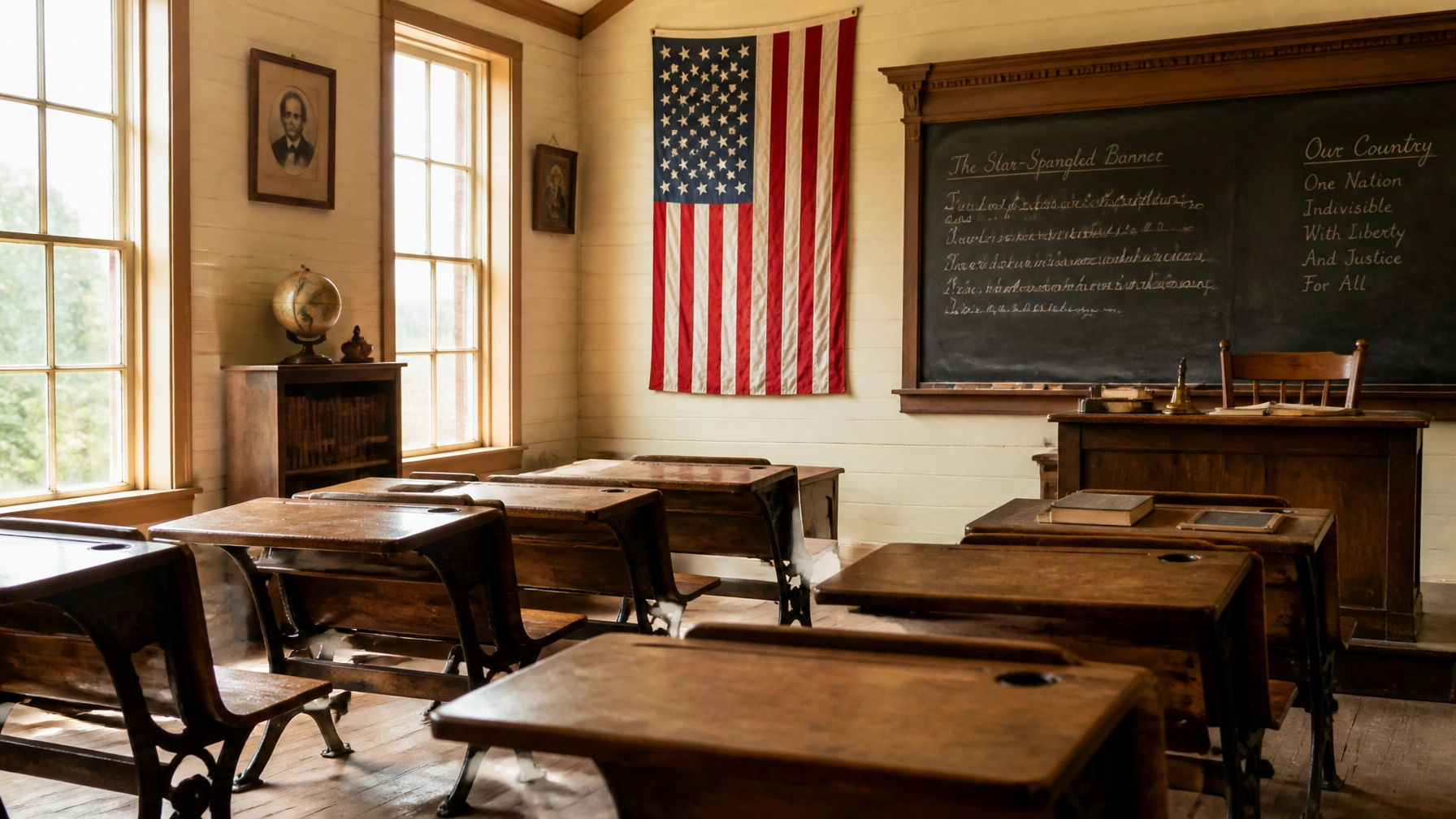
Most people think the Pledge of Allegiance has remained unchanged since the dawn of our Republic: until they see the original 1892 draft that sparked a national movement.
As you stand in your classroom, at a city council meeting, or during a veterans' gathering, the words you recite feel timeless. Yet, those 31 words we know today began as a 22-word "forgotten draft" written by a man named Francis Bellamy. Following our nation’s massive America 250th anniversary celebrations, there has never been a more vital time for you to understand how this single sentence was designed to heal a fractured country and how it continues to shape our shared civic identity today.
The August Heat of 1892: A Vision for Unity
Imagine sitting in a cramped office in Boston during the sweltering August of 1892. You are Francis Bellamy, a staffer for The Youth’s Companion magazine. Your mission? To create a "patriotic program" for every public school in America to celebrate the 400th anniversary of Columbus's voyage.
Bellamy wasn't just writing a poem; he was crafting a tool for civic education. The Civil War had ended only 27 years prior, and the scars of division were still fresh. Bellamy believed that if every child in America recited the same vow of loyalty to the flag, the next generation would be truly "indivisible."

The Original 1892 Wording:
"I pledge allegiance to my Flag and the Republic for which it stands, one nation, indivisible, with liberty and justice for all."
Take a moment to look at that text. You’ll notice two major differences from what you say today. First, it mentions "my Flag" rather than "the Flag of the United States of America." Second, the phrase "under God" is entirely absent: it wouldn't be added until 1954 during the Eisenhower administration.
4,000 Voices: The First Public Recitation
On October 21, 1892, Bellamy’s vision became a reality. About 4,000 Boston high school students gathered to recite these words for the first time. Can you hear the resonance of those voices? It wasn't just a school requirement; it was a public declaration of a "New America."
This moment set the standard for how we view civic participation. By bringing young people together under one flag, the Pledge replaced regional assumptions with a national commitment. It was a bold attempt to weave the diverse threads of a growing immigrant population into a single American tapestry.
Why the "Forgotten Draft" Matters Post-250th
We have just moved past the monumental 250th anniversary of the United States. While the fireworks have faded, the core questions of our democracy remain. Are we truly "one nation"? Are we still "indivisible"?
When you look back at Bellamy’s original vision, you see a focus on the values rather than just the ritual. The 250th celebrations reminded us that our unity is not a historical accident: it is a daily choice. The Pledge serves as a bridge between our founding ideals of 1776 and our modern responsibilities.

Breaking Down the Values
- Unity: This was Bellamy’s primary goal. In a world that often feels polarized, the Pledge reminds you that we share a common "Republic."
- Indivisibility: This word is a direct nod to the post-Civil War era. It’s a promise that we won't let our differences tear the Union apart.
- Liberty and Justice for All: These are the bookends of the American experiment. Bellamy actually considered adding the word "equality," but he feared it would be too controversial for the time. Today, we carry that torch forward, ensuring those final two words: "for all": truly mean everyone.
Coaching the Next Generation
You have a unique opportunity to turn a rote morning ritual into a powerful lesson in history and character. For veterans and their families, the Pledge is more than words; it’s a tribute to the service that keeps that flag flying. For educators, it’s the ultimate "teachable moment" about our civic responsibilities.
Don't let the words become white noise. Instead, dive deep into the history. When you explain to a child that the phrase "under God" was a 1954 addition to emphasize American values during the Cold War, or that "my Flag" was changed to "the Flag of the United States of America" in 1923 to ensure clarity for new citizens, you transform a habit into a heritage.

Your Call to Action: Share the Legacy
The history of the Pledge of Allegiance is a story of evolution, tension, and ultimate hope. It reflects where we have been and challenges us to become who we claim to be.
Here is your mission for this week:
- Learn the history: Dive into our educational resources to understand the full context of each phrase.
- Spark a conversation: Share one fact from this post: like the Boston recitation of 1892: with a young person in your life.
- Reflect: The next time you place your hand over your heart, think about the "forgotten draft." Think about the 4,000 students in 1892 who stood where you are standing now.
We are a nation built on promises. Let’s make sure we know exactly what we are promising. Together, we can replace assumptions with knowledge and continue the work of building a more perfect, indivisible Union.