
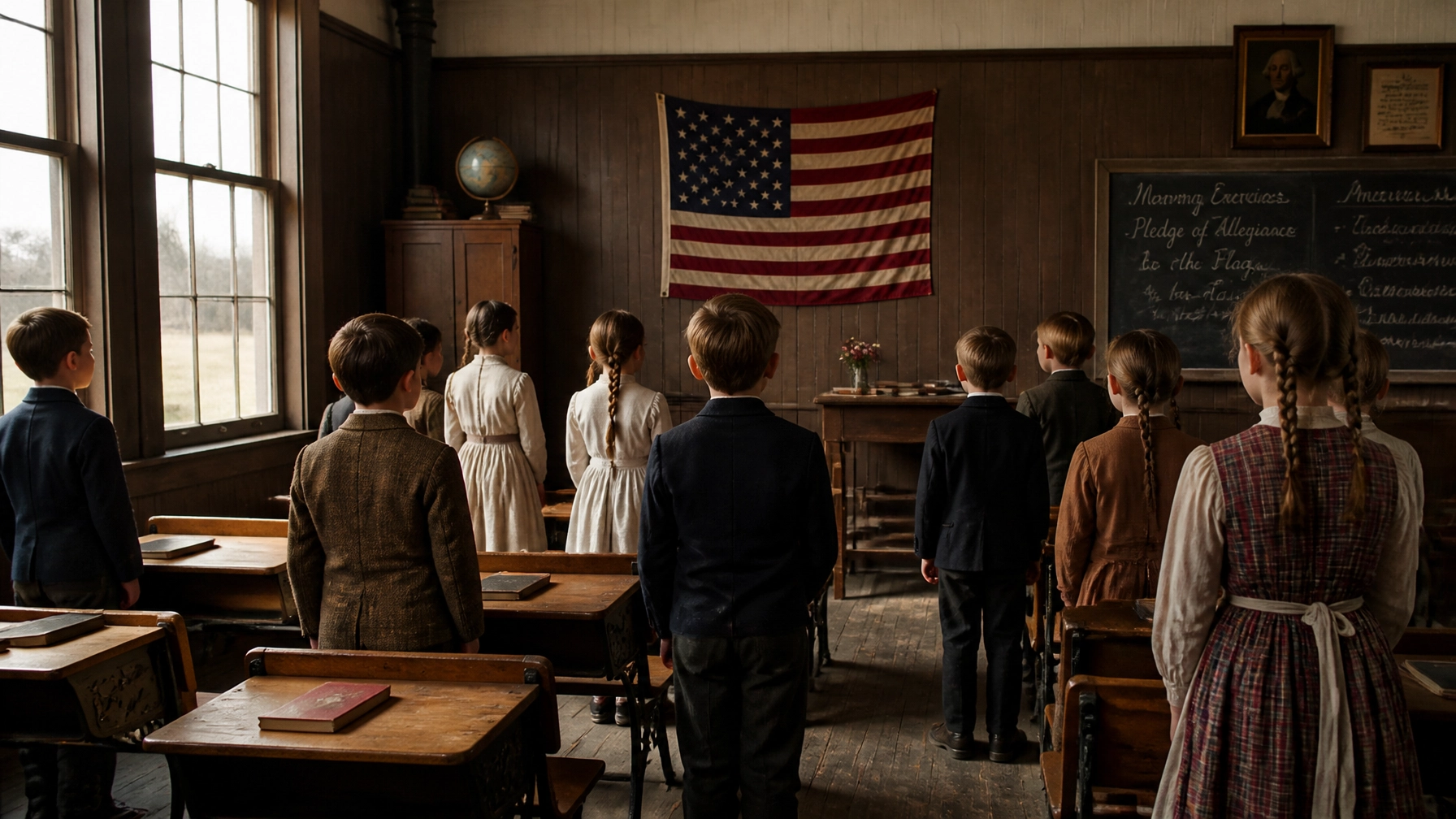
Most people think the Pledge of Allegiance is a static piece of American history that has remained unchanged since the beginning of time: until they see the actual documents that reveal its evolution.
If you’ve ever felt like your civic education lessons are falling flat or that the words of the Pledge have become "white noise" to your students or family, you need to see this. To truly understand why we stand and place our hands over our hearts, you have to go back to the source. Or, more accurately, the sources.
As we approach America’s 250th anniversary, the pressure is on to move beyond rote memorization and dive into real, informed civic participation. Primary sources are the heart of your message. They turn a 31-word ritual into a living, breathing debate about what it means to be an American.
Hook your students, challenge your own assumptions, and dive deep into these ten primary sources that bring the Pledge of Allegiance to life.
1. The Original 1892 Text in The Youth’s Companion
Before it was a national law, the Pledge was a marketing campaign. Francis Bellamy wrote the original version for the September 8, 1892, issue of The Youth’s Companion magazine.
Why it matters: You’ll notice the original text says "my flag," not "the Flag of the United States of America."
How to use it: Show your students the original printing. Ask them why a magazine would want to distribute flags to every school in the country. It’s a great way to talk about the "secret history" of the Pledge and how patriotic rituals are often born from a desire for national unity during times of rapid change.

2. The 1892 National Public Schools Columbus Day Program
The Pledge wasn't just written to be read; it was written to be performed. Bellamy designed an entire flag-raising ceremony for the 400th anniversary of Columbus’s arrival.
Why it matters: This document outlines the original "Bellamy Salute": which, as many are shocked to learn, bore a striking resemblance to what later became the Nazi salute.
How to use it: Discuss how symbols and gestures can change meaning over time. If you want to master the story behind every phrase, you have to understand the ritual that surrounded it. You can learn more about this in our Pledge History 101 guide.
3. The 1954 Amendment (Public Law 83-396)
Perhaps the most famous change to the Pledge occurred during the Cold War. In 1954, President Dwight D. Eisenhower signed the law that added the words "under God."
Why it matters: This wasn't just a religious addition; it was a political statement meant to distinguish the United States from "godless" communism.
How to use it: Contrast the 1954 context with the original 1892 intent. It sparks a powerful conversation about how our national vows reflect the specific anxieties and values of the era in which they are edited.
4. West Virginia State Board of Education v. Barnette (1943)
If you only use one legal document, make it this one. This Supreme Court case is the bedrock of students' rights regarding the Pledge.
Why it matters: Justice Robert Jackson famously wrote, "If there is any fixed star in our constitutional constellation, it is that no official, high or petty, can prescribe what shall be orthodox in politics, nationalism, religion, or other matters of opinion."
How to use it: Use this to teach that true patriotism is voluntary. It’s a coachable moment: we respect the flag because we have the freedom not to. This is a key part of avoiding common civic leadership mistakes.

5. Minersville School District v. Gobitis (1940)
To understand Barnette, you have to see the mistake the Court made just three years earlier. In Gobitis, the Court initially ruled that schools could force students to salute the flag.
Why it matters: It shows that the "Republic for which it stands" is capable of self-correction.
How to use it: Compare the two cases. Ask, "What changed in America between 1940 and 1943?" It’s an immersive way to look at the Bill of Rights in action.
6. The U.S. Flag Code (4 U.S.C. § 4)
This is the "rulebook" for the flag. It doesn't just give the text of the Pledge; it dictates the exact manner of delivery: standing at attention, right hand over heart.
Why it matters: It moves the Pledge from a tradition to a codified standard of respect.
How to use it: Review the Flag Code with veterans or students to discuss why these specific protocols exist. It reinforces the idea that civic rituals are shared responsibilities, not just suggestions.
7. The Declaration of Independence
You cannot understand "liberty and justice for all" without the document that first made those promises.
Why it matters: The Declaration provides the "why" behind the Pledge. The Republic stands for the unalienable rights mentioned in 1776.
How to use it: Line up the phrase "liberty and justice for all" next to "all men are created equal." Ask your students: "How are we doing on that promise?" This kind of civic participation matters as we look toward the 250th anniversary.
8. The U.S. Constitution and Bill of Rights
If the Flag represents the Republic, the Constitution is the blueprint of that Republic.
Why it matters: The Pledge is a vow of loyalty to a system of government, not a person or a king.
How to use it: Connect the word "Republic" in the Pledge to Article IV, Section 4 of the Constitution, which guarantees a "Republican Form of Government."

9. The 1970 James Allen Revision Proposal
During the social upheaval of the Vietnam War era, U.S. Commissioner of Education James Allen proposed an alternative Pledge that emphasized dedication to the ideals of the nation.
Why it matters: It shows that the Pledge has always been a point of conversation and, sometimes, contention.
How to use it: Have students write their own "revision" based on what they think America needs to focus on today. It’s a great exercise to prepare them for the future of civic life.
10. The American’s Creed (1917)
Written by William Tyler Page, this creed was the winner of a nationwide contest to summarize American civic beliefs during WWI.
Why it matters: It’s often recited alongside the Pledge and uses similar language about the Republic and the Constitution.
How to use it: Use it as a companion piece. How does the Creed expand on the "allegiance" we promise in the Pledge?
Empower Your Civic Journey
Don't let the Pledge of Allegiance be a mindless habit. By bringing these primary sources into your home or classroom, you replace assumptions with actual knowledge. You aren't just reciting words; you are engaging with the heart of the American experiment.
Whether you are a veteran honoring our history or an educator shaping the next generation, these documents are your toolkit. They ensure that when we say "liberty and justice for all," we know exactly what we are pledging to protect.
Ready to dive deeper? Check out why learning the secret history of the Pledge will change the way you see the flag forever.