
Most people think civic leadership is reserved for the halls of Congress or the steps of the statehouse: until they realize that the most powerful form of leadership happens right at their own kitchen table.
Morning, everyone. It’s Dan here.
Every day, I sit down to write to you because I believe that the heartbeat of this country isn’t found in a headline; it’s found in the quiet, daily commitment to the values that hold us together. We live in a time where division feels like the default setting. But what if I told you that unity isn’t some grand, distant dream? It’s a muscle. And like any muscle, if you don’t exercise it, it withers.
In my years of working in conservation marketing and now leading the mission here at Pledge Allegiance, I’ve learned that the secret to a stronger America isn’t a new policy or a louder debate. It’s a return to the basics. It’s about why civic leadership advice is the single most important thing you can digest with your morning coffee.
The Compass in Your Pocket
Picture this: You’re lost in a thick forest. The trees look the same, the path has vanished, and everyone in your group is pointing in a different direction. In that moment, you don’t need an opinion; you need a compass.
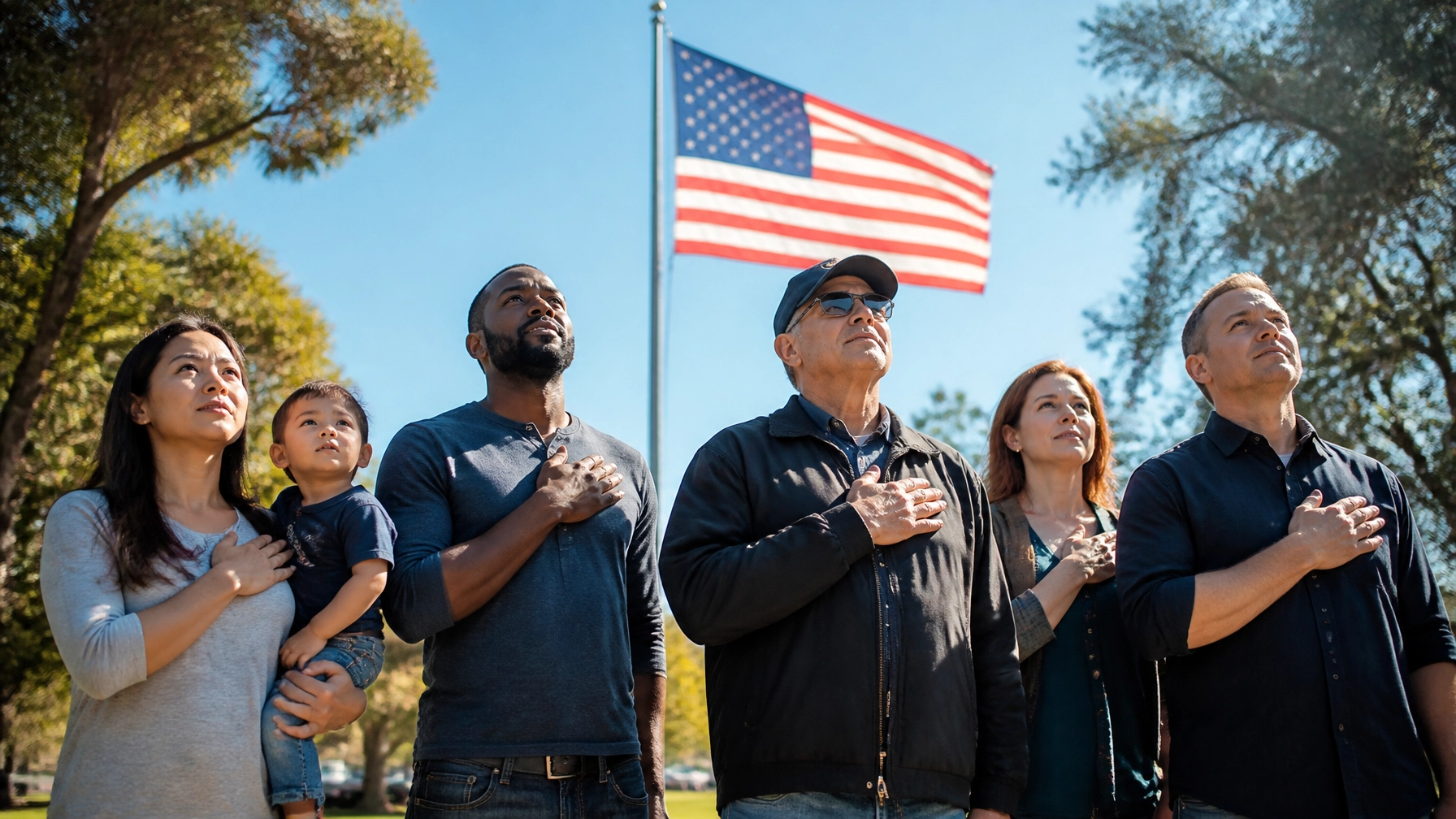
Our shared civic values: liberty, justice, and the responsibility we have to one another: are that compass. When we recite the Pledge of Allegiance, we aren’t just repeating a historical script. We are calibrating our internal navigation. We are reminding ourselves that we belong to something bigger than our individual grievances.
But here’s the catch: you have to know what the words actually mean. Most Americans can recite the Pledge from memory, yet few can tell you the history of why it was written or why "under God" was added in 1954. Knowing the history of the Pledge is what turns a ritual into a realization. It replaces assumptions with knowledge, and that knowledge is the bedrock of unity.

Why "Civic Leadership" Starts with You
You might be wondering, "Dan, I'm a veteran, a teacher, or just a busy parent. How am I a civic leader?"
Civic leadership is simply taking responsibility for the "we" in "We the People." It’s the choice to engage constructively across differences rather than retreating into a digital echo chamber. It’s the willingness to mentor a younger generation: to show them that civic duty can change your life.
As we approach America’s 250th anniversary, this brand of leadership is more vital than ever. We aren't just celebrating a birthday; we are renewing a contract. A contract that says we will seek "liberty and justice for all," not just for those who agree with us.
The Veteran’s Perspective: Preserving the Story
I spend a lot of time talking with veterans and their families. If anyone understands the cost of unity, it’s them. Veterans didn't serve a political party; they served the Republic. They served the flag and the ideals it represents.
When we lose touch with our civic values, we aren't just losing our way: we are losing the stories of those who sacrificed to keep the path open. That’s why our initiatives focus so heavily on honoring service members. By preserving their stories, we provide a blueprint for the rest of us. We see what it looks like to put the mission of "One Nation" above the noise of the moment.

Education: The Great Unifier
If you want to solve the division in this country, start with the classroom. And I don’t just mean schools: I mean our communities. We’ve found that when people sit down for a community dialogue to discuss civic responsibilities, the "us vs. them" mentality begins to dissolve.
Why? Because it’s hard to hate someone when you’re both working to understand the same constitution.
We need to move past the "divisive debate" and move toward "informed participation." This means:
- Hooking the next generation with the true, unvarnished history of our nation.
- Addressing the hard questions about our past while celebrating our progress.
- Outlining a clear path for how every citizen can contribute.
Your Daily Dose of Values
So, how do you practically implement this? How do you make civic leadership a daily habit?
- Read and Reflect: Take five minutes every morning to think about one phrase of the Pledge. What does "indivisible" look like in your neighborhood today?
- Educate Yourself: Don't rely on what you think you know. Dive into the facts about America's 250th and why these milestones matter.
- Lead by Example: Be the person who brings people together. Host a discussion, volunteer for a veterans' initiative, or simply explain the why behind the Pledge to your children or grandchildren.

A Final Thought from the Desk
The world is loud, and it’s easy to feel like one voice doesn’t matter. But remember: a single candle can’t light a stadium, but a thousand can make it look like day.
Civic leadership isn’t about being the loudest person in the room; it’s about being the most grounded. It’s about holding onto those shared values: the ones we pledge ourselves to every day: and refusing to let them go when things get heated.
Unity isn't a destination we'll eventually reach. It's the way we choose to travel together.
Stay patriotic, stay curious, and most importantly, stay united.
See you tomorrow,
Dan Kost
Owner, Pledge Allegiance