
Most people think the Pledge of Allegiance is just a 31-word ritual we’ve been repeating since the dawn of the Republic: until they see how its complex, shifting history actually holds the key to stopping today's most divisive debates.
You’ve likely seen it happen: a school board meeting turns into a shouting match, or a social media thread devolves into accusations of "fake patriotism." It feels like we’re losing the ability to talk to each other about what it means to be American. But what if the solution isn't to argue louder, but to look closer at the words we say every day?
At Pledge Allegiance, we believe that replacing assumptions with actual knowledge is the fastest way to bridge the gap. When you understand the why behind the words, you stop seeing the Pledge as a battleground and start seeing it as a blueprint for unity.
The Evolution of a National Promise
The Pledge didn't just appear out of thin air in 1776. In fact, it was written over a century later, in 1892, by a minister named Francis Bellamy. If you’ve ever felt like the Pledge is a rigid, unchanging text, you might be surprised to learn how many times it has been "edited" to reflect the needs of the nation.
Originally, the text was a mere 23 words. It didn't mention the United States by name, and it certainly didn't include the phrase "under God." Bellamy wrote it for a massive national celebration: the 400th anniversary of Columbus’s arrival: as a way to heal the lingering scars of the Civil War. He wanted a way to bring a divided nation back together under a single, shared identity.
Think about that for a second. The very purpose of the Pledge was to stop division.

Over the years, the words changed as America changed. In 1923, "my Flag" became "the Flag of the United States," and "of America" was added a year later. Why? Because leaders wanted to ensure that new immigrants felt a specific bond to their new home. It wasn't about exclusion: it was about creating a shared sense of belonging.
Then came 1954. In the heat of the Cold War, Congress added "under God" to draw a sharp contrast between American values and the "godless" ideology of the era. Understanding this timeline doesn't weaken the Pledge: it humanizes it. It shows that we have always been a work in progress, constantly trying to define what "one nation" really looks like.
Replacing Assumptions with Actual Knowledge
The biggest fuel for divisive debates is a lack of context. When people treat the Pledge as a "test" of loyalty rather than a "lesson" in citizenship, tension is inevitable. But you have the power to change the narrative.
By diving into Pledge History 101, you move beyond the surface-level arguments. You begin to see that the Pledge is a living document of our civic journey.
For educators, this is a game-changer. Instead of just leading a daily recitation, you can turn those 31 words into a semester’s worth of civic education. When you teach the historical context: including the Supreme Court cases that protected the right of conscience: you’re not just teaching patriotism; you’re teaching the very foundations of American democracy.
How Civic Education Fosters Community Dialogue
You might wonder: Does knowing history actually change minds?
The answer is a resounding yes. Divisive debates often thrive on "us versus them" mentalities. However, when you frame the Pledge through the lens of its history, you shift the conversation to shared values.
Consider the phrase "with liberty and justice for all." When we stop debating who is saying the Pledge and start discussing how we live up to that final promise, we find common ground. This is the heart of Civic Education 101. It’s about moving from divisive debate to informed participation.

When you coach your family or your students to look at the Pledge as a "civic contract," it changes the energy in the room. You’re no longer arguing over a ritual; you’re exploring a commitment to each other. This instructional approach: teaching the Pledge as a series of active responsibilities: is what builds lasting unity.
The Road to America’s 250th Anniversary
As we approach the 250th anniversary of the United States, the stakes for our civic health have never been higher. We are at a crossroads. We can continue down the path of fragmentation, or we can use this milestone to reconnect with our foundational stories.
You are a vital part of this mission. Whether you are a veteran who has defended these ideals, an educator shaping the next generation, or a parent wanting your children to value their heritage, your voice matters.
The 250th anniversary isn't just about fireworks and parades; it’s about a renewal of our civic spirit. By promoting a deeper understanding of our national symbols, you’re helping to ensure that the "indivisible" part of the Pledge stays true for the next 250 years. Check out our guide on 7 mistakes to avoid when teaching the Pledge to help lead this charge effectively.
Action Steps for Every Patriot
So, how do you start? How do you take this historical knowledge and use it to stop the shouting and start the talking?
- Ask, Don’t Assume: Next time the topic of the Pledge comes up in a heated setting, ask a historical question. "Did you know the 'under God' phrase was added during the Cold War to emphasize our freedoms?" It shifts the brain from "fight" mode to "learn" mode.
- Dive Deep Into the Phrases: Take one phrase a week: "To the Republic," "Indivisible," "Liberty and Justice": and talk about what it means in a modern context.
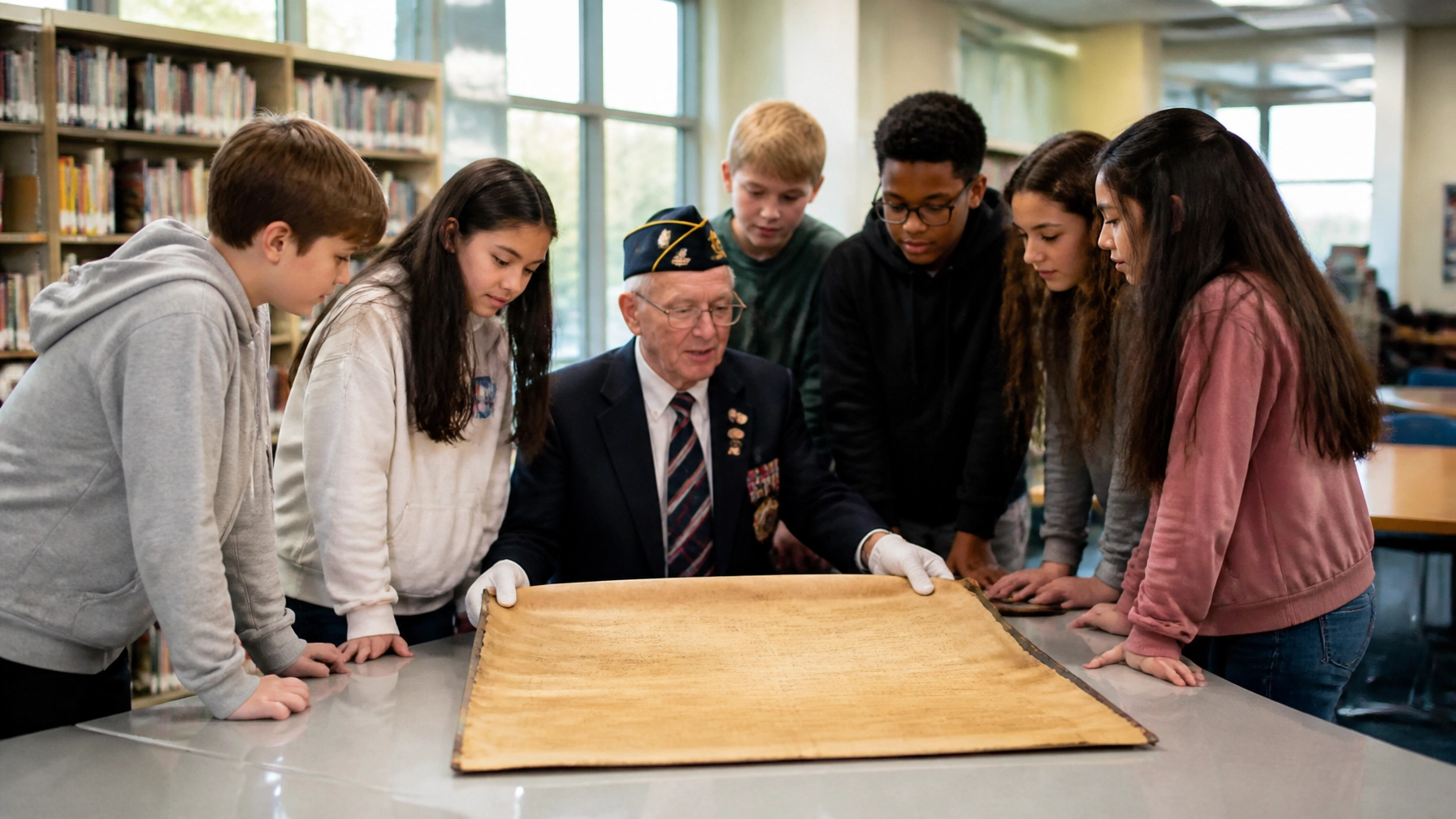
- Involve Our Veterans: Our veterans are the living embodiment of the Pledge. Their stories provide the bridge between the words and the sacrifice required to keep them.
- Model Respectful Dissent: Remember that the history of the Pledge includes the right not to say it. When we respect that right, we are actually honoring the very "liberty" the Pledge promises.

Conclusion: A Lingerie of Liberty
The Pledge of Allegiance is more than a string of words: it is the heart of our message to the world and to ourselves. When you master its history, you gain a powerful tool to de-escalate tension and inspire real connection.
Don't let the noise of the day drown out the significance of our shared promise. Join us in replacing assumptions with facts, and let’s turn the Pledge back into what it was always meant to be: a unifying cry for a nation that values liberty and justice for all.
Your journey into civic mastery starts with a single step: and a single word. Are you ready to lead the way?