
What if the most powerful teaching tool in your civics toolkit arrived in your inbox every morning at 8:00 AM?
Most educators think that teaching the Pledge of Allegiance is a static, one-time lesson: until they see how our daily updates turn historical phrases into living, breathing community milestones. In a world where civic education can often feel like a series of dates in a dusty textbook, staying current is your greatest superpower. You aren't just teaching history; you’re guiding students through history in the making.
At Pledge Allegiance, we believe that civic education shouldn't be a "once-a-year" event. It's a daily practice. That’s why we’ve developed a streamlined way for you to track program updates, veteran initiatives, and community dialogues through our daily press releases.
This guide will show you exactly how to integrate these real-time updates into your classroom to foster a deeper understanding of American civic life.
Why Real-Time Updates Matter for Your Classroom
Civic milestones provide authentic, high-impact moments for your students to learn what it means to participate in democratic life. When you use our daily press releases, you move beyond abstract concepts and into the realm of "civic agency."
By tracking these daily releases, you help your students:
- Build Civic Knowledge: Understand how organizations and communities work together to honor national traditions.
- Develop Media Literacy: Learn how to analyze official communications and distinguish between reporting and promotion.
- Connect with Veterans: See the tangible ways we honor service members in real-time, preserving their stories for the next generation.

Step 1: Hook Your Students with the "Daily Brief"
Every morning, the world of civic engagement shifts. Maybe a new veteran initiative was launched in a neighboring state, or a school district across the country achieved a new milestone in its civic education program.
Hook your students by starting the day with a "Civic Minute."
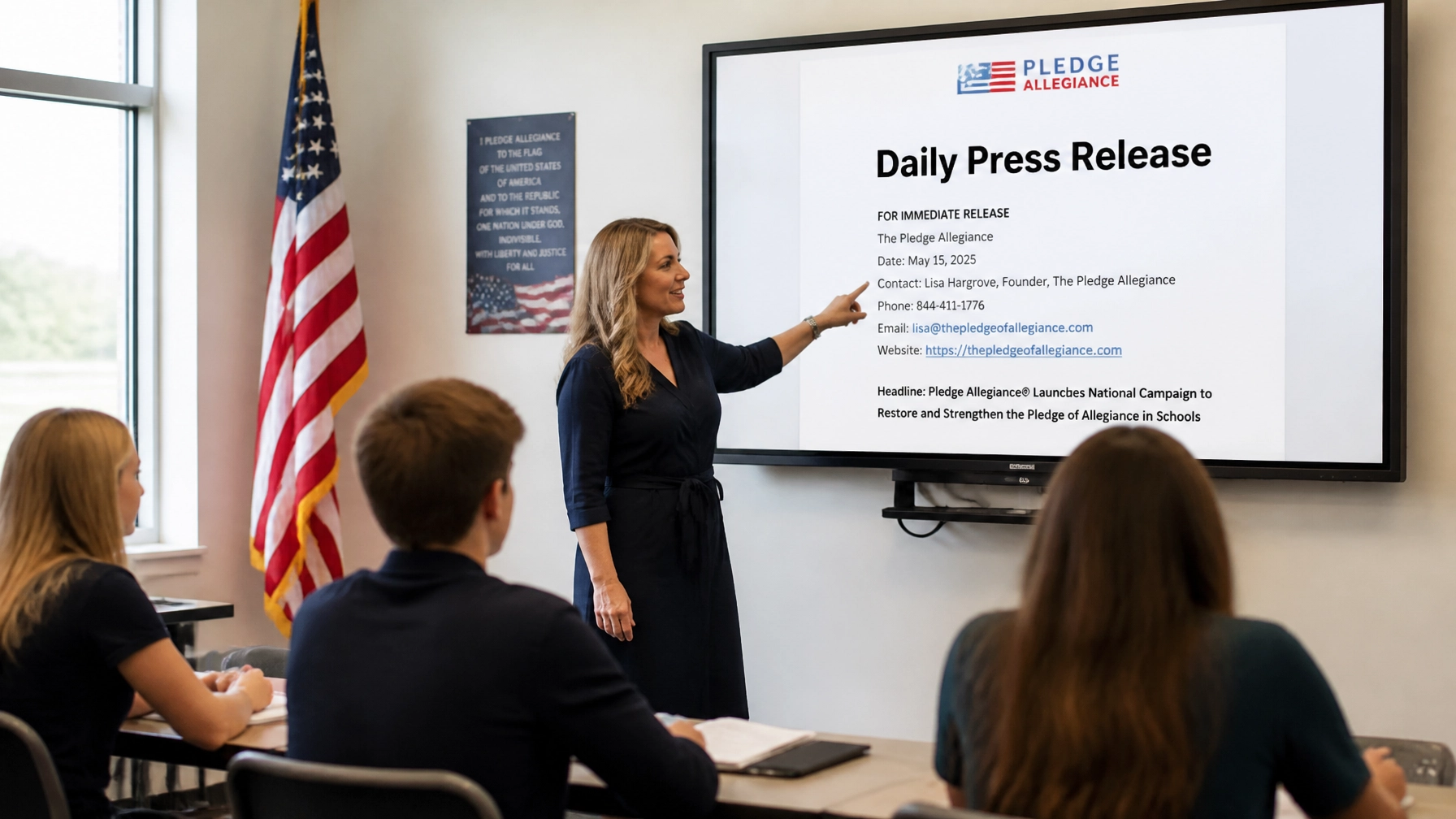
Open the latest press release on your digital whiteboard. Lead with an action verb: Identify the core message of the day. Analyze who is involved. Discuss why this update matters to the broader American story. This simple habit transforms the Pledge from a recited mantra into a relevant, daily commitment to the values of "liberty and justice for all."
Step 2: Track Milestones as Historical Markers
Civic milestones aren't just for politicians; they belong to the people. Our daily updates often highlight specific achievements in our mission to replace assumptions with knowledge. For example, if we announce a milestone in our America 250 lessons, use that as a launching pad for a lesson on the evolution of the Pledge itself.
When you track these milestones, you’re showing your students that the American experiment is ongoing. Use these updates to:
- Map Progress: Have students keep a "Civic Calendar" where they pin major announcements from the press releases.
- Compare and Contrast: Look at how civic education has changed by comparing today's updates with historical archives.
- Set Classroom Goals: Use our program updates to inspire your students to create their own civic milestones, such as organizing a school-wide dialogue.
Step 3: Humanize the Lesson through Veteran Initiatives
One of the most powerful elements of our daily communication is our focus on veteran stories. We don't just talk about patriotism; we show the people who have lived it.

Incorporate these stories by:
- Highlighting a Hero: When a press release features a veteran initiative, take five minutes to dive deep into that veteran’s story.
- Writing Exercises: Ask your students to draft a response or a letter of gratitude based on the initiatives mentioned.
- Oral History Projects: Let our updates inspire your students to interview local veterans in their own families or communities, mimicking the preservation work we do at Pledge Allegiance.
Step 4: Foster Civil Community Dialogue
In a time of divisive debate, we prioritize civil community dialogue. Our press releases often announce new programs designed to get people talking: not shouting.
Dive deep into the "why" behind the news.
If our release mentions a community dialogue program, use the "Socratic Seminar" method in your classroom. Use the release as your primary text. Ask your students: "How does this initiative help foster unity?" or "What responsibilities do we have as citizens to engage in these discussions?"
This isn't just about reading the news: it’s about teaching the habit of informed participation.

Summary: Your Path to a More Engaged Classroom
Tracking civic milestones doesn't have to be a chore. By using our daily press releases, you have a ready-made curriculum that is fresh, professional, and deeply patriotic.
Remember, your goal isn't just to teach the words of the Pledge: it's to teach the spirit behind them. By integrating real-time program updates and veteran stories into your lessons, you are equipping your students with the tools they need to be informed, active participants in our democracy.
Ready to start?
- Explore our recent updates to see what you’ve missed.
- Incorporate one press release into your lesson plan this week.
- Watch as your students begin to see themselves as part of the ongoing American story.
The heart of your message should be clear: civic education is alive, and with the right tools, you can ensure it lingers in your students' minds for a lifetime.