
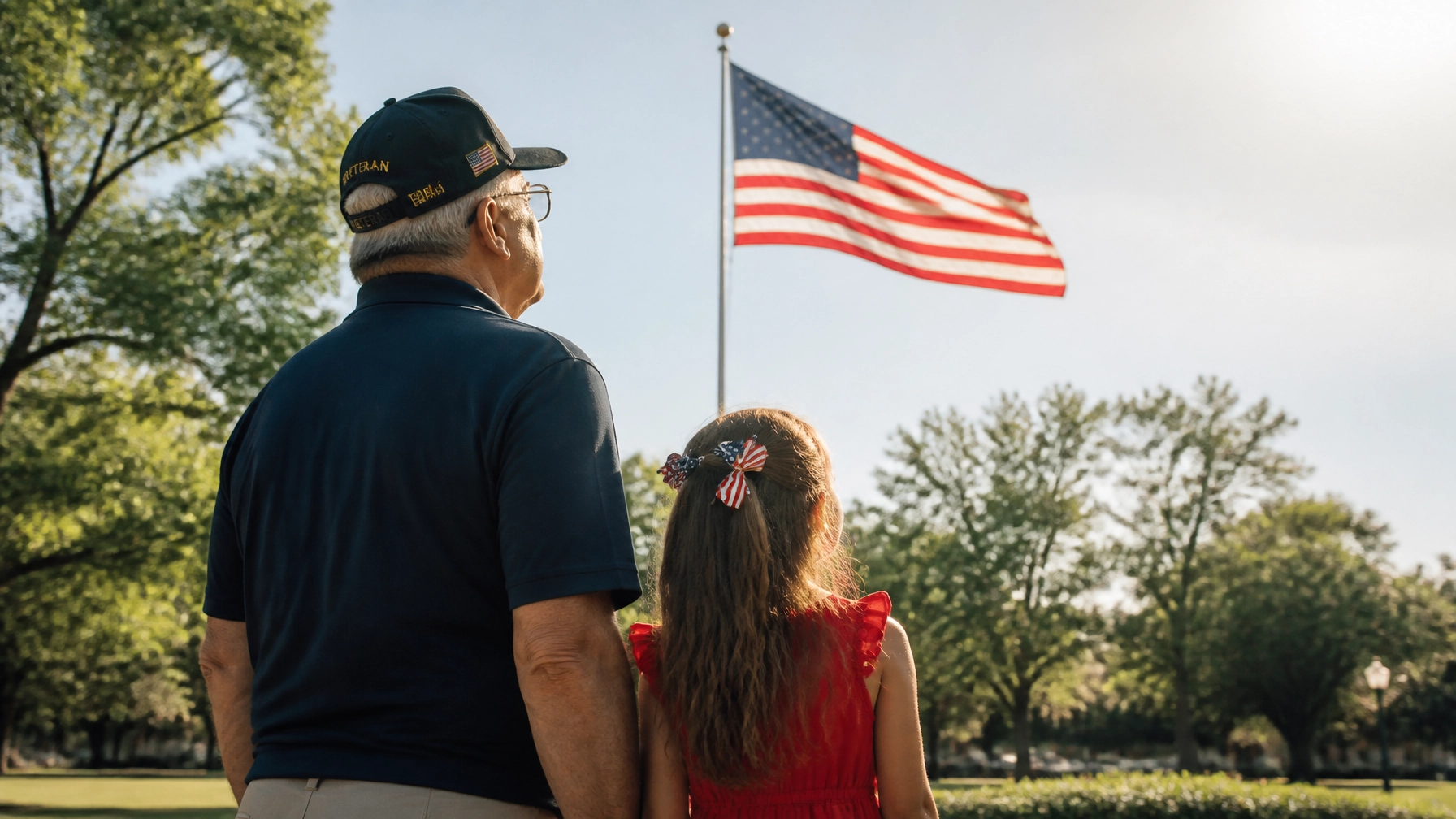
Most people think they know everything there is to know about the Pledge of Allegiance: until they realize its history is as complex and battle-tested as the veterans who defend the flag it honors. As we approach America's 250th anniversary in 2026, there has never been a more vital time to peel back the layers of our national oath.
You see, the Pledge isn't just a string of words we memorize in kindergarten; it's a living document that has evolved through world wars, social shifts, and the tireless advocacy of those who served. If you’ve ever felt a surge of pride while reciting it at a ballgame or a school assembly, you owe it to yourself: and our veterans: to understand the real story.
In this guide, I’m diving deep into 15 little-known facts that will change the way you think about those 31 words. Let’s get you ready for the Semiquincentennial with some serious civic knowledge.
1. The Original Author was a Civil War Veteran
Most textbooks credit Francis Bellamy, but the very first version was actually penned by Captain George T. Balch, a Union Army veteran. Written around 1887, his version was simpler: "We give our heads and our hearts to God and our country; one country, one language, one flag." Balch was a man of action who believed that patriotic education was the key to unifying a nation still healing from the Civil War.
2. It Started as a Marketing Campaign
Believe it or not, the Pledge we know today was born from a magazine promotion. In 1892, The Youth’s Companion hired Francis Bellamy to write a new salute to the flag to help sell magazines and flags to public schools. It was part of a massive push to celebrate the 400th anniversary of Christopher Columbus’s arrival in the Americas.
3. The Columbus Day Connection
The very first time the Pledge was recited en masse was October 21, 1892. Over 10,000 schoolchildren took part in a coordinated national ceremony. Picture this: a nation coming together to define its identity through the voices of its children. This historic moment set the stage for the Pledge to become a daily staple of American life.
4. The Original Text was Much Shorter
When Bellamy first published the Pledge, it didn’t mention the United States by name, and it certainly didn't include "under God." The 1892 version read: "I pledge allegiance to my flag and to the Republic for which it stands, one nation, indivisible, with liberty and justice for all." It was meant to be universal and punchy.

5. Wording Changed Because of "My Flag"
In 1923, the National Flag Conference: pushed by the American Legion and the Daughters of the American Revolution: changed "my flag" to "the flag of the United States." Why? Because they were concerned that immigrants might be secretly pledging allegiance to the flags of their birth countries. You can read more about how pledge history secrets revealed can change your perspective on immigrant integration.
6. "Of America" Was an Afterthought
Just one year later, in 1924, they added "of America" to the end of that phrase. Now, there was zero room for confusion. The oath was officially tied to our specific soil.
7. The "Bellamy Salute" Looked Uncomfortable
Until 1942, the standard way to salute the flag during the Pledge was to extend your right hand toward the flag, palm up or down. However, as the 1930s progressed, this gesture began to look disturbingly similar to the Nazi salute. To avoid any association with fascism, Congress officially changed the protocol to the "hand over heart" gesture we use today.
8. It Wasn't Legally Recognized Until WWII
For half a century, the Pledge was just a popular custom. It wasn't until June 22, 1942, in the heat of World War II, that Congress officially incorporated it into the U.S. Flag Code. Our leaders realized that in times of global conflict, a formal oath of unity was essential for national morale.
9. "Under God" was a Cold War Addition
The phrase "under God" wasn't added until 1954. During the Cold War, the United States wanted to distinguish itself from the "godless communism" of the Soviet Union. President Dwight D. Eisenhower was a major proponent of this change, seeing it as a way to reinforce the spiritual foundations of American democracy.
10. The Knights of Columbus Lobbied for It
The push for "under God" didn't come from thin air. The Knights of Columbus, a Catholic fraternal organization, spent years campaigning for the inclusion of those two words. They believed that the Pledge was incomplete without acknowledging a higher power. This is a perfect example of how community organizations shape our civic life: something we discuss in our guide on how to integrate the Pledge's history.

11. You Have the Right NOT to Say It
In 1943, the Supreme Court ruled in West Virginia State Board of Education v. Barnette that students cannot be forced to recite the Pledge. The court argued that "compulsory unification of opinion" was contrary to the very values the flag represents. True patriotism, the court suggested, must be voluntary to be meaningful.
12. Red Skelton’s Famous Interpretation
In 1969, comedian Red Skelton delivered a monologue on his TV show, breaking down every word of the Pledge. It became one of the most famous pieces of patriotic media in history. He warned that if we ever took the Pledge for granted, it would lose its meaning. That warning still rings true today as we prepare for the 250th.
13. Veterans Can Now Salute in Civilian Clothes
Thanks to the National Defense Authorization Act of 2008 (and subsequent updates), veterans and active-duty service members not in uniform are officially authorized to render the military hand salute during the Pledge and the National Anthem. This small change was a huge win for honoring the identity of our service members in everyday life.
14. The 250th Anniversary is Our "Semiquincentennial"
In 2026, America turns 250. This isn't just a birthday party; it's a chance to renew our commitment to the values in the Pledge. We believe that America's 250th anniversary matters because it provides a bridge between our history and our children's future.
15. The Pledge is a "Living" Tradition
The most important fact? The Pledge isn't static. It has changed at least four times in its history. This shows that our national identity is something we constantly work on, refine, and improve. As a guide for your family or classroom, you can explain the hidden history to show that being American is an active, evolving journey.

Why This Matters for You
Knowing these facts does more than just win you a trivia night. It empowers you to speak about our country with depth and nuance. When you stand up to recite those words, you're not just repeating a script: you're participating in a 130-year-old conversation about what it means to be "one nation, indivisible."
If you’re an educator, use these facts to spark curiosity in your students. If you’re a veteran, know that your role in this history is foundational. And if you’re a parent, use this knowledge to help your children understand that liberty and justice aren't just words: they're responsibilities.
Let’s make sure that by the time the fireworks go off in 2026, every American knows exactly what they are pledging to. Because civic education matters, and it starts with you.