
Most people think civic education is just a dusty textbook from 1994: until they realize America's 250th anniversary is the ultimate chance to rewrite our future. As we approach the Semiquincentennial in 2026, you have a unique opportunity to move beyond rote memorization and spark a genuine, lasting love for our country in the next generation.
Whether you are a teacher looking to revitalize your curriculum, a parent wanting to ground your children in American values, or a veteran eager to pass on the torch of liberty, this milestone belongs to you. It is time to replace assumptions with actual knowledge. Let’s dive into 25 creative, hands-on civic education ideas that will make the 250th anniversary unforgettable.
Spark Innovation in the Classroom
Your classroom is the front line of democracy. To prepare your students for the next 250 years, you need to make history feel like a living, breathing promise rather than a collection of dates.
1. The "Reimagining 1776" Dialogue
Instead of just reading the Declaration of Independence, ask your students to host a "Continental Convention." Have them debate how founding phrases like "consent of the governed" apply to modern digital privacy or local school policies.
2. A 250-Year Interactive Timeline
Construct a physical or digital timeline in your hallway. Challenge students to find one local event for every decade of American history. This connects their own hometown to the national story.
3. "Write the 28th Amendment"
Guide your students through the process of drafting a new amendment. They must research past amendments, identify a modern gap, and present their proposal to a "Ratifying Convention" of their peers.
4. Phrase-by-Phrase Pledge Analysis
Mastering the Pledge isn't just about reciting it; it’s about understanding it. Use our Civic Education 101 guide to break down each phrase. What does "indivisible" actually mean in a classroom setting?

5. The Founding Documents Lab
Turn your library into a "Lab" where students "adopt" a primary source: like a letter from a suffragette or a veteran’s journal. Their job is to create a 60-second video explaining why that document still matters in 2026.
6. Classroom "City Council" Simulations
Don't just talk about local government: run it. Have students propose a real change for the school (like a new recycling program) and follow the full legislative process, including public comment and voting.
7. Portraits of Future Citizens
Ask students to create self-portraits that reflect their civic identity. What kind of neighbor or leader do they want to be? Display these alongside historical portraits of figures like Frederick Douglass or George Washington.
8. The "Pledge History" Mystery
Did you know the Pledge has changed multiple times? Lead a classroom discussion using The Ultimate Guide to Pledge History to uncover what most textbooks leave out.
Foster Civic Values at Home
Civic education doesn't end when the school bell rings. As a parent or grandparent, you are the primary coach for your child’s character and understanding of their role in "We the People."
9. The Democracy Potluck
Host a dinner where every guest brings a dish representing their heritage. During the meal, ask everyone to share one story of a family member who made a civic contribution: whether it was serving in the military or volunteering at a local poll.
10. A "Civic Promise" Time Capsule
Sit down with your kids and write letters to your future selves for the 300th anniversary. Describe what you love about your community today and what you promise to do to make it better over the next 50 years.
11. Family Heritage Mapping
Trace your family's journey to: or through: America. Link your personal family milestones to major national events. This makes history personal and relatable.
12. Patriotic "Story Time"
Swap out the usual bedtime stories for biographies of "Everyday Patriots." Focus on the people who didn't make the front page but worked tirelessly to build their communities.
13. The "250 Acts of Care" Challenge
As a family, commit to 250 small acts of service leading up to the anniversary. This could be as simple as writing thank-you notes to local first responders or cleaning up a local park.
14. Creating a "Family Constitution"
Work together to write a document that outlines your family’s values and responsibilities to one another and your neighbors. It’s a powerful way to teach the concept of a social contract.
15. Visit a "Hidden" Local Landmark
Every town has a historical marker that everyone drives past but no one reads. Make it a weekend mission to visit these spots and research the story behind them.
Honor and Engage Our Veterans
Our veterans are the living archives of American service. Their stories provide the context that makes civic education move from the head to the heart.

16. The Veteran Oral History Project
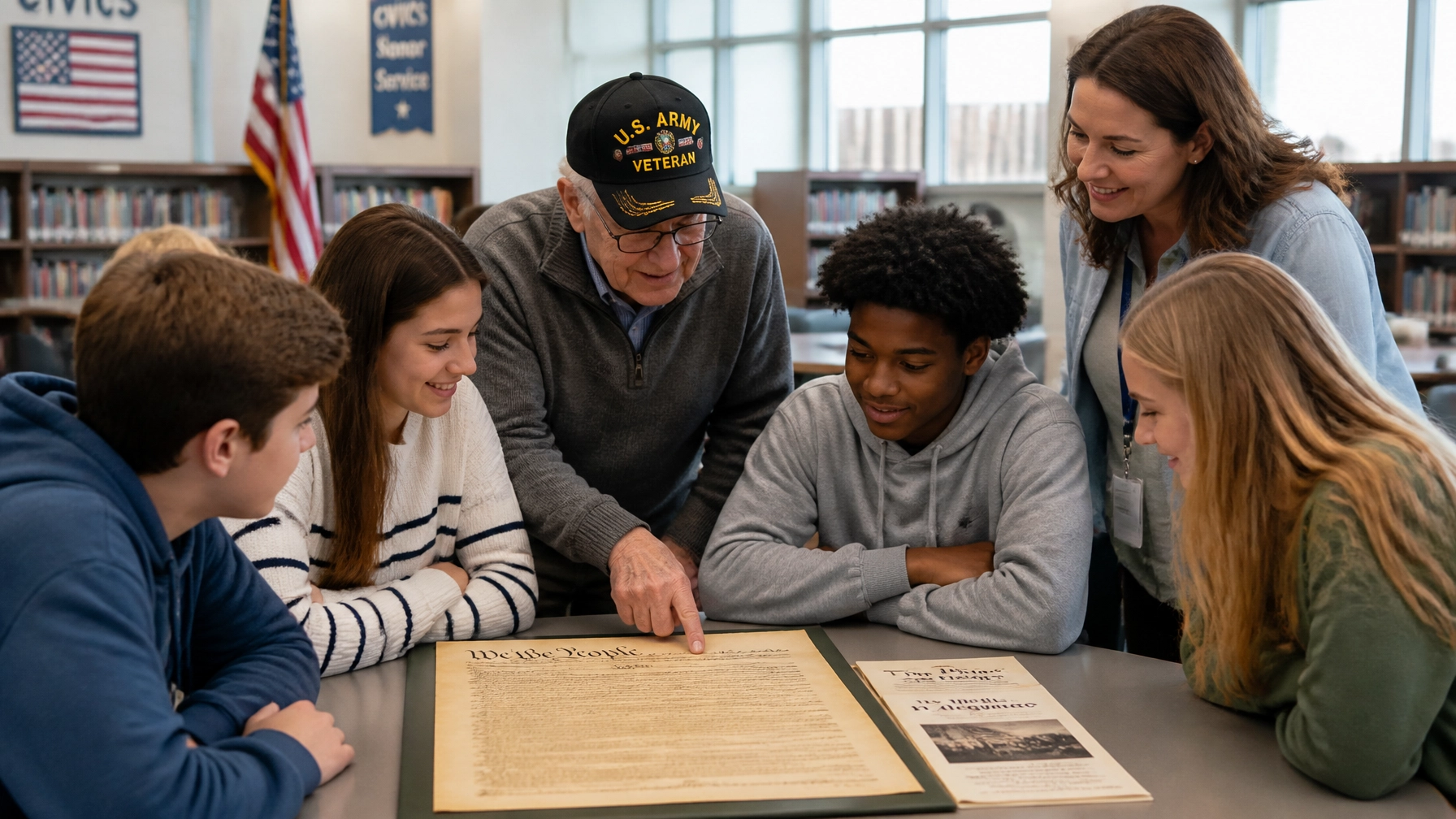
Partner with a local VFW or American Legion. Have students interview veterans about their service and, more importantly, what the American flag means to them. Preserve these recordings for your local historical society.
17. "Pledge with a Patriot" Days
Invite veterans into schools to lead the Pledge of Allegiance. Let them spend five minutes afterward explaining why those words matter to someone who has worn the uniform.
18. Veteran-Led Civil Discourse Training
Veterans often have a unique perspective on unity. Host a community forum where veterans lead discussions on how to disagree with respect: a core component of our National Civil Discourse Training Program.
19. Honoring Service Sites
Organize a day to clean and restore local veteran memorials or gravesites. Use this as an opportunity to teach the history of the conflicts those individuals served in.
20. "Stories of the Flag" Workshops
Host a workshop where veterans teach the proper etiquette and history of the American flag. This is a perfect time to integrate Pledge History 101 into the conversation.
Build a Stronger Community
Democracy isn't a spectator sport. The 250th anniversary is your chance to step onto the field and foster a sense of belonging in your own backyard.
21. "Democracy Minutes" Micro-Podcasts
Encourage local students to record 2-minute podcasts explaining civic concepts like jury duty or the importance of local elections. Share these on community social media pages.

22. The 250th Anniversary Community Walk
Design a walking tour that highlights local sites of civic importance: old town halls, historic schools, or locations of former community debates. End the walk at a public space with a group recitation of the Pledge.
23. A "Civility Lab" Public Forum
Host a community meeting focused on a local issue but use it as a "lab" to practice civil discourse. Set ground rules for listening and responding, moving the needle from divisive debate to informed participation.
24. Planting a "Liberty Grove"
Work with your city council to plant 250 native trees across the city. Each tree can represent a year of our history or a specific local hero.

25. The "Our 250" Digital Archive
Create a website where residents can upload a photo and a one-sentence "Civic Promise." What will you do for your country in the next year? Seeing a wall of 250+ promises builds an immediate sense of shared responsibility.
Taking the Next Step for 2026
You don't have to do all 25 of these ideas to make an impact. Pick one: just one: that resonates with your classroom, your family, or your community. The goal isn't just to celebrate a birthday; it’s to reinforce the "indivisible" nature of our republic.
If you’re feeling overwhelmed by where to start, check out our guide on 7 mistakes people make with civic education. Let’s make sure that when 2026 arrives, we aren't just waving flags: we’re understanding the profound responsibility that comes with them.
The next 250 years start with you. Are you ready to lead?