
If you’ve ever felt like teaching civics is a minefield of modern controversy, you need to see this.
Most parents and educators want to pass down the foundational values of the United States: values like freedom, fairness, and equality: but they often hesitate. Why? Because today, it feels like every word in our national vocabulary has been pulled into a political tug-of-war. We worry that explaining the Pledge of Allegiance might lead to a debate we aren't ready for, or that we'll accidentally say something "partisan."
But here is the reality: The phrase "with liberty and justice for all" is not a political talking point. It is a promise. It’s a shared goal that transcends the 24-hour news cycle. At Pledge Allegiance, we believe that replacing assumptions with actual knowledge is the key to building a stronger, more informed generation of citizens.
Let’s dive deep into how you can coach your kids through these powerful concepts with warmth, clarity, and zero political noise.
Hook Them with the "Why" Before the "What"
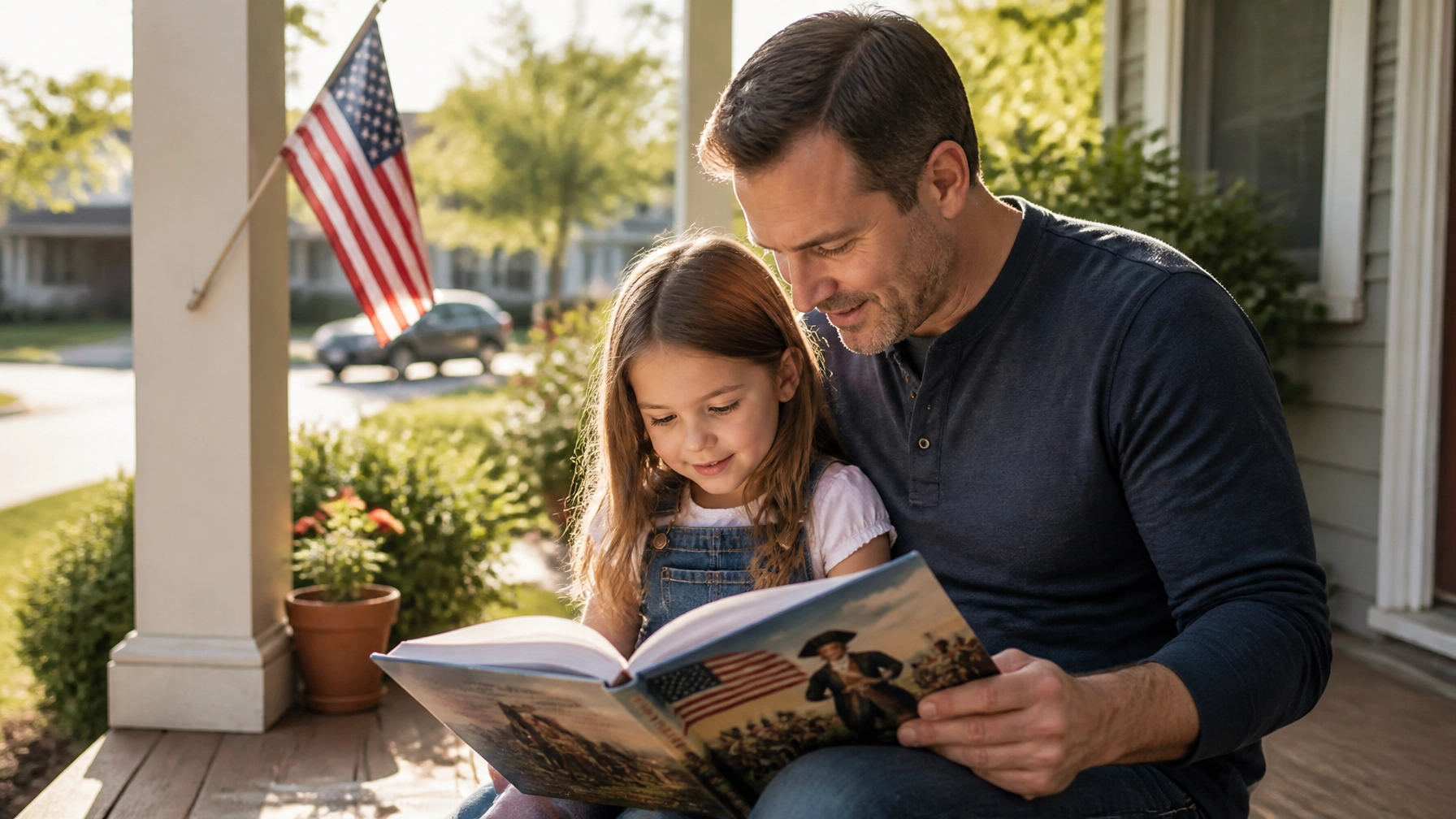
Before you start defining words, help your children understand why these ideas matter in their everyday lives. You don’t need a podium or a PowerPoint presentation: you just need a relatable scenario.
Think about a game on the playground. If one kid gets to change the rules halfway through so they always win, the game falls apart. That is a lack of justice. If another kid is told they aren’t allowed to choose which team to play on because of what shoes they’re wearing, that is a lack of liberty.
By starting with fairness and choice, you anchor abstract historical concepts in their concrete reality. You are no longer "teaching politics": you are teaching the rules of a healthy community.
Breaking Down "Liberty" (The Power of Choice)
Liberty is often the first word kids hear in the Pledge that feels "big." To a six-year-old, "liberty" sounds like something out of a movie. To a teenager, it might sound like a slogan.
Explain it like this: Liberty means you have the freedom to make choices about your own life, as long as you follow rules that keep everyone safe.
Use these parallel examples to reinforce the idea:
- For younger kids: You have the liberty to choose which book we read at bedtime or which game to play at recess.
- For older kids: You have the liberty to voice your opinion in class or join a club that interests you.
Remind them that liberty is a "right," but it comes with the "responsibility" to respect other people’s liberty too. If you want to dive deeper into the classroom application of these ideas, check out our 15 surprising pledge facts for classroom discussion.
Defining "Justice" (The Standard of Fairness)
Justice is a word kids usually equate with "getting in trouble" or a courtroom. You want to shift that perspective toward fairness.
Explain it like this: Justice means that the rules are the same for everyone, and people are treated fairly regardless of who they are.
In a household or a classroom, justice is easy to spot. If everyone has to do their chores before they get dessert, that is justice. If one person gets dessert without doing the work while everyone else is still scrubbing dishes, that is an injustice.

The Heart of the Message: "For All"
This is perhaps the most important part of the phrase to emphasize. "For All" is an inclusive, non-negotiable term. It means that the promise of liberty and justice isn't a "members-only" club.
Coach your kids to see that "for all" includes the person they might not agree with, the person who looks different from them, and the person they haven't even met yet. It is the aspirational part of our American experiment. We are always working to make that "for all" more true every day.
For parents looking to connect these values to specific holidays, learning how to teach your children the true meaning of Memorial Day is a fantastic way to show that "liberty" was earned through sacrifice.
Connecting History to the Heroes Among Us
One of the best ways to teach civic values without getting bogged down in politics is to focus on tribute. When kids meet veterans, they aren't seeing a political party: they are seeing a person who lived out the values of the Pledge.

Invite a veteran to speak to your class or sit down with a family member who served. Ask them what "liberty" meant to them while they were away from home. This moves the conversation from the abstract to the personal. It transforms a classroom lesson into an immersive experience that lingers in your readers' minds.
Move from Words to Action: Civic Responsibility
Civic education isn't just about reciting a 31-word pledge; it's about what you do after the pledge is over. Encourage your kids to find ways to "act out" liberty and justice in their neighborhood.
Try these simple activities:
- The Fairness Audit: During a family game night, ask the kids to explain why the rules are fair.
- Community Service: Volunteer together at a local food bank or park cleanup. This shows that we have a responsibility to care for the "all" in "liberty and justice for all."
- Dialogue Circles: Practice having "community dialogues" where everyone gets to speak and everyone has to listen: even if they disagree.

Looking Toward America's 250th Anniversary
As we approach 2026: the 250th anniversary of the United States: we have a unique opportunity to reclaim our civic narrative. This isn't just a birthday party for the country; it's a chance to re-evaluate how we are teaching these timeless truths.
You might wonder, does civic education really matter in 2026? The answer is a resounding yes. Preparing your children for this milestone means giving them the tools to be informed participants in democracy, not just spectators of the debate.

Your Role as a Civic Guide
Remember, you don't need to be a Constitutional scholar to teach your kids about the Pledge. You just need to be a consistent, warm, and intentional guide. By stripping away the political jargon and focusing on the human elements: freedom, fairness, and the promise we make to one another: you empower your children to value their country and their neighbors.
Summarize these lessons often. Reinforce them through stories. And most importantly, live them out in your own actions. When your kids see you treating others with justice and respecting their liberty, they won't need a textbook to understand the Pledge: they'll just need to look at you.
Stay positive, stay informed, and let's work together to preserve the stories and significance of our shared American journey.