
Most people think explaining the Pledge of Allegiance is as simple as reciting thirty-one words… until they realize their kids are just making rhythmic noises while staring at a piece of fabric.
As we approach America’s 250th anniversary in July 2026, the weight of our civic traditions feels heavier: and more important: than ever. You want your children to feel that spark of patriotism, that sense of belonging to something bigger than themselves. But if you’re like most parents or educators, you might be falling into some common traps that turn a powerful oath into a mindless chore.
Let’s be honest: the Pledge is a mouthful. It’s packed with 19th-century vocabulary and abstract concepts that can fly right over a child’s head. If we don’t bridge that gap, we lose a prime opportunity for civic education.
Here are the seven biggest mistakes you’re likely making when explaining the Pledge to your kids: and exactly how to fix them so the message actually sticks.
1. Treating it Like a "Morning Chore"
Most kids see the Pledge as the thing they do right before the math lesson or the morning announcements. It’s lumped in with putting away backpacks and sharpening pencils. When you treat the Pledge as a routine box to check, it loses its soul.
The Fix: Reframe it as a Promise
Stop calling it "The Pledge" for a second and start calling it "The Promise." Explain to your kids that when we stand up, we aren't just reciting a poem; we are giving our word. We are promising to be good neighbors, to look out for our country, and to stand up for what’s right. When a child understands they are making a commitment, their posture changes. They realize that promises are meant to be kept, not just spoken.
2. Ignoring the "Vocabulary Gap"
"Allegiance." "Republic." "Indivisible." These aren't words your kids use on the playground. To a six-year-old, "Indivisible" sounds like an invisible superhero. If they don't know what the words mean, the sentiment is lost in translation.
The Fix: Translate into "Kid-Speak"
Break it down.
- Allegiance: Being a loyal friend.
- Republic: A big team where we pick our captains.
- Indivisible: Like a Lego set that’s glued together: you can’t pull us apart.
- Liberty: The freedom to be who you are.
By providing a "decoder ring" for the Pledge, you turn abstract concepts into tangible values. You can even find tools to help with this in our online shop to make these lessons more visual.

3. Skipping the "Why" Behind the Flag
We tell kids to look at the flag, but do we tell them why that specific flag matters? To a child, it’s just red, white, and blue stripes. If they don't understand the symbolism, the act of facing the flag feels like a strange, empty ritual.
The Fix: Tell the Story of the 50 Stars and 13 Stripes
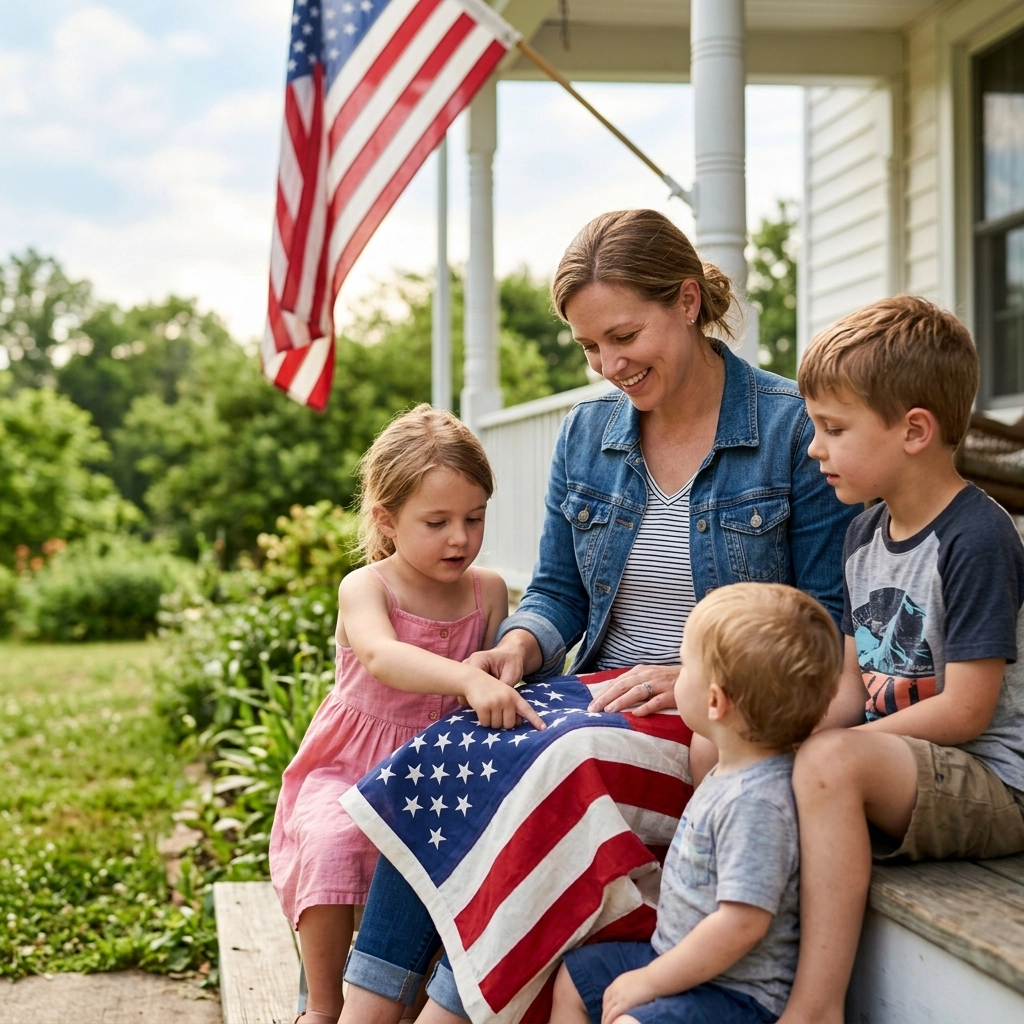
Connect the physical object to the people it represents. Tell them the stripes are for the first brave people who started this country, and the stars are for every single state: including the one you live in right now. Remind them that the flag represents everyone from the veterans in your family to the person sitting at the desk next to them. It’s the "family photo" of the United States.
4. Forgetting the "Indivisible" Part of Unity
In a world that often feels divided, the word "indivisible" is perhaps the most important part of the Pledge. Yet, we often gloss over it. Kids hear the news; they feel the tension in the air. If we don't explain unity, the Pledge feels disconnected from reality.
The Fix: The "Bundle of Sticks" Analogy
Show them a single twig and snap it. It’s easy. Then, take a bundle of fifty twigs and try to snap them together. They won't budge. Tell your kids, "This is what indivisible means. When we stand together, nobody can break us." This is a core pillar of what we believe at Pledge Allegiance. It’s about the strength we find in our common ground, especially as we celebrate 250 years of this American experiment.
5. Letting "Liberty and Justice for All" Sound Like a Mission Accomplished
Many kids think "liberty and justice for all" means everything is perfect and we’re done. When they see things that aren't fair in the world, they might feel like the Pledge is a lie.
The Fix: Explain it as an Aspiration
Teach your kids that "liberty and justice for all" is our goal. It’s the homework assignment America is still working on. By saying the Pledge, we are promising to help make that "justice" part come true for everyone. This empowers kids to see themselves as active participants in the American story, rather than just passive observers.

6. Ignoring the History (and the 250th Anniversary)
History can be dry if it’s just dates on a page. If you don’t give the Pledge a "backstory," it feels like it just appeared out of thin air. With the 250th anniversary of the Declaration of Independence coming up this year, there has never been a better time to dive deep.
The Fix: Connect it to the "Grand Birthday Party"
Explain that America is turning 250 years old this July. Tell them about the men and women who have stood up and said these same words for generations. Whether it was on a battlefield, in a schoolhouse, or at a space station, these words have connected Americans for over a century. Use the excitement of the 250th to spark a "Civic Reset" in your home. You can follow our daily updates to keep the momentum going.
7. Not Leading by Example
This is the big one. If you’re at a sporting event or a community meeting and you’re scrolling on your phone while the Pledge is being recited, your kids are watching. They do what you do, not what you say.
The Fix: Stand Tall and Be Present
When the Pledge starts, put the phone away. Stand up straight. Place your hand firmly over your heart. Let your kids see that this moment matters to you. Your reverence is the most powerful teaching tool in your arsenal. If you want them to respect their country, they need to see you doing it first.

Why This Matters in 2026
We are living through a historic moment. The 250th anniversary isn't just about fireworks and parades; it’s about the soul of our nation. It’s about ensuring the next generation understands what it means to be an American citizen.
Civic education has been on the back burner for too long. We’ve traded deep understanding for quick slogans. But you have the power to change that in your own home or classroom. By fixing these seven mistakes, you aren't just teaching a poem: you’re raising a patriot.
You’re giving your kids a sense of identity and a moral compass. You’re teaching them that they belong to a grand, messy, beautiful, and "indivisible" family.
Take the Next Step
Don't let the conversation stop here. Patriotism is a muscle: you have to exercise it every day.
- Dive Deeper: Learn why the Pledge still matters in 2026.
- Get Involved: If you believe in our mission to bring civic education back to the forefront, consider making a donation. Every bit helps us reach more families and schools.
- Stay Informed: For more tips on leading your community with American values, check out our latest blog posts.

The road to July 4, 2026, is a journey we are all taking together. Let’s make sure our kids are leading the way, hand over heart, knowing exactly what they’re promising to the republic for which it stands.
Our country’s future isn't written in the stars: it’s written in the hearts of the children who understand the weight of their words today. Keep teaching, keep leading, and keep pledging. It makes all the difference.