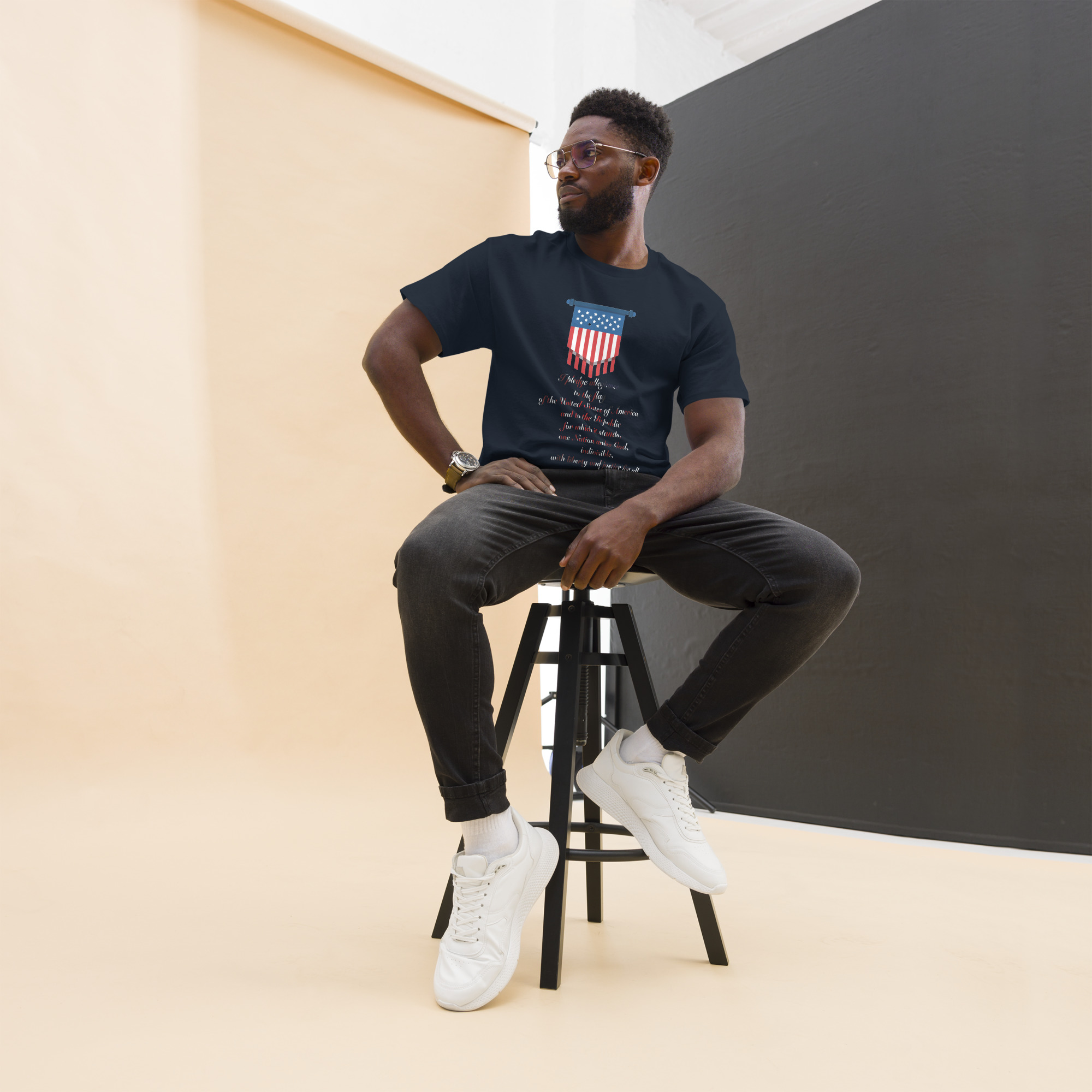


Most people think the Pledge of Allegiance is a relic from the Revolutionary War, a set of words handed down by the Founding Fathers themselves. But here is the shocker: the Pledge didn't even exist until 1892. In fact, it started as a marketing campaign for a children’s magazine.
Does that take away its power? Absolutely not. If anything, it makes the American flag a more vibrant, living symbol than you ever imagined. When you look at the stars and stripes today, you aren’t just looking at a piece of fabric; you’re looking at a canvas that has been painted by over a century of American struggle, growth, and identity.
I’m Dan Kost, and at Pledge Allegiance, we live for this stuff. As we gear up for America’s 250th anniversary, understanding our roots isn't just a history lesson, it’s the key to reclaiming American unity. If you’ve ever felt like our country is losing its way, you need to see how the Pledge was used to pull us together in the first place.
The Marketing Campaign That Unified a Nation
Picture this: It’s 1892. The United States is changing fast. Millions of immigrants are arriving at Ellis Island, and the wounds of the Civil War are still healing in the hearts of many. A man named Francis Bellamy, a minister and a socialist, was tasked by The Youth’s Companion magazine to create a program for the 400th anniversary of Christopher Columbus landing in the Americas.
Bellamy didn't just want to sell magazines; he wanted to instill a sense of national pride in a generation of schoolchildren. He penned the original thirty-one words to be a "patriotic program" for every school in the country.
Most veterans and educators I talk to are surprised to learn that the original version didn't mention "the United States of America" or "Under God." It was simpler: "I pledge allegiance to my Flag and the Republic for which it stands, one nation, indivisible, with liberty and justice for all."
This is where the shift begins. When you realize the Pledge was designed to turn "new Americans" into "patriots," you start to see the flag as a tool of invitation. It wasn't just a symbol for those who were already here; it was a beacon for those who had just arrived. If you’ve ever wondered why civic education matters, this is the heart of it. It’s about building a shared identity from scratch.
The 1923 Clarification: Whose Flag is it Anyway?
For thirty years, Americans said "my Flag." But in the wake of World War I, some folks got nervous. The National Flag Conference of 1923 decided that "my Flag" was too ambiguous. They worried that immigrants might still be thinking of the flags of their birth countries when they recited the words.
So, they changed it to "the Flag of the United States of America."
This wasn't just a grammar edit. It was a firm statement of loyalty. It was the moment the flag became an exclusive symbol of our specific Republic. When you look at the flag now, remember that those words were added to ensure we were all rowing in the same direction. It was about clarity, knowing exactly where your heart lies.

The Salute You Wouldn't Recognize
Now, this is a part of history that often gets swept under the rug, but it’s vital to understand. Originally, when children recited the Pledge, they didn't put their hands over their hearts. They used the "Bellamy Salute."
You would start with your hand over your heart, then extend your arm toward the flag, palm up. However, as the 1930s rolled around, a certain dictator in Germany adopted a salute that looked disturbingly similar. By 1942, Congress realized that having American kids perform a salute that resembled the Nazi gesture was a bad look.
They officially changed the protocol to the hand-over-heart gesture we use today. This tells us something powerful about our flag: it is a symbol of democracy that must constantly distinguish itself from tyranny. Every time you place your hand over your heart, you are participating in a tradition that was literally reshaped to stand in opposition to fascism.
If you want to dive deeper into these kinds of shifts, you should check out why understanding the 1892 original Pledge will change the way you see our traditions. It’s fascinating how much our "timeless" traditions have evolved to meet the moment.
1954: Adding the Spiritual Anchor
The most famous change occurred during the height of the Cold War. In 1954, President Dwight D. Eisenhower encouraged Congress to add the words "under God."
Why? Because we were in a battle of ideologies. On one side was the United States; on the other was the officially atheistic Soviet Union. Adding "under God" was a way to say that American rights don't come from the government, they come from a higher power. It was a strategic move to define the American character as fundamentally spiritual and limited in its governmental reach.
When you see the flag today, those two words remind us that the state is not the ultimate authority. Whether you are a person of faith or not, the inclusion of that phrase was a massive historical pivot that turned the flag into a shield against total government control.
Why This Matters for America’s 250th
We are approaching the 250th anniversary of this great nation. Many people are looking at the flag today and feeling a sense of division rather than unity. They see a symbol that has been "politicized."
But here is the truth: The flag has always been at the center of political and social evolution. The history of the Pledge proves that we have always been a work in progress. We have always been adjusting our language and our gestures to better reflect who we want to be.
Knowing the history doesn't make the flag less sacred, it makes it more human. It shows that generations of Americans before us cared enough to argue over these words, to refine them, and to use them as a rallying cry during our darkest hours.
If you're an educator or a parent, this is the most important lesson you can teach. Don't just teach the words; teach the why. Help the next generation see that they are part of a 250-year-old story that isn't finished yet.
How to Reclaim Your Connection to the Flag
Bet you can't look at the flag the same way now, right? It’s not just a decoration. It’s a historical record.
At Pledge Allegiance, we believe that civic education matters because when you know the history, you can’t be easily divided. You realize that we’ve been through these debates before and we’ve come out stronger every time.
Here is how you can start taking action today:
- Educate Your Family: Share one fact from this post at the dinner table tonight. Maybe it’s the Bellamy Salute or the 1923 wording change.
- Stay Informed: Our world moves fast, and patriotic updates shouldn't take all day. Learn how to stay informed in under 5 minutes.
- Support the Mission: We are working hard to bring these lessons to schools and communities across the country. If you believe in what we're doing, consider supporting our civic education initiatives.

Final Thoughts: A Symbol of Resilience
The flag is a mirror. If we are divided, it looks like a symbol of division. If we are united, it looks like a symbol of strength. But the history of the Pledge of Allegiance tells us that unity isn't something that just happens, it’s something we build, word by word, generation by generation.
In 2026, we’re going to celebrate 250 years of this experiment. Between now and then, let’s commit to knowing our history so well that no one can tell us we don't belong. The flag belongs to you. The Pledge belongs to you. And the future of this Republic? Well, that’s up to all of us.
If you’ve enjoyed this deep dive, I invite you to join me every day. I write a daily letter that goes beyond the headlines and gets into the heart of what it means to lead a community with grit and grace. Find out why reading my daily CEO letter will change the way you lead.
Let’s keep the conversation going. Our history is too rich to be forgotten, and our future is too bright to be left to chance. Stand tall, keep your hand over your heart, and remember the history that brought us here. One nation, indivisible. Always.