
Most people think the Pledge of Allegiance was written by the Founding Fathers and handed down on a piece of parchment right next to the Constitution: until they find out it actually started as a magazine marketing gimmick in 1892.
Does that shock you? It should. But here is the thing: understanding the "why" and the "how" behind the Pledge doesn’t take away from its power. In fact, when you dive into the history of the 1892 original version, you start to see our American traditions through a much clearer lens. You realize that patriotism isn’t a static, dusty relic; it’s a living, breathing commitment that has evolved alongside our nation.
As we approach America’s 250th anniversary, there has never been a better time to peel back the layers of our history. Whether you are an educator looking for a "hook" for your students, a veteran who has dedicated your life to the flag, or a parent trying to raise civic-minded kids, this story is for you.
The Marketing Campaign That Sparked a National Movement
Picture this: it’s the late 19th century. America is changing fast. The Civil War is still a living memory for many, and a massive wave of immigrants is arriving at our shores. There is a deep, underlying anxiety about how to unify such a diverse and rapidly growing population.
Enter Francis Bellamy. He wasn't a politician or a general: he was a Baptist minister and a Christian socialist working for a popular magazine called The Youth’s Companion.
The magazine’s owners had a brilliant idea: they wanted to place an American flag in every public school in the country. Why? Part of it was genuine patriotism, but let’s be real: it was also a savvy marketing campaign to boost magazine subscriptions. To make the flag-raising ceremony really stick, they needed a "salute" or a "pledge" that kids could recite.
Bellamy sat down and penned the original words in August 1892. It was designed to be short, punchy, and recitable in exactly 15 seconds. On October 21, 1892, tens of thousands of schoolchildren across the country recited it for the first time to celebrate the 400th anniversary of Christopher Columbus’s voyage.
If you want to dive deeper into these kinds of stories, you should check out our Top 10 Pledge History Facts to Share This America’s 250th. It’s full of "I never knew that!" moments that are perfect for the dinner table or the classroom.
The Original Words (And What Was Missing)
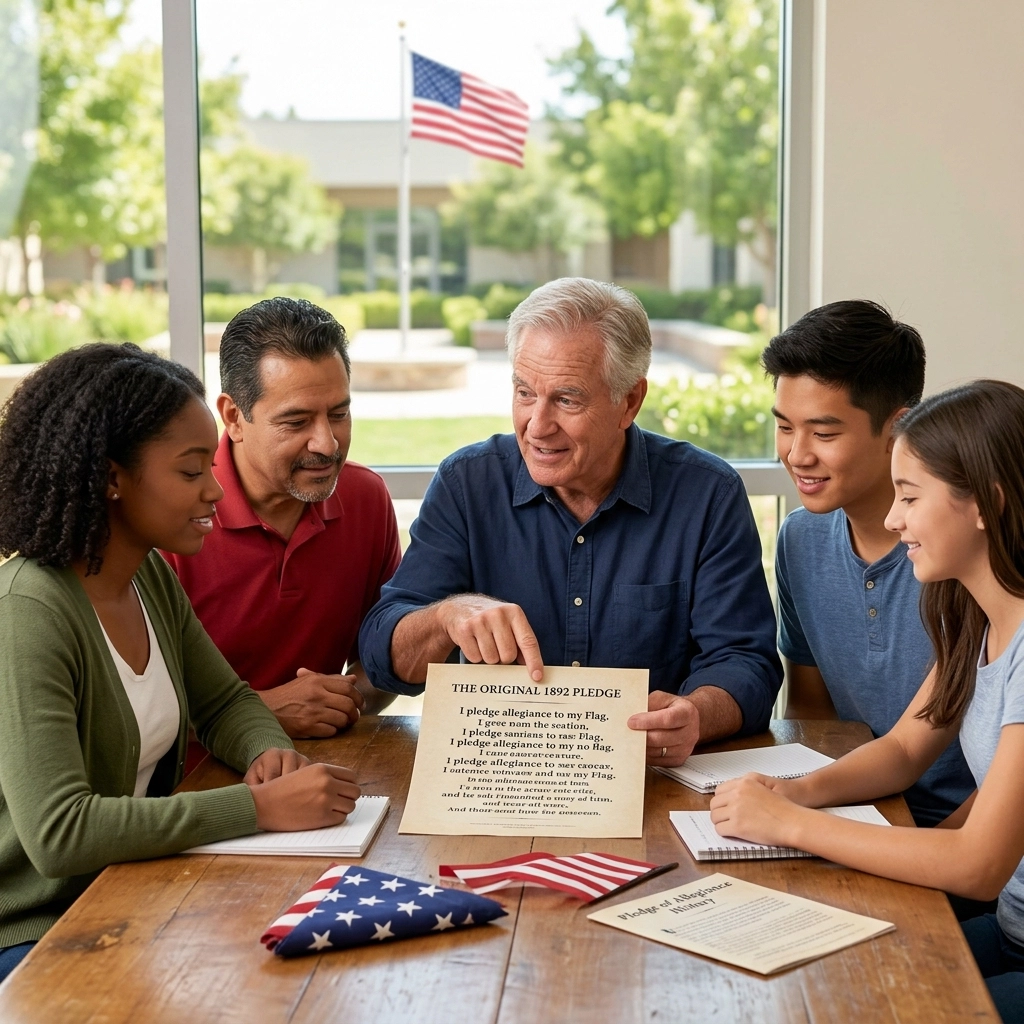
When Bellamy first wrote the Pledge, it sounded a bit different than what you hear at a ballgame today. The 1892 version was:
"I pledge allegiance to my Flag and the Republic for which it stands, one Nation, indivisible, with liberty and justice for all."
Notice anything missing? There was no "United States of America" and no "under God."
Bellamy, as a socialist, actually considered including the words "equality" and "fraternity" in the text. However, he knew those words were politically charged at the time: especially with the ongoing debate over women's suffrage and racial equality. He chose to stick with "liberty and justice," believing those values were universal enough to unite a fractured country.
Think about that for a second. The Pledge was created as a tool for assimilation. It was meant to teach the children of immigrants what it meant to be American. It was a verbal handshake with the Republic. Understanding this intent helps us realize that civic education has always been about building a common ground.

The Evolution: Why We Keep Changing It
Most of us treat the Pledge as if it were carved in stone, but its history proves it’s more like a family heirloom that gets polished and updated for every new generation.
- The 1923 Update: People started getting nervous that immigrants might be reciting "to my flag" while secretly thinking about the flag of their birth country. To clear up any confusion, the National Flag Conference changed it to "the Flag of the United States of America."
- The 1954 "Under God" Addition: During the height of the Cold War, President Eisenhower encouraged Congress to add "under God" to distinguish the U.S. from the "godless communism" of the Soviet Union.
- The Gesture Change: This is the one that really surprises people. Originally, the Pledge was recited with the "Bellamy Salute": a hand out, palm up or down, pointed toward the flag. If that sounds familiar, it’s because it looked almost identical to the salute later adopted by the Nazis. In 1942, Congress officially changed the gesture to the hand-over-heart we use today to avoid the association.
Dive deep into these shifts and you’ll find Pledge history secrets revealed that your standard history textbooks usually leave out.

Why This Matters for America's 250th
You might be wondering, "Dan, why does a marketing campaign from 1892 matter in 2026?"
It matters because we are currently preparing for America’s 250th anniversary. We live in a time where unity feels hard to come by. By looking back at the 1892 original Pledge, we see that the struggle for unity isn't new. We see that our ancestors were also trying to figure out how to weave a million different stories into one national tapestry.
At Pledge Allegiance, we believe that civic education is the heartbeat of a strong community. If we don’t teach our kids where these traditions come from, the traditions lose their meaning. They just become words we mumble while waiting for the bell to ring. But when you know the history, those words become a connection to the millions of people who stood in those same classrooms over the last 134 years.
If you're an educator, you can learn how to integrate the Pledge’s history with your America 250th anniversary lessons to make history come alive for your students.
Coaching Moment: How to Explain This to Your Kids
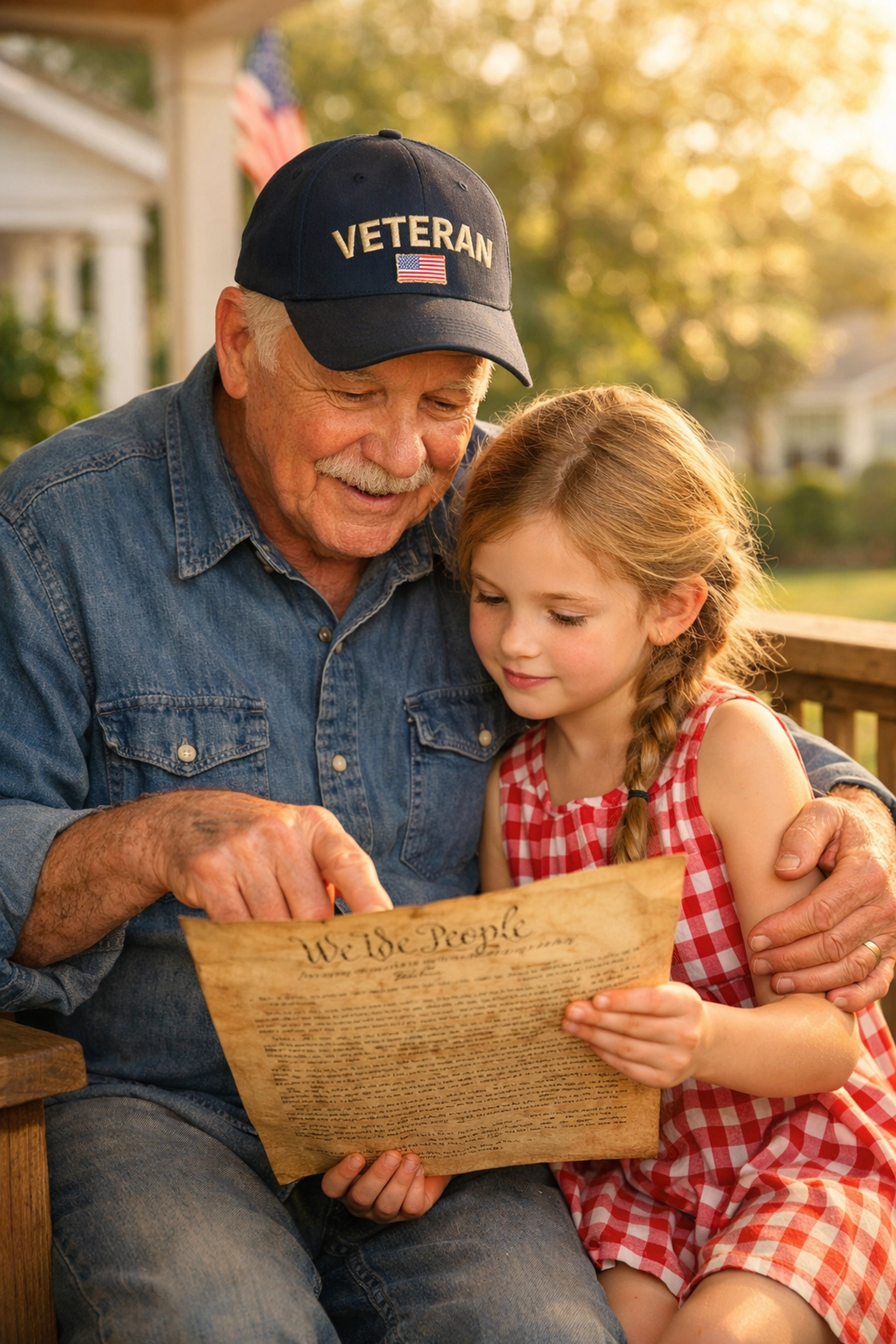
Don't be afraid to tell your kids or grandkids that the Pledge has changed. In fact, use it as a coaching moment to explain how America is always "a work in progress."
- Hook them with the salute: Show them a picture of the original Bellamy salute. It’s a great way to start a conversation about how symbols change meaning.
- Address the "Why": Explain that people in 1892 wanted everyone to feel like they belonged to one big family, even if they came from different parts of the world.
- Outline the values: Focus on "liberty and justice for all." Ask them: "Do you think we’ve reached that goal yet? How can we do better?"
If you need a bit more help, I’ve put together a guide on how to explain the hidden history of the Pledge to your kids without being boring. It’s all about making it relatable and energetic.
Join the Mission
Understanding our past is the only way to safeguard our future. That’s why I write these daily updates. Whether it’s a deep dive into 1892 or a look at how we can lead our communities today, the goal is always the same: Unity through Education.
I’m on a mission to make sure every American understands the weight and the wonder of our civic traditions as we head toward 2026. If you believe in that mission, I’d love for you to join us. You can support our educational programs by visiting our donations page. Every bit helps us get these resources into more classrooms and homes.
Stay curious, stay patriotic, and keep asking questions. The history of the Pledge is the history of us: constantly evolving, occasionally messy, but always striving for something better.
For more daily insights on how to master civic leadership in your daily life, take a look at The CEO’s Guide to Mastering Civic Values. Let’s make this 250th anniversary something the next generation will talk about for another hundred years.

What’s your favorite piece of "hidden" American history? Drop a comment or send me a note: I’d love to hear how you’re keeping these traditions alive in your neck of the woods.