
Most people think they know the Pledge of Allegiance by heart because they’ve recited it thousands of times: until they realize they’re only scratching the surface of its true story. As we march toward the Semiquincentennial: America’s massive 250th birthday on July 4, 2026: there’s never been a better time to dive deep into the roots of our national promise.
You see, the Pledge isn’t just a string of words we say before a ballgame or in a classroom. It’s a living, breathing document that has evolved alongside our nation. It’s a bridge connecting the courage of the original signers of the Declaration of Independence to the patriotic heart you carry today. Whether you’re a teacher looking to inspire the next generation, a veteran who has defended these very ideals, or a parent wanting to instill civic pride, these ten facts will change the way you look at those thirty-one words forever.
1. The "Sacred Honor" Preceded the Formal Pledge
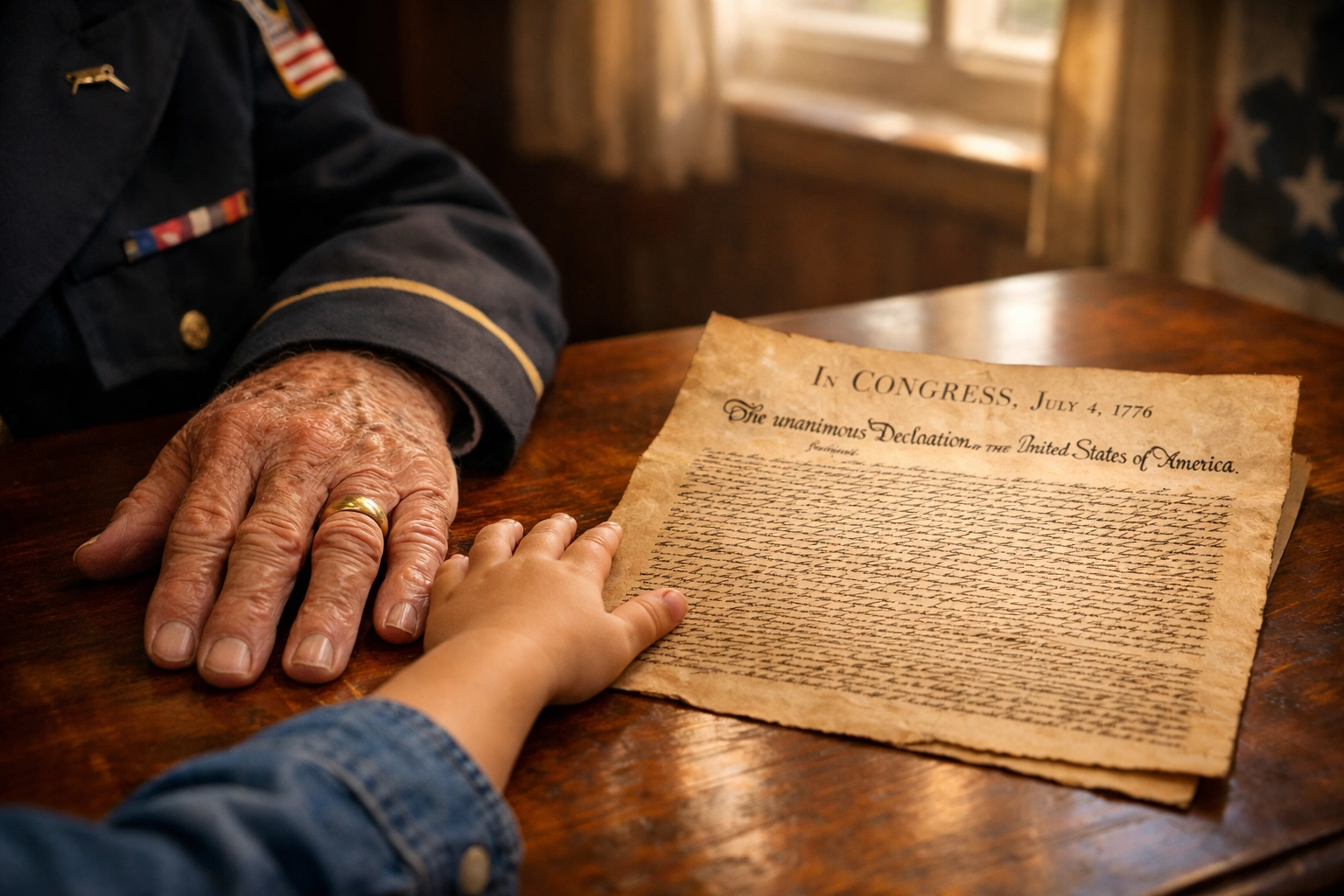
Long before Francis Bellamy put pen to paper in 1892, the spirit of the Pledge was forged in fire. When the 56 signers of the Declaration of Independence finished their revolutionary document, they didn't just sign their names; they made a "sacred pledge."
The final lines of the Declaration read: "And for the support of this Declaration, with a firm reliance on the protection of divine Providence, we mutually pledge to each other our Lives, our Fortunes and our sacred Honor." You have to realize that this wasn't just flowery language: it was a legal and moral commitment that carried the weight of a death sentence if they failed. This "sacred honor" is the DNA of the modern Pledge of Allegiance.
2. The Original 1892 Version Was Shorter
What if I told you the original Pledge didn't even mention the United States by name? It’s true. In 1892, the original text read: "I pledge allegiance to my Flag and the Republic for which it stands, one nation, indivisible, with liberty and justice for all."
The author, Francis Bellamy, wanted it to be a universal salute to the flag of any republic. It wasn't until 1923 that the words "the Flag of the United States of America" were added. Why the change? People wanted to make sure that immigrants and citizens alike knew exactly which flag they were promising to defend. You can dive deep into the original 1892 Pledge explained here to see how those few minutes of history changed our civic landscape.
3. Fifty-Six Men, One Massive Risk
When you recite the Pledge, you are honoring the grit of 56 men from all walks of life. These weren't just professional politicians. They were lawyers, merchants, farmers, printers, and physicians. They represented a cross-section of colonial society: just like you and your neighbors today.
By signing the document that birthed our nation, they were engaging in an act of open rebellion against the Crown. If the Revolution had failed, every single one of them faced financial ruin, imprisonment, or the gallows. Understanding the professions and the risks of these signers helps you appreciate the "liberty" mentioned in the Pledge. It wasn't free; it was bought by men who had everything to lose.
4. The 27 Grievances That Built the Promise
The Pledge promises "justice for all," but do you know why that specific word is so vital? It’s because the founders were living through a period of extreme injustice. The Declaration of Independence actually enumerated 27 specific grievances against King George III.
These included things like imposing taxes without representation and depriving citizens of trial by jury. When you stand and face the flag today, you are affirming a system that was specifically designed to rectify those 27 wrongs. Every time you say those words, you're reinforcing the wall between us and tyranny. To learn more about how these values integrate into modern life, check out our Civic Education 101 guide.
5. "Under God" Wasn't Added Until 1954
This is one of the most debated facts in the history of the Pledge. For over 60 years, the Pledge did not include the phrase "under God." It was added during the Cold War era in 1954, following a campaign by the Knights of Columbus and a sermon by Reverend George Docherty that was attended by President Dwight D. Eisenhower.
The addition was meant to distinguish the United States from the officially atheistic Soviet Union. It serves as a reminder that our rights aren't granted by the government, but are "unalienable" and inherent to our humanity: a concept rooted in the "Laws of Nature and of Nature's God" as mentioned in 1776.
6. The Bellamy Salute vs. The Hand Over Heart
Picture this: millions of Americans standing with their right arms extended toward the flag, palms up. This was actually the original "Bellamy Salute" used during the Pledge. However, during World War II, the salute looked uncomfortably similar to the one used by the Nazi regime in Germany.
To avoid any confusion and to ensure our salute remained uniquely American, Congress officially amended the Flag Code in 1942, mandating the "hand over heart" gesture we use today. It’s a powerful lesson in how our traditions adapt to protect the integrity of our message. You can find more about these historical shifts on our About page.
7. A Future President Signed the Foundation
One of the most famous signers of the Declaration: the document that provided the moral foundation for our Pledge: was a young Virginia planter who would eventually become the third President of the United States: Thomas Jefferson.
Jefferson's focus on natural rights and the idea that governments "derive their just powers from the consent of the governed" is exactly what you are acknowledging when you pledge allegiance to the Republic. We aren't pledging to a person or a king; we are pledging to a system that we, the people, authorize.

8. The July 4, 2026 Milestone
We are currently on a collision course with history. On July 4, 2026, America will celebrate its 250th anniversary: the Semiquincentennial. This isn't just another Fourth of July; it’s a once-in-a-generation milestone to reflect on our journey since 1776.
As we approach this date, sharing the history of the Pledge becomes a vital part of our civic duty. It’s about more than just a celebration; it’s about a renewal of that "sacred pledge" made by the founders. We want every classroom and every VFW hall across the country to be ready. If you want to help us keep this spirit alive, consider visiting our donate page to support civic education.
9. Indivisible: The Lesson of the Civil War
The word "indivisible" wasn't just a random choice by Francis Bellamy. Writing in 1892, the memory of the Civil War was still fresh in the American psyche. The nation had nearly been torn apart, and the word "indivisible" was a firm, patriotic declaration that the Union was permanent.
When you say "indivisible" today, you are honoring the millions who fought to keep the United States together. It’s a call for unity in an often divided world. It reminds us that no matter our differences, we are one people under one flag. This is why consistency matters in our daily reminders.
10. The Original Document Dating Mystery
Here’s a fun piece of trivia for your next trivia night: while we celebrate July 4th as the birth of our independence, historians believe the original Declaration was actually signed mostly on August 2, 1776. The document is dated July 4th because that is when the text was officially approved.
When the document was eventually rolled up for storage, a label was attached reading "Original Declaration of Independence dated 4th July 1776." It shows that even in the 1700s, Americans knew the power of a specific date and a specific promise.
Why These Facts Matter for You
You might be wondering, "Dan, why does this matter for my daily life?" It matters because civic education is the bedrock of a strong nation. When you understand the history behind the Pledge, it stops being a rote exercise and starts being a powerful affirmation of your identity as an American.
Whether you are teaching your children about their heritage or standing with fellow veterans, these facts give you the tools to spark a conversation. They turn a simple tradition into an immersive experience of history.
As we count down to America's 250th, I encourage you to stay informed. My daily letters are designed to keep this conversation going every single day. We don't just talk about history; we talk about how to live it out through active citizenship and a deep love for our country.
Ready to gear up for the 250th? Head over to our shop to find patriotic items that help you share the message, or contact us to learn how you can get involved in your local community. Let’s make the next few years a masterclass in American pride.
Stay patriotic, stay informed, and keep the promise alive.