

What if everything you’ve been told about teaching civic education is actually holding our kids back?
Most people think that as long as a student passes a civics test or recites the Pledge of Allegiance in the morning, the job is done. But as we approach America’s 250th anniversary, we have to be honest with ourselves – our current approach isn't just "coasting," it’s stalling. We’re at a crossroads where "good enough" is no longer enough to sustain the Great American Experiment.
If you’ve ever felt like the next generation is disconnected from the values that built this country, you aren't alone. But here’s the good news: fixing it doesn't require a PhD in political science. it requires a return to the heart of our story.
At Pledge Allegiance, we see the gaps every day. We also see the incredible spark that ignites when a student finally understands what "liberty and justice for all" actually means. Let’s dive into the seven most common mistakes people make with civic education and, more importantly, how you can fix them before the fireworks start for the Semiquincentennial.
1. Treating Civics as a "One-and-Done" High School Requirement
Most states treat civics like a flu shot – you get it once in high school, and you're supposedly "immune" to civic ignorance for life. This is perhaps the biggest institutional failure we face. Research shows that reduced time for civics in lower grades leads to a lack of foundational understanding that no single high school course can fix.
How to Fix It:
Stop waiting for 12th grade. Civic education should be a lifelong journey that starts the moment a child can say "United States." For families, this means discussing the "why" behind our holidays. For educators, it means integrating civic themes into literature and history from day one. We need to make patriotism a daily habit, not a graduation box to check.
2. Teaching to the Citizenship Test Instead of the Heart
Did you know that over a third of states now require students to pass the U.S. Citizenship Test to graduate? While it sounds good on paper, the data is clear: memorizing facts about the three branches of government doesn't actually increase voter turnout or community engagement.
How to Fix It:
Move beyond the "what" and get to the "so what." Instead of just asking kids to name the President, ask them what it means to lead with integrity. Use tools that make the concepts tangible. Our classroom kits are designed to bridge that gap, turning abstract words into lived values that resonate with a student’s daily life.

3. Falling into the "America the Awful" vs. "America the Perfect" Trap
We live in a polarized time, and that polarization has leaked into our classrooms. On one side, some educators present a narrative of "America the Awful," focusing solely on our failures. On the other, some insist on an "America the Perfect" narrative that ignores our struggles. Both are mistakes.
How to Fix It:
Teach the "Pledge" perspective. The Pledge of Allegiance doesn't say we are perfect; it says we are working toward being "one nation, under God, indivisible." It’s an aspirational promise. We should teach our history with honesty – acknowledging the scars while celebrating the triumphs. When we teach kids that they are part of a continuous journey toward a "more perfect union," we give them a reason to stay engaged.
4. Letting "Standards Bloat" Suffocate the Story
State standards are getting longer and more complex every year. Teachers are often forced to rush through hundreds of benchmarks, leaving no time for the stories that actually make students care. When everything is a priority, nothing is.
How to Fix It:
Simplify and focus on the core symbols. The American Flag, the Constitution, and the Pledge are the "North Stars" of our civic identity. If a student understands the deep history and sacrifice behind the flag, they’ll be more curious about the laws and systems that protect it. Don't let the bureaucracy drown out the beauty of our heritage.
5. Using Community Service as a Substitute for Civic Knowledge
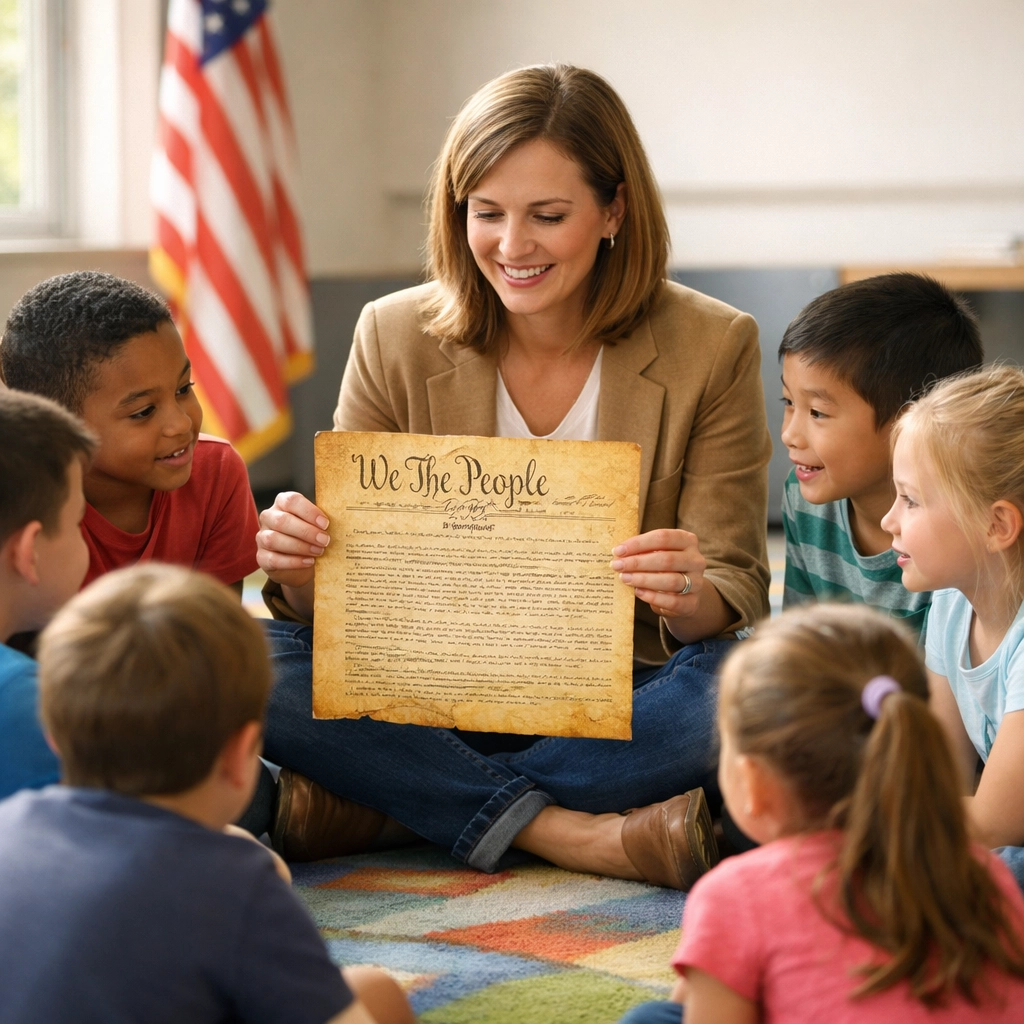
Many schools have swapped out civics classes for "service learning" or community service hours. While picking up trash in a park is great, it isn't the same as understanding the Bill of Rights. In fact, sporadic, poorly organized service programs can sometimes lead to less civic engagement because students feel like they’ve "done their time."
How to Fix It:
Connect the service to the system. If students are volunteering at a food bank, use that as a jumping-off point to talk about civic responsibility and how local government works. Use youth workshops to help teens see the connection between their actions and the health of the Republic. Service should be the fruit of civic knowledge, not a replacement for it.
6. Ignoring the Living History of Our Veterans
One of the greatest resources for civic education is sitting right in our local VFW halls and living rooms. Yet, we often treat veterans as people to be thanked once a year on November 11th, rather than as the primary keepers of our civic flame.
How to Fix It:
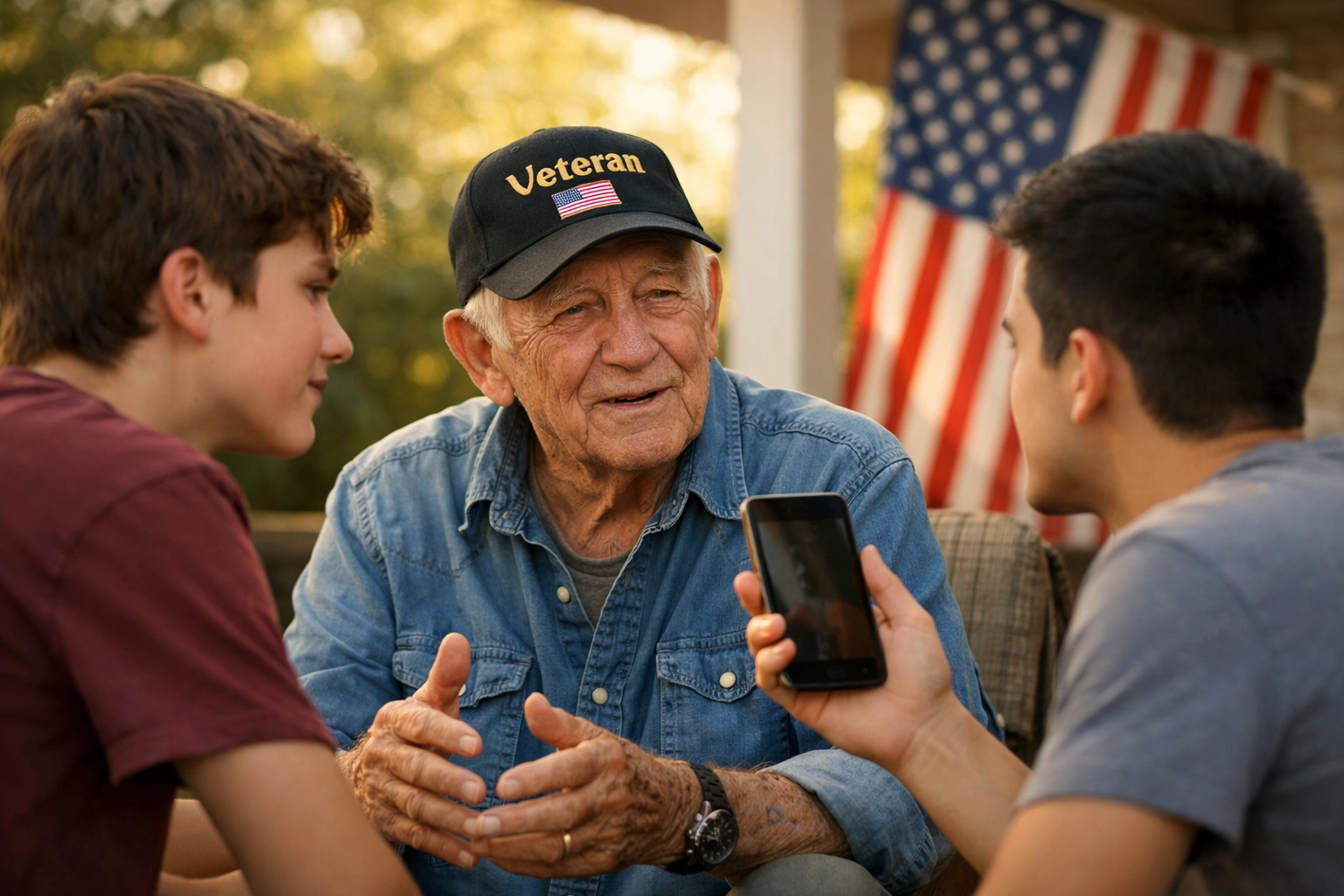
Bring the stories to life. A veteran’s firsthand account of why they stood for the flag carries more weight than any textbook ever could. We encourage families and schools to pick up an oral history kit to record these perspectives. When a student hears a veteran explain why they were willing to sacrifice everything for the word "Liberty," that word is no longer just ink on a page – it becomes a legacy they are responsible for carrying.
7. Saying the Pledge Without Understanding the Law
There’s a common misconception that civics is just about "following the rules." This leads to mistakes in how we handle the Pledge in schools. Some think it can be forced, while others think it should be discarded entirely to avoid conflict.
How to Fix It:
Know the law and the logic. Understanding that the Pledge is a voluntary expression of loyalty actually makes it more powerful, not less. We’ve put together a guide on what the law actually says regarding the Pledge. Use these moments of "disagreement" as teaching opportunities. Civic education thrives in the space where we learn how to disagree with respect while remaining committed to the same flag.
Preparing for the 250th: Your Call to Action
The year 2026 isn't just a date on the calendar – it’s a deadline for our dedication. We have a unique window of opportunity to revitalize how we teach the next generation of Americans.
Think about it: in just a short time, the world will be watching as we celebrate 250 years of independence. Will our children understand why that’s a miracle? Or will they just see it as another day off school?
The fix starts with you. Whether you are a parent, a teacher, or a concerned citizen, you have the power to pivot.
- Speak up at school board meetings for better civic resources.
- Incorporate the Pledge into your family’s daily routine.
- Support organizations that are doing the heavy lifting to keep our history alive.
If you believe in this mission, consider making a donation to help us get these kits and programs into more hands across the country.

America isn't just a place on a map – it’s an idea that requires constant renewal. By avoiding these seven mistakes and focusing on the heart of our patriotic traditions, we can ensure that when the 250th anniversary arrives, we aren't just celebrating the past – we are securing the future.
Let’s get to work. Our nation – and our children – are counting on us to get this right. We are one nation, indivisible, and it’s time our education reflected that strength.