
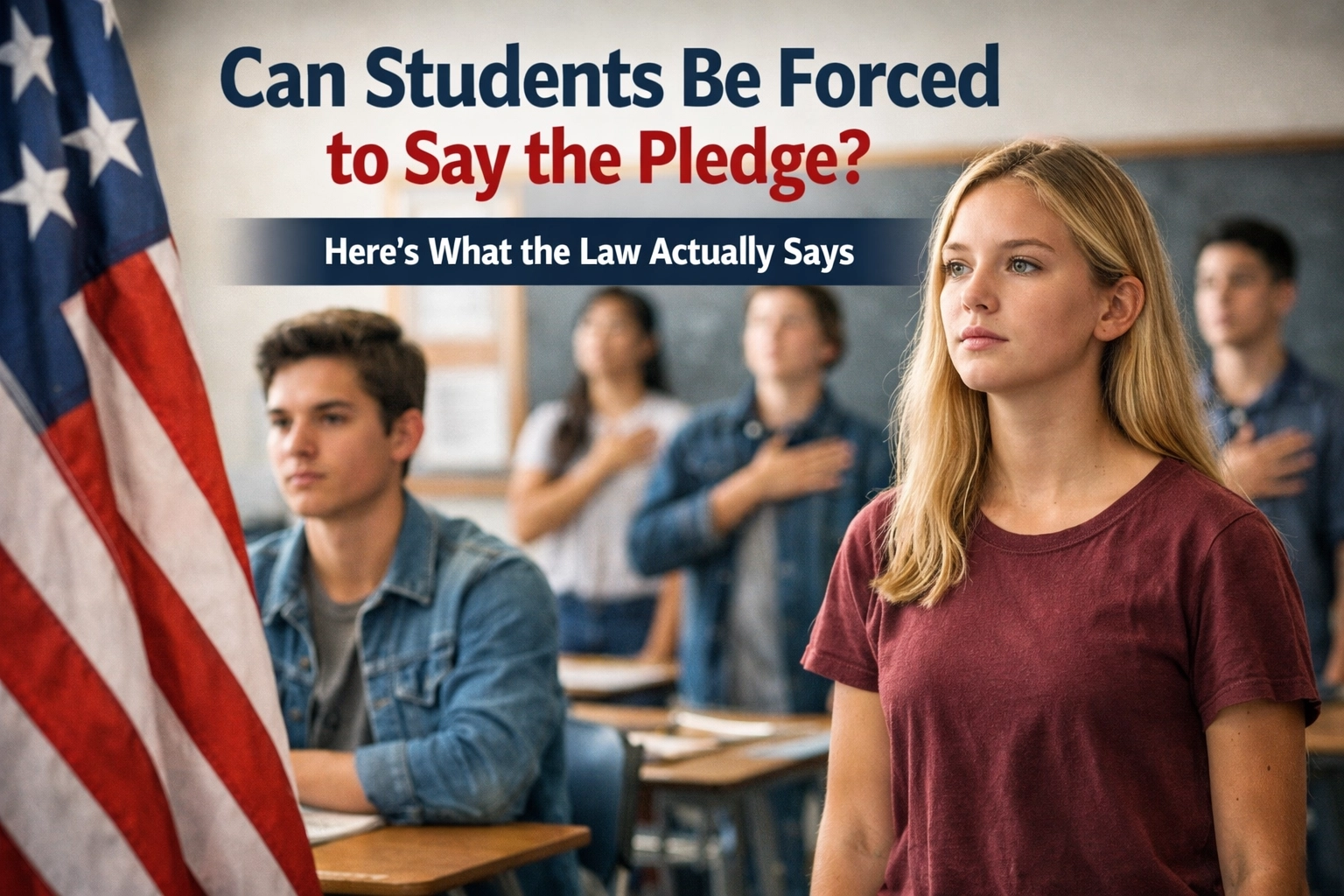
Here's something most people don't know: your child cannot be forced to say the Pledge of Allegiance in public school. Not today, not tomorrow, and not when America celebrates its 250th birthday next year.
You might think school authority trumps individual rights, especially during patriotic moments. But the law says otherwise – and it's been settled for more than 80 years.
Let me walk you through exactly what the Constitution protects, what schools can (and cannot) require, and what this means for you as a parent, educator, or student navigating these conversations as we approach America's semiquincentennial.
The Supreme Court Case That Changed Everything
Picture this: West Virginia, 1943. Two young sisters, Gathie and Marie Barnette, refused to recite the Pledge of Allegiance in their public school classroom. Their religious beliefs as Jehovah's Witnesses prevented them from pledging to any symbol or government. The school expelled them. The state threatened to send them to reform school and jail their parents.
The Barnette family fought back – and won.
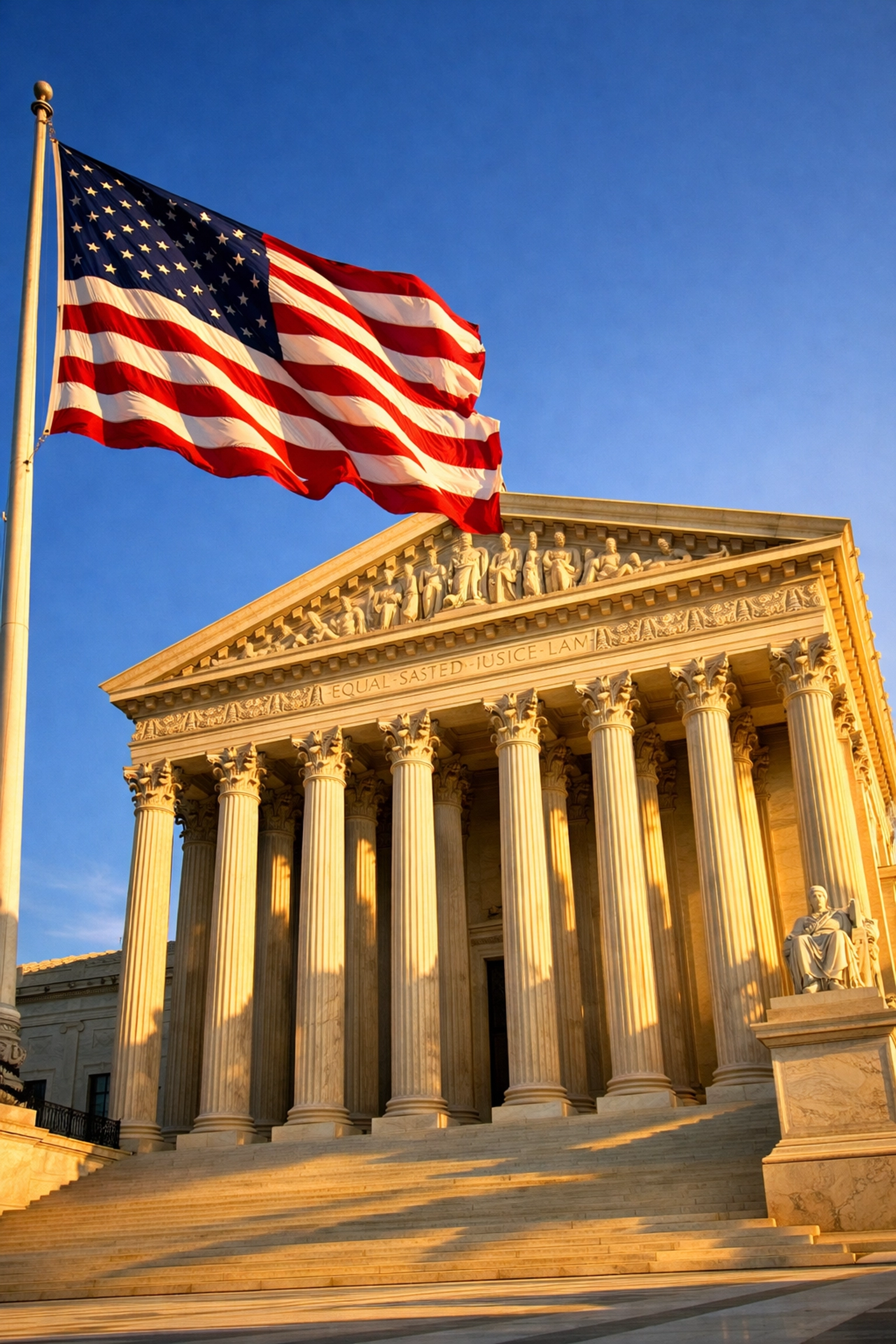
In West Virginia State Board of Education v. Barnette, the Supreme Court ruled that forcing students to pledge allegiance violates the First Amendment. Justice Robert Jackson wrote one of the most powerful lines in constitutional history: "No official, high or petty, can prescribe what shall be orthodox in politics, nationalism, religion, or other matters of opinion or force citizens to confess by word or act their faith therein."
That decision stands today. It protects every student in every public school across America.
What Your Rights Actually Look Like in Practice
You need to understand what this protection means in real, practical terms – because the law is crystal clear, but enforcement can vary.
Students can:
- Remain silent during the Pledge
- Stay seated while others stand
- Leave the classroom during recitation
- Refuse to place their hand over their heart
- Decline participation for religious, political, or personal reasons
Schools cannot:
- Punish students for not participating
- Issue suspensions, detentions, or demerits
- Lower grades or withhold privileges
- Physically force students to stand or speak
- Publicly shame or isolate non-participating students
Any punishment for exercising these constitutional rights is illegal. Period.
The State-by-State Reality You Should Know
Here's where it gets interesting. While the federal Constitution protects students everywhere, state laws create different landscapes across the country.
Forty-six states require schools to set aside time for the Pledge. That doesn't mean students must participate – it just means schools must offer the opportunity. But how states handle opt-outs varies significantly.
Thirty-four states explicitly outline exemption procedures or require schools to inform students they cannot be compelled to participate. This creates clarity for everyone involved.
Four states (Florida, Pennsylvania, Texas, and Utah) require written parental permission for students to opt out. Courts have upheld this requirement as constitutional – it's a procedural step, not a barrier to the right itself.
Eight states (California, Delaware, Georgia, Illinois, Kansas, Massachusetts, Nevada, and New Mexico) don't explain opt-out procedures in their statutes. This doesn't eliminate the constitutional protection – it just means the process might be less clear, and students or parents might need to advocate more directly.
If you're in one of those eight states, you still have the same federal constitutional rights. You just might need to reference Barnette directly when communicating with school administrators.

Private Schools Operate Under Different Rules
Here's a crucial distinction you need to understand: private schools aren't bound by the First Amendment the same way public schools are.
The Constitution restricts government action, not private entities. So if your child attends a private school – whether religious, independent, or charter – that school can require participation in the Pledge as a condition of enrollment.
You have the freedom to choose a different school if those requirements conflict with your values. But you don't have the same constitutional protection against the school's policies.
This distinction matters as families make educational decisions and advocate for their children's rights.
Why This Matters as America Turns 250
As we approach July 4, 2026 – America's 250th birthday – these conversations about freedom, patriotism, and individual rights take on special meaning.
The Pledge of Allegiance represents our national values. But so does the First Amendment. And sometimes, the most patriotic act is exercising the rights our Constitution guarantees.
You don't have to agree with every reason someone chooses not to recite the Pledge. But you should understand that protecting their right to choose is fundamentally American. It's what makes our republic different. It's what the Barnette sisters fought for. It's what veterans defended.
Speaking of veterans – if you want to honor those who served and protected these freedoms, consider supporting our Veterans' Tribute Series. As America celebrates its semiquincentennial, these tributes help you commemorate the service members who made our constitutional rights possible. Every purchase supports civic education initiatives that teach the next generation about both patriotic tradition and constitutional protections.

How to Handle These Situations with Students
Whether you're a parent, teacher, or administrator, you need practical guidance for navigating Pledge-related situations with grace and respect.
If you're a parent and your child doesn't want to participate:
Start by understanding their reason. Is it religious? Political? A form of protest? Personal discomfort? Their motivation matters for the conversation, even though it doesn't affect their legal right.
Talk with your child's teacher or principal directly. Reference the Barnette decision by name. Most educators know the law, but a respectful reminder can prevent misunderstandings.
Document everything. If your child faces any consequences, you'll want a clear record.
If you're an educator:
Create a classroom culture where exercising constitutional rights is respected, not stigmatized. This models civic education in action.
Explain to participating students that everyone has the right to make their own choice – and that respecting others' choices is itself a patriotic act.
Never single out non-participating students or require them to explain their decision publicly. Their rights don't depend on justification.
If you're a student:
You don't need permission to exercise your constitutional rights, though some states require parental notification for procedural purposes.
You don't owe anyone an explanation for your choice, though being prepared with a simple, respectful statement can help: "I'm exercising my First Amendment rights" is sufficient.
If you face pressure or punishment, document what happened and tell a trusted adult who can advocate for you.
The Bigger Picture on Civic Education
Here's what gets lost in these debates: teaching students about their constitutional rights is civic education. Understanding that you can disagree with government policy, protest injustice, or hold unpopular opinions without fear of official punishment – that's the essence of American civics.
The Pledge itself contains the phrase "liberty and justice for all." Part of that liberty is the freedom to dissent. Part of that justice is protecting minority viewpoints from majority coercion.
You can love America and question its symbols. You can honor veterans and protest current policies. You can teach patriotism and constitutional rights simultaneously.
These aren't contradictions. They're features of a free society.
As we celebrate 250 years of American independence, we're also celebrating 250 years of an experiment in self-governance where individual rights constrain governmental power. That's worth understanding – and defending – whether you choose to recite the Pledge or not.

What You Should Do Next
Now that you understand what the law actually says, you can navigate these situations with confidence.
If you're facing a Pledge-related issue at your child's school, you know your rights and how to advocate effectively. If you're an educator, you can create classroom environments that respect both tradition and constitutional protection. If you're a student, you can make informed choices about your own participation.
The Barnette decision didn't weaken American patriotism – it strengthened American freedom. And that distinction matters as we prepare to celebrate our nation's semiquincentennial.
Want to explore how the Pledge connects to other aspects of civic education? Check out our resources on teaching the Pledge in creative ways or answering kids' toughest questions about what it means to pledge allegiance.
The law is clear. Your rights are protected. And America's 250th birthday is the perfect time to celebrate both our patriotic traditions and the constitutional freedoms that make those traditions meaningful.